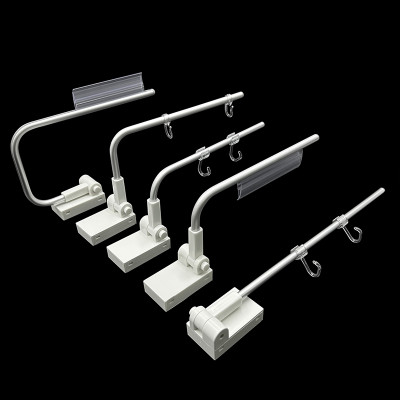
How to Choose Display Hooks: Matching Hook Type to Packaging, Panel and Store Format
On a hanging display the hook decides how much stock a bay can hold, how fast it can be refilled, and whether the packaging still faces the shopper after a week of trading. It is also the cheapest part of the fixture, and the one most often ordered from a photograph.
Four decisions set the whole specification, and they should be taken in this order: the panel or rail the hook mounts to; the way the product hangs (a Euro slot, a header card, a single punched hole, a hanger, or nothing at all); the load and how far it hangs from the panel; and only then the finish and colour.
This guide covers the panel standards for pegboard, slatwall, gridwall and square-tube rails, the hook shapes you will meet in a retail catalogue, the six fit checks we run before an export order is released, and four store-format setups. It is written for buyers, store planners and category managers who have to commit to a hook specification before the planogram is final.
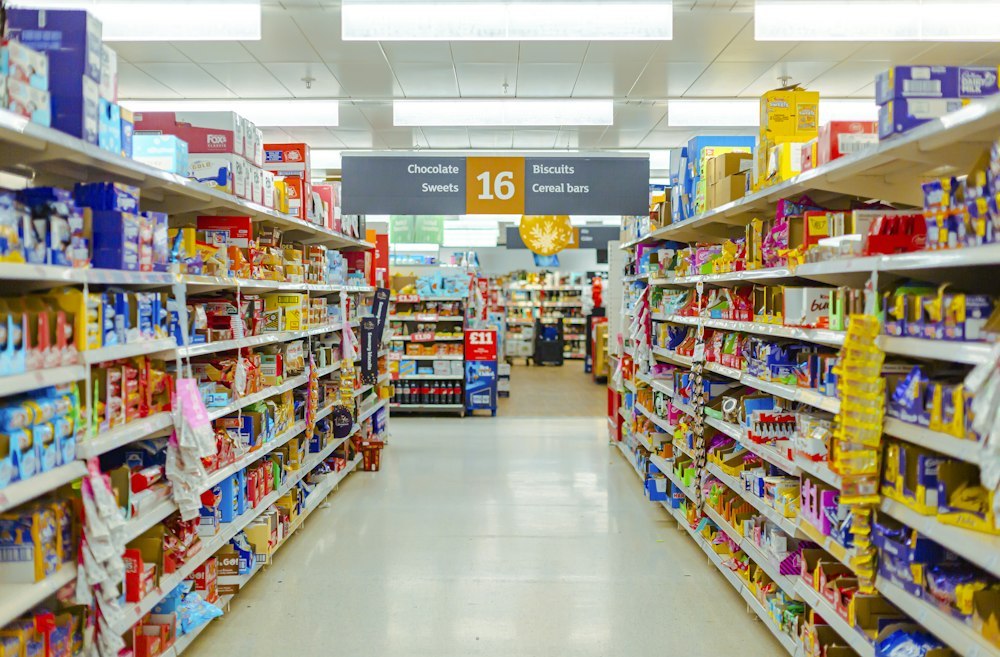
Start With the Panel, Not the Hook
The most common reason a hook order fails is that the panel was assumed rather than measured. Four mounting systems cover most retail displays, and each one has its own geometry.
| Mounting system | Standard geometry | What to measure | Hook family that fits |
|---|---|---|---|
| Pegboard | Holes on 1 in (25.4 mm) centres, most often 3/16 in (4.8 mm) or 1/4 in (6.35 mm) diameter; the board itself is commonly 1/8–3/16 in thick. Metric boards use a 25 mm pitch with 5–6 mm holes. | Hole diameter and centre-to-centre pitch | Double-prong peg hook, J-hook, T-top price tag hook |
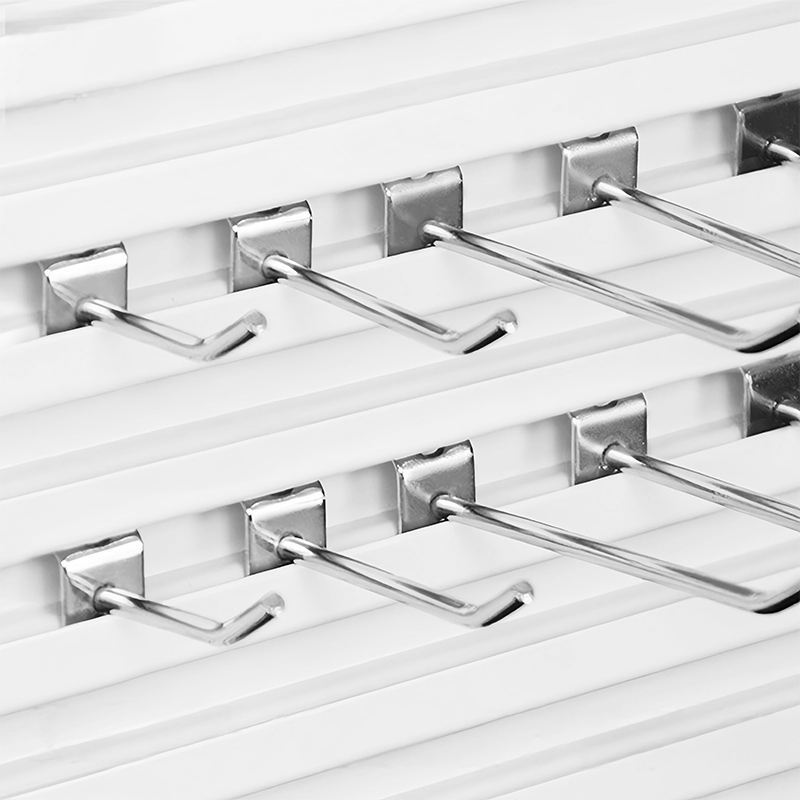
| Slatwall | Grooves on 3 in (76 mm) centres is the retail standard; 4, 6, 8 and 12 in are made to order. Standard MDF panels are 4 x 8 ft and 3/4 in (19 mm) thick. | Groove pitch, groove profile, panel thickness | Z-back single-prong or double-prong slatwall hook |
| Gridwall | 3 x 3 in (76 x 76 mm) mesh; panels are commonly 2 ft (610 mm) wide, in wire of about 6 mm. | Mesh pitch and wire diameter | Gridwall hook with a lip or clip base |
| Square tube rail | Crossbar and rail sections are commonly 15–25 mm square across shopfitting systems. | Tube size and wall thickness | Clip-on crossbar hook, square tube garment rod |
Panel geometry by mounting system: the numbers to confirm before a hook is quoted.
How a hook engages each mounting system, drawn in cross-section.
An imperial 25.4 mm pitch and a metric 25 mm pitch look identical on a tape measure at the first hole. By the sixth hole they are 2 mm apart, and a multi-prong accessory stops seating. Measure from the centre of one hole or groove to the centre of the next, and write the number down.
Once the panel is measured, the hook shortlist narrows quickly. A hook built for a flat panel will rotate on a round rail, and a peg hook cannot grip a slatwall groove. If your store mixes systems, separate the bays on the drawing so the same hook is never expected to serve both.
Hook Types and What Each One Holds
Catalogues mix trade names, distributor names and factory names for the same part. The working set below is ordered by what actually hangs on the hook, which is the decision you are really making.
| Hook type | What it holds | Packaging interface | Typical wire |
|---|---|---|---|
| Single-prong (straight) | Light packaged goods, single items | Single punched hole or header card | 4 mm |
| J-hook / apple shape | Bagged items, coiled goods, tools with a loop | Loop or punched hole | 4 mm |
| Ball-end hook | Bagged goods that slide off a straight arm | Header card, punched hole | 4 mm |
| Double-prong (Euro) hook | Euro-slot packs, blister cards, hardware | Two prongs through the Euro slot | 4–5 mm |
| T-top / price tag hook | Pack plus a printed price label on the arm | Euro slot plus a ticket bar | 4–5 mm |
| Scan hook | High-turnover SKUs that need a visible barcode | Euro slot plus a label grip | 4–5 mm |
| Waterfall hook (5 or 7 balls) | Size runs of one garment, hangers facing front | Hangers | 4 mm |
| Loop / U hook | Scarves, belts, straps, items with no hang tab | None, the item is draped | 4 mm |
| Faceout arm | One garment or hero product facing the shopper | Hanger | 4–5 mm |
| Garment / lingerie rod | Rails of light garments on hangers | Hangers | 4 mm |
| Security hook | Higher-value items in unsupervised zones | Euro slot or header card | 5 mm and up |
Eleven hook types, mapped to the packaging each one is built for.
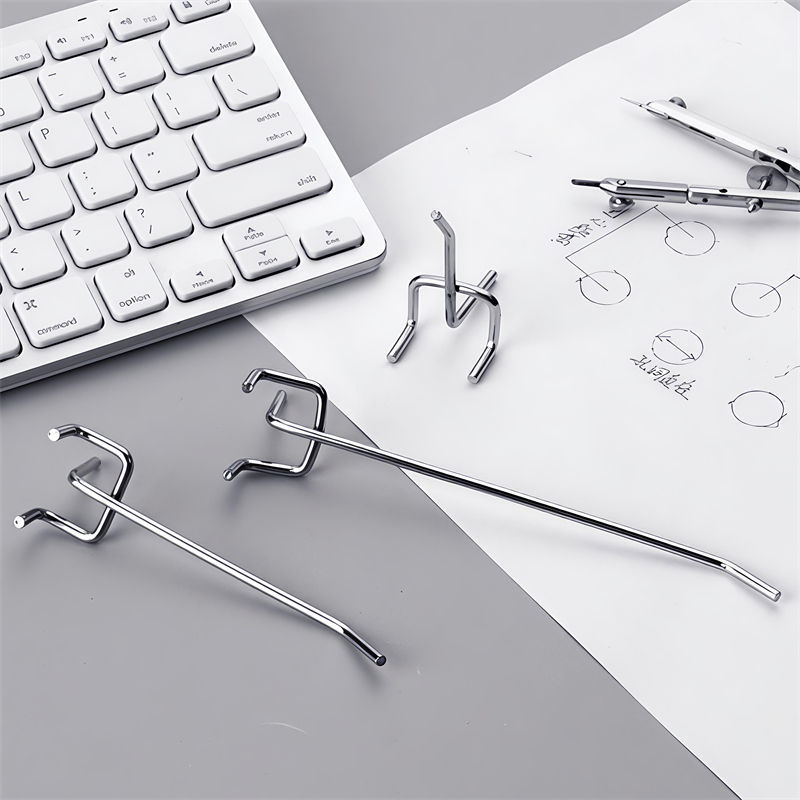
Six of the eleven shapes, drawn to a common scale: single prong, double prong, T-top or scan, waterfall, loop and faceout arm.
Two adjacent mechanisms are worth knowing even when they are not wall hooks: automatic front-push hooks, which keep the next pack at the front of the arm as shoppers take stock, and shelf-mounted pusher systems, which do the same job inside a flat lane. Both are usually specified with the shelf rather than with the wall panel; the flat-lane versions are covered in our guide to shelf dividers and shelf pushers.
The Interface Nobody Checks: Packaging, Not the Panel
A hook that fits the panel perfectly can still fail at the other end of the arm. The packaging decides whether the pack hangs flat, twists, or walks off the tip, and this is the check most often skipped when a hook is reordered from an old sample.
Euro slot: a rounded slot pierced in the card. A double-prong hook passes both prongs through it, so the card hangs flat and faces forward. Header card or peg hole: a single punched hole, matched to a single-prong or J-hook. Soft pack with one punched hole: use a ball-end hook so the pack cannot walk off the arm. Hanger: garment hooks only. No hang tab at all: the correct answer is a loop hook, basket or bin, not a longer hook.
The double-prong design is usually sold as stronger. Its real advantage is orientation: two parallel prongs stop the card rotating around a single point, so a Euro-slot pack stays square to the shopper and the print stays readable.
Six Fit Checks Before You Place an Order
These are the six dimensions we confirm before a hook order is released. Each one fails in a way you can see in the bay, not in the warehouse.
- Mouth opening versus panel thickness or groove. If the mouth is wider than the material it grips, the hook sits loose and rotates forward as soon as it is loaded.
- Fixing pitch versus panel pitch. 25.4 mm and 25 mm pegboard, 1 in and 3 in slatwall, and 76 mm mesh each need a matching fixing.
- Insertion depth and rear clearance. A pegboard mounted flat against a wall blocks the rear leg from rotating into place; use a spacer or furring strip instead of forcing the hook.
- Groove profile on slatwall. The Z-back bracket must sit inside the groove, not on the lip. A bracket that stands proud will chew the panel edge over time.
- Clip bore versus mesh wire. A hook made for 4 mm wire rattles on 6 mm mesh and drops its load when a shopper lifts a pack.
- Clamp size versus tube. 15 mm and 20 mm square tube are not interchangeable, even when the hook arm is identical.
Two fit failures: a mouth wider than the panel, and a pitch mismatch that accumulates along the arm.
If you cannot measure one of these, photograph the panel with a ruler in frame and send the image. One clear photograph settles more fit questions than three paragraphs of description.
Length, Wire Gauge and Load: The Short Version
Hook load is not a single number, because the stress at the base rises with the load and with how far that load hangs from the panel. The practical version is short.
- Light packs and accessories, roughly up to 1 kg per hook: a 4 mm single wire is normally enough at a 100–200 mm projection.
- Medium packs, roughly 1–3 kg per hook: move to a double-prong hook at 4.5–5 mm.
- Heavy packs or long projection: a 5.8 mm double wire, or accept a shorter arm and hang fewer units per hook. A longer arm lowers capacity, it does not add it.
- Garments: choose a waterfall or faceout shape for presentation, and size the wire for the hanger load rather than for the weight of the garment.
For the engineering version of this section — the bending-stress relation, a calculated load table across 2.0–5.8 mm wire, and how finishes perform over time — read our companion article on why display hooks bend.
Finish and Environment
Finish is where a hook stops being hardware and becomes part of the store look. It is also where service life is decided, in chilled cabinets, coastal stores and back-of-house areas.
| Finish | Look | Best suited to | Watch for |
|---|---|---|---|
| Chrome plate | Bright, catches light, reads as premium | Fashion, jewellery and front-of-store bays | Bright plating shows salt and chlorine damage first in coastal or wash-down areas |
| Black or white powder coat | Matte, blends with shelving and panels | Grocery, convenience, chilled zones and high-turnover bays | Chipping exposes bare wire if struck; still the most common retail choice |
| Colour powder coat to brand | Matched to the store palette | Chains standardising across stores | Confirm the reference under store lighting, not on a screen |
| Gold or rose-gold plate | Warm, boutique feel | Apparel and accessory walls | Softer surface; expect more handling marks in high-traffic zones |
Finish selection by environment and by store look.
Colour can be matched to a Pantone reference so a chain keeps the same hook colour across markets. What we will not do is promise a service life in a specific climate without knowing the humidity, the cleaning chemicals and the temperature range. For coastal or wash-down sites we send a sample for a trial bay first.

Four Store Formats, Four Hook Setups
The same panel can be merchandised four different ways. These are the setups we quote most often.
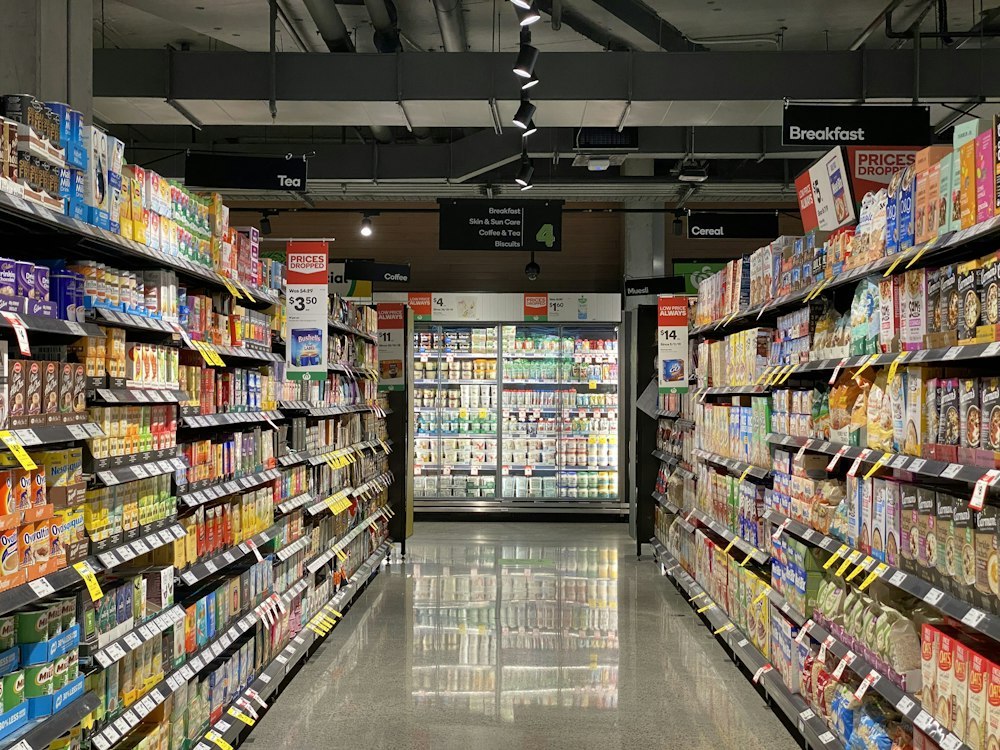
Supermarket and grocery
Packaged goods on slatwall or a gondola end: a single-prong hook at 100–250 mm for light packs, a double-wire hook at 220 mm where packs are heavier or the bay is restocked roughly, and a T-top price tag hook wherever the price label has to travel with the product instead of sitting on the shelf edge.
Convenience and impulse zones
Short projection is the rule: 100–150 mm keeps the aisle clear and stops packs meeting in the middle. A scan or ticket hook puts the label at the tip, so a price change is made at the hook instead of at the till.
Apparel and boutique
Square tube rails take clip-on garment rods for hanger runs, waterfall hooks for size runs of one style, and a faceout arm for the piece the store is pushing. The stop balls matter: on a waterfall hook they are what keeps hangers spaced and facing outward.

Hardware, DIY and warehouse club
Here the hook is the load path. Double-wire crossbar hooks at 5.8 mm on square tube shelves, heavy SKUs on the lower rows, light stock above, and a projection short enough that a loaded arm cannot be levered sideways by a passing trolley.
What to Send in an RFQ
A hook quote is only as good as the information behind it. Nine items are enough for an accurate answer.
- The mounting system, plus the measured pitch (centre to centre) and the material thickness
- A photograph of the panel or rail, ideally with a ruler in frame
- How the product hangs: Euro slot, header card, punched hole, hanger, or nothing
- Packed weight of one unit, and how many units you expect per hook
- The projection you need, or the depth of the shelf or bay behind it
- Quantity per model, and the models in use today if you are replacing a system
- Finish and colour, with a Pantone reference where colour matters
- Branding needs: neutral packing, printed sleeve or PVC label
- Destination port, so freight and packing can be quoted together
We return a drawing with the key dimensions, a calculated load reference for the panel and load position you described, and a price. Catalogue stock starts at 100 pcs per model, customised versions of the same items carry the same minimum, and new tooling is quoted separately. Samples take 7 days, production runs 25 days after sample approval, and freight is typically 20–40 days by sea, 5–10 days by air or 3–7 days by express.
Send the list through the inquiry form and the reply is a drawing and a price, not a question about which hook you meant.
How the Hooks Are Made and Checked
VIGO DISPLAY manufactures in Yuhang, Hangzhou, in a 6,000 m² factory with more than 30 production machines, including automatic cutting machines and precision injection moulding. Annual output is 50,000,000 pieces, produced by a team of more than 100 people covering R&D, design, production, quality inspection and sales, with a ten-person engineering and design group.
Hooks move through nine production and inspection stages: incoming material inspection, cutting, injection moulding, welding, surface finishing, semi-finished inspection, assembly, finished-goods inspection and packing. Dimensional and appearance checks sit at both ends of the line, because on a premium apparel wall an appearance fault is a reject even when the dimension is correct.
Two things we will not do: quote a load rating without knowing the panel and the load position, and promise finish life in a climate we have not been told about. Where a specification cannot be supported by data, we say so and propose a trial instead.
Frequently Asked Questions
Are slatwall hooks and pegboard hooks interchangeable?
No. A peg hook needs a hole of the right diameter and pitch, while a slatwall hook needs a bracket that sits inside a routed groove. Forced to swap, the hook either rotates under load or damages the panel edge.
How do I measure my slatwall groove pitch?
Measure from the centre of one groove to the centre of the next. 3 in (76 mm) is the retail standard; 4, 6, 8 and 12 in versions exist, and a hook made for 3 in will not seat on a 6 in panel.
What is the difference between a Euro hook and a scan hook?
Both are double-prong hooks. A scan hook adds an integrated ticket or label grip at the tip, so the barcode or price sits on the hook instead of on the shelf edge.
How much weight can a 4 mm hook carry?
There is no single figure. Capacity falls as projection grows, and it also depends on the panel material and where the load sits on the arm. Tell us the pack weight, the projection and the panel, and we return a calculated reference value for that combination.
Can the hooks be customised for our brand?
Yes. Length, wire diameter, structure, colour matched to a Pantone reference, and packing (neutral, printed sleeve or PVC label) are all made to order, and catalogue models can be branded without a new mould.
What is your minimum order and lead time?
100 pcs per model, for catalogue items and customised versions alike; new tooling is quoted separately. Samples take 7 days and production 25 days after sample approval.
Sources and Related Reading
Panel geometry in this guide is drawn from published panel and shopfitting specifications:
- Slatwall specifications — standard panels are 4 x 8 ft and 3/4 in thick, with grooves on 3 in centres and 4, 6, 8 and 12 in made to order (slatwall.info)
- Slatwall spacing guide — 3 in on centre is the retail standard, with 1, 4, 6 and 8 in alternatives (Megawall)
- Pegboard standards — imperial 1 in (25.4 mm) versus metric 25 mm pitch, 3/16 in and 1/4 in holes, and how the drift accumulates (Kapy CAD)
- Hardboard and pegboard specification — quarter-inch holes on one-inch centres, in 1/8 to 3/16 in board (Forest Plywood)
- Grid panel specification — 3 in squares, 6 mm wire, panels 2 ft wide (Display Stands UK)
Related reading on this site: Why Your Display Hooks Bend, Shelf Dividers vs Shelf Pushers, Hanging Display Strips, and the display hooks category.
The selection path in one diagram: panel, then packaging, then hook shape, then wire and finish.
The short version
- Measure the panel first: pitch centre to centre, hole or groove profile, material thickness.
- Match the hook to the packaging: a Euro slot and a header card want different prongs.
- Size the wire for the load and the projection, then pick the finish for the environment, not the other way round.