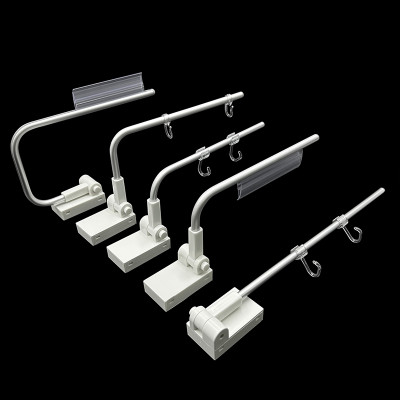
Why Your Display Hooks Bend: Wire Diameter, Load Rating, and Surface Finish Explained
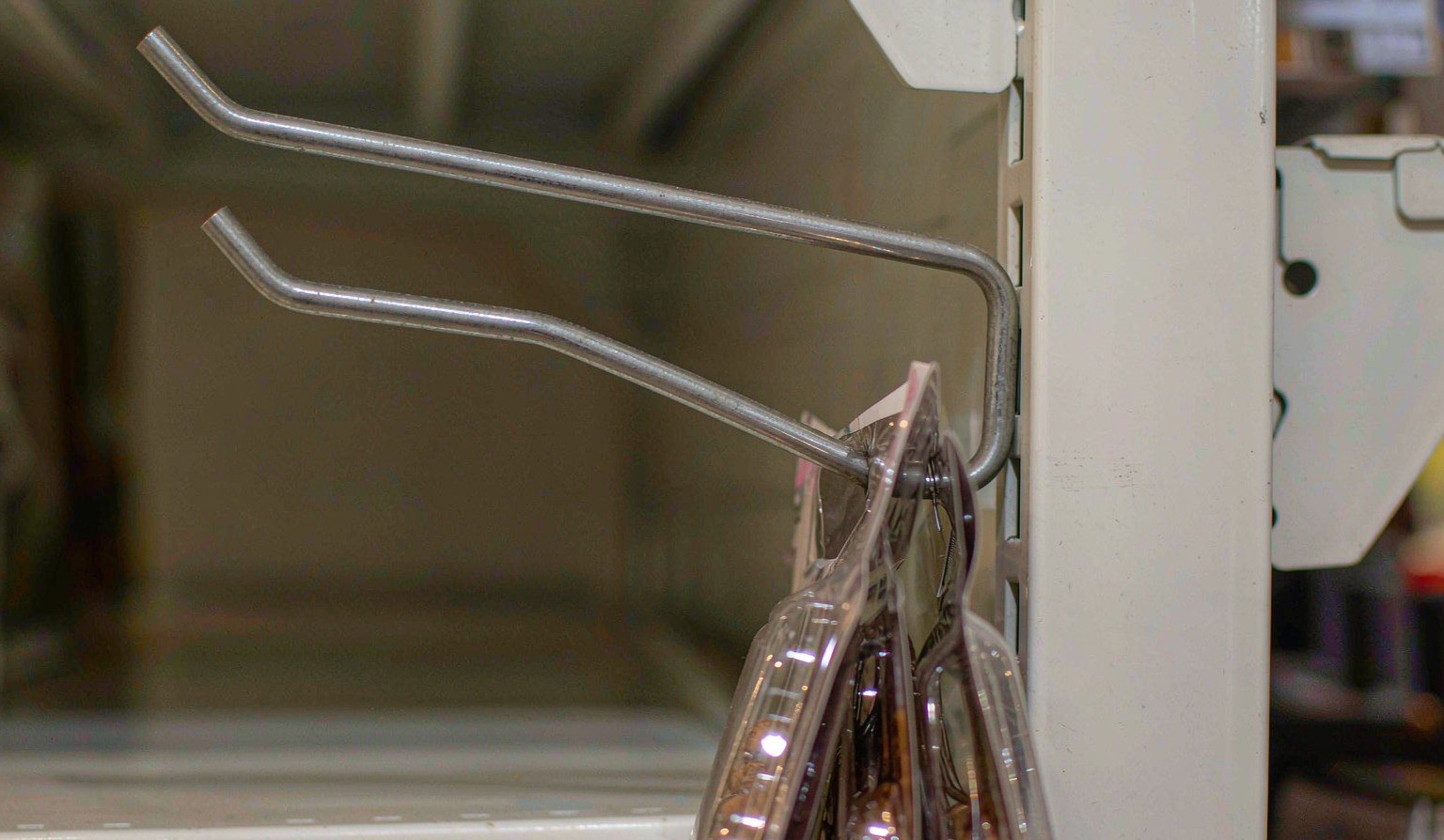
A bent display hook is almost never a quality accident. Hooks rarely snap. They open slowly, tip forward, and drop stock on the floor — usually a few weeks after installation, and almost always on the line that sells best. When we sort deformation complaints from export orders, the cause almost always comes down to three numbers: the wire diameter, the load the hook was actually asked to carry, and how well the finish survived the environment it was installed in. This guide handles all three with numbers you can check yourself. It is written for buyers, store planners and category managers who have to commit to a hook specification before they know how the bay will actually be merchandised. Only one of the three failure modes below is about the strength of the hook itself. The other two are about fit, and they are the ones buyers most often misdiagnose. Failure mode two, drawn. A hook whose mouth is wider than the panel cannot grip it, so the arm starts sagging before any load is added. %s If a bay uses thin panels, or a hook spans a joint between two boards, the fix is a backing rail or a different mounting type. A thicker hook only moves the same failure later. The practical consequence: replacing the hooks does not fix failure mode three. If the panel is flexing, a thicker wire only delays the same complaint by one season. A display hook behaves like a cantilever beam. The bending stress at the base of the wire is: σ = 32 P L / (π d³) — P = load, L = projection from base to load point, d = wire diameter Because the diameter is cubed, it dominates every other variable. A 25% increase in wire diameter raises capacity by about 95% (1.25³ = 1.95). A 25% increase in arm length cuts capacity by 20%. If you want more load on the same shelf, change the wire, not the packaging. The table below is calculated from that formula for a 100 mm projection, cold-drawn low-carbon steel wire with a yield strength of 400 MPa. “Bending threshold” is the load at which the wire reaches yield and stays bent. “Static working load” is the threshold divided by three — that is the number to design a planogram around. Calculated reference values, not catalogue claims. Recompute for your own arm length before specifying. Capacity scales with the cube of diameter, so the gap between 4.0 mm and 5.8 mm is far larger than it looks. Every figure above is static. In a real bay, a shopper pulling the second item off a loaded hook lets the remaining stock slide forward, and the transient load on that hook can multiply by roughly 1.5 to 2. This is why the working load is the threshold divided by three, not a 1:1 rating. Deflection tells the same story in millimetres. At its working load a 4 mm hook on a 100 mm arm bends about 1 mm at the tip. Pushed to the bending threshold it bends roughly 3 mm. Three millimetres of tip movement on a 100 mm arm is exactly the visible sag that generates the complaint email. A load figure without a projection length, a wire grade and a test method is not usable. Ask which of the three the number refers to — bending threshold, static working load, or a deflection limit — because the same hook can honestly be quoted as 7.8 kg or 2.6 kg depending on the answer. Our own peg hooks are listed at 3-6 kg, and that is a bending-threshold number measured on a rigid panel, not a working load. The table above is a calculation. The display hooks category lists the standard families we actually run — wire diameter, projection, inner width and finish in one place. Pick a base model, then send us the deviations. The hook has to match the surface before it matches the product. These four mounting systems cover the overwhelming majority of retail bays, and each one constrains you in a different way. Specifications reflect VIGO DISPLAY standard hook families; custom sizes follow the same mounting logic. Every mounting type above is stocked or made to order - browse the display hooks category to see wire diameters, projections and finishes side by side. Each mounting surface fixes the hook's insertion geometry before load capacity even enters the conversation. Within each mounting type the same hook shapes repeat across the industry, so it helps to name them in the RFQ: single straight, ball-end, euro slot, T-top label holder (the shape most often called a scan hook), ring, broom, double wire, and gravity-feed auto-push hooks. Choose the mounting type first, the load rating second, and the shape last. Hook quantity is the line item buyers most often get wrong, usually by rounding up. Five steps produce a defensible number: A worked example, with every parameter marked as an example you should replace: a 1,200 mm shelf carrying 150 mm-wide polybags gives a pitch of 200 mm, so 6 hooks per lane. Four tiers make 24 hooks per bay. With a 1.15 spare factor that is 28 hooks per bay. Twelve bays per store gives 336; forty stores gives 13,440 hooks. Rounding the pitch down to fit one extra hook per lane is what turns a comfortable bay into a crowded one. Order one bay first. A single merchandised bay exposes every assumption in the calculation — real package width, real clearance, and whether the hook you chose is actually compatible with the panel you already own. Finish is the specification buyers cut first and regret last. It does not change load capacity at all — it decides whether the hook still looks presentable after two years in a wet aisle. Salt-spray hours are the one specification you should never accept as a slogan. The same coating chemistry can pass 300 hours or 800 hours depending on how the steel was degreased and phosphated before coating. Ask for the report for the specific run, not a generic certificate. As a working rule: powder coat or e-coat anything that lives near produce, chilled cabinets or a wet cleaning routine; keep zinc and chrome for dry ambient aisles where cost and appearance matter more; and if a store cleans fixtures with aggressive chemicals, check the coating's chemical resistance before you commit, because a damaged film corrodes faster than an uncoated one. Film and salt-spray figures are typical industry ranges. Actual results depend on pretreatment and batch — always ask for the test report. Most hook quotations go back and forth three times before anyone can price them. Every round trip is caused by a missing item on this list: “Display hook for [pegboard / gridwall / slatwall / crossbar], wire ⌀ ___ mm, length ___ mm, inner width ___ mm, [finish], T-top label holder for ___ mm tags, ___ pcs, ___ pcs per carton, port ___.” Send those seven lines and a quotation becomes a confirmation rather than a conversation. In our own process, sampling runs 7-10 days and bulk production 25 days from drawing confirmation; both clocks start when the specification is complete, not when the enquiry arrives. Send the checklist above through our inquiry page and we return a drawing, a calculated load reference and a quote within 24 hours. Hook specifications that survive a pilot usually change before rollout. Across our chain projects — including HotMaxx, Hema Freshippo, Century Hualian and Yonghui — the same two adjustments appear again and again, and neither is about wire diameter. The first is hook pitch. A pitch chosen from a packaging drawing is almost always tighter than the pitch that works once real packages, with real film seams and real hang holes, are loaded side by side on a real shelf. The second is the spare ratio: bays get re-merchandised during promotions, and a chain that ordered to the planogram exactly will be short of hooks in the first promotional reset. There is a third lesson too, and it is about diagnosing complaints. When a store reports hooks bending, the panel is the first thing to check, not the wire. If a bay uses thin panels, or hooks span a joint between two boards, the fix is a backing rail or a change of mounting type — a thicker hook only moves the failure later. You can review the full projects in our case library, including the HotMaxx magnetic shelf sign holder programme covering 900+ stores and the Hema Freshippo shelf-management and ESL accessory rollout. 4.0 mm wire has a static working load of about 0.85 kg and a 5.0 mm wire about 1.67 kg, so a 1 kg product sits between the two. Choose 5.0 mm, or shorten the projection: capacity scales with 1/L, so the same 4.0 mm wire carries exactly twice as much once the arm drops from 100 mm to 50 mm. Yes. Standard lengths run from 100 mm to 300 mm across the range, custom lengths are made to order, and finishes include electroplated zinc, polished chrome, powder coating in your RAL colour and electrophoretic coating. Low-MOQ trial orders are accepted, so you can validate one bay before committing to a chain rollout. A correctly sized hook does not. Damage happens when the hook mouth is too tight and has to be forced in, which crushes the panel edge or the slot coating. Measure the panel thickness or the slot width first and specify the hook to that measurement. Sampling takes 7-10 days after drawing confirmation and bulk production takes 25 days. Both schedules depend on the specification being complete, which is why the RFQ checklist above matters more than it looks. Send the mounting type, wire diameter, projection length, inner width, finish and quantity. We reply with a drawing, a calculated load reference and a quote within 24 hours - or browse the category first and quote the model code you like.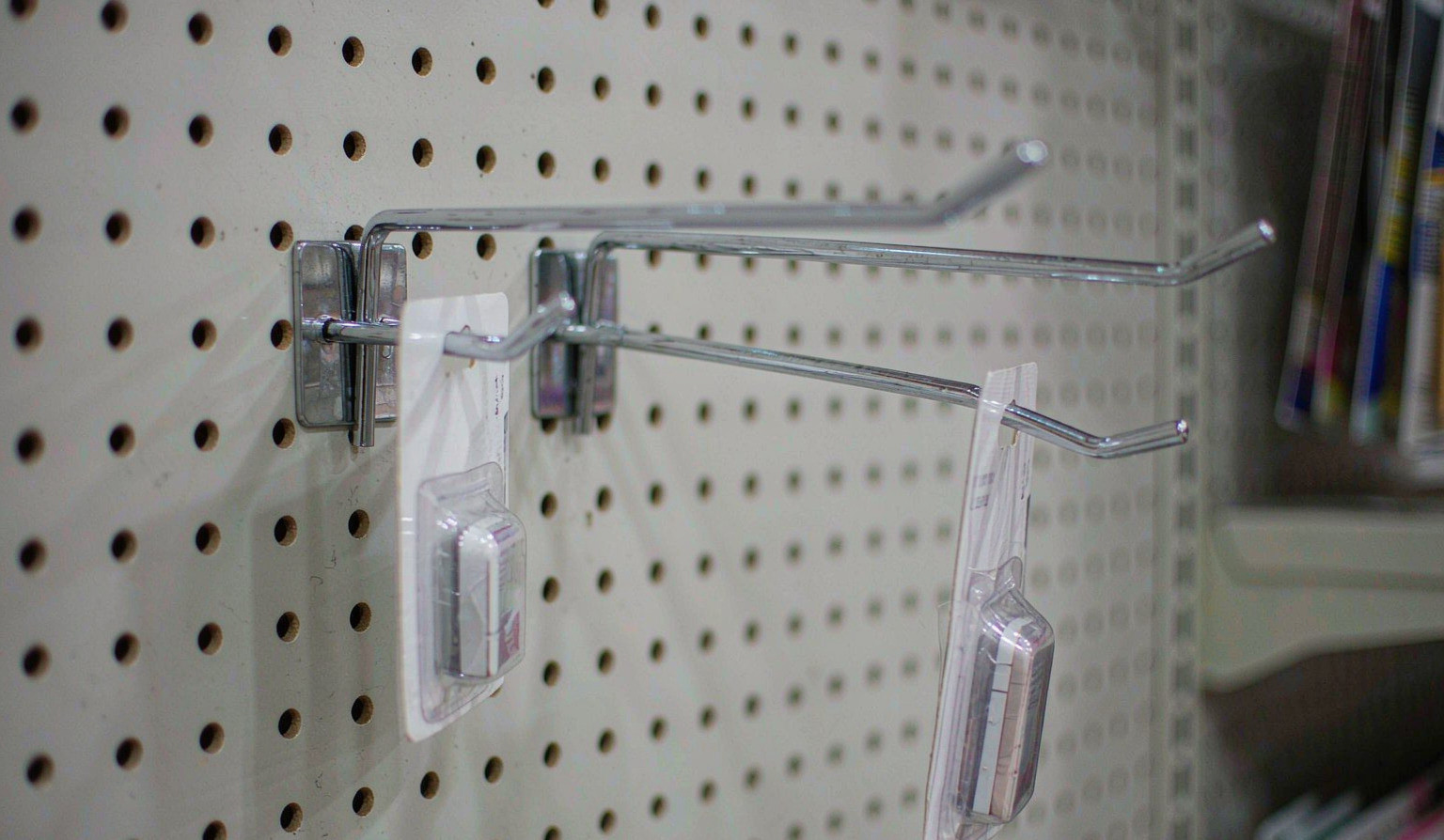
The 3 Real Reasons Hooks Bend (Not What You Think)
Wire Diameter vs. Load Capacity: The Number Table
Wire ⌀
Bending threshold at 100 mm
Static working load (÷3)
What it is actually for
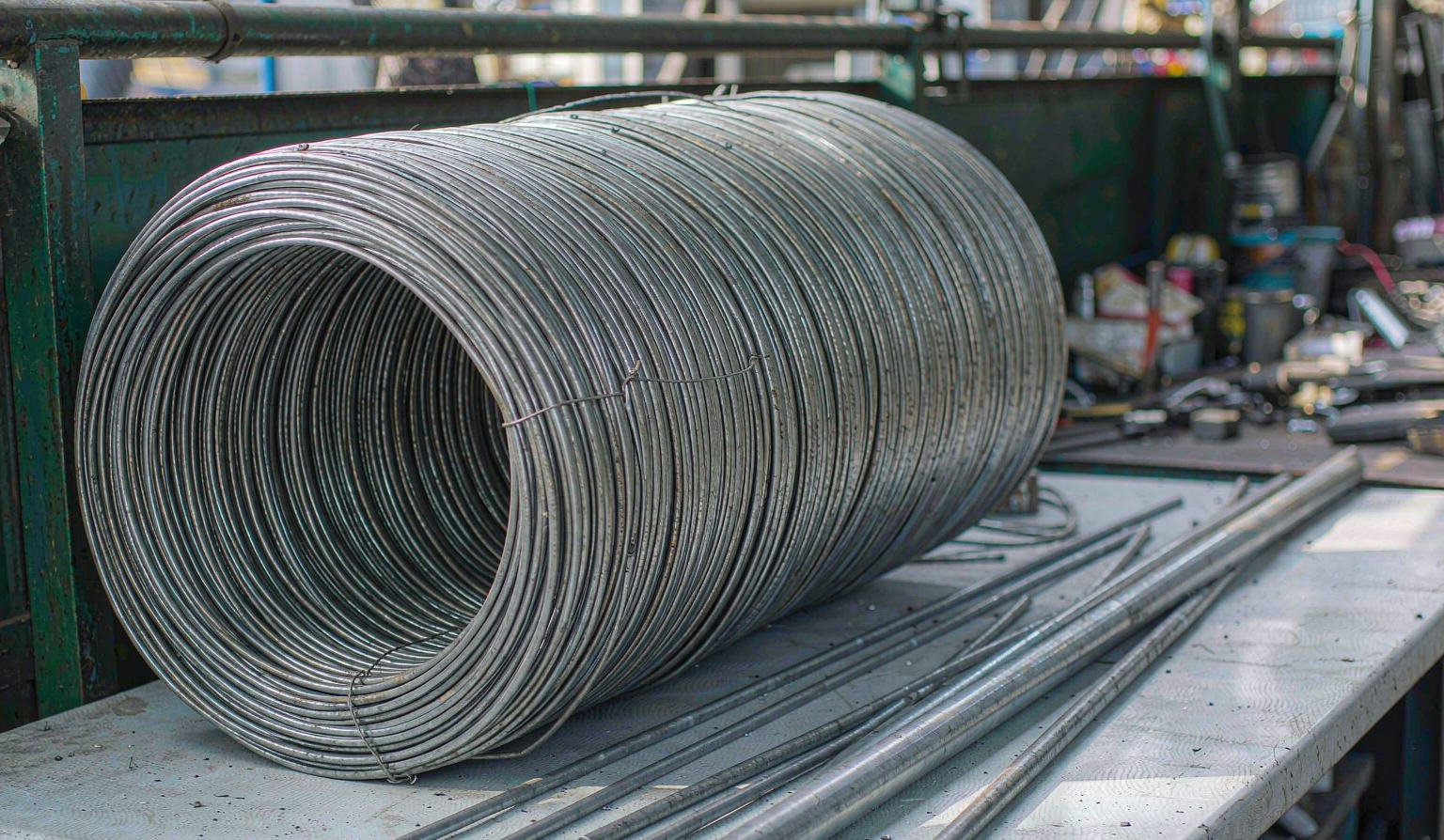
2.0 mm 3.1 N ≈ 0.32 kg ≈ 0.11 kg Label wire and tag loops — not a load-bearing hook 2.5 mm 6.1 N ≈ 0.63 kg ≈ 0.21 kg Clip-strip springs and small tags 3.0 mm 10.6 N ≈ 1.08 kg ≈ 0.36 kg One light polybag on a short hook 3.5 mm 16.8 N ≈ 1.72 kg ≈ 0.57 kg Two or three small polybags 4.0 mm 25.1 N ≈ 2.56 kg ≈ 0.85 kg Packaged small items — e.g. JL-63 crossbar hook 5.0 mm 49.1 N ≈ 5.00 kg ≈ 1.67 kg Blister packs and boxed goods — e.g. JL-65, JL-60/61 5.8 mm 76.6 N ≈ 7.81 kg ≈ 2.60 kg Double-wire heavy duty — e.g. JL-64 Static vs. dynamic: the aisle is not a test bench
Compare real wire diameters side by side
Hook Types Compared: Pegboard / Gridwall / Slatwall / Crossbar
Type
Mounting surface
Typical wire
Re-merchandising speed
Where it wins
Pegboard hook Perforated panel, 25.4 mm (1 in.) hole pitch 4-5 mm Fastest — lift and relocate in seconds High-SKU aisles: hardware, cosmetics, small electronics Gridwall hook Wire mesh panel, 75 x 75 mm 4-6 mm Fast, but the mesh limits placement Freestanding displays and side panels Slatwall hook Grooved MDF or PVC panel, 100 mm slot pitch 4-6 mm Moderate — the slot pitch sets the grid Dense merchandising where the panel is also the backdrop Crossbar / tube hook Square tube or round bar, clamp-on 4-5.8 mm Fastest — no panel work, tool-free Shelves you cannot drill, and gondola crossbars How Many Hooks Do You Actually Need? A Planogram Calculation
Surface Finish: Zinc / Chrome / Powder / Electrophoretic Coating
Finish
Typical film
Salt spray, typical range
Hygiene notes
Best environment
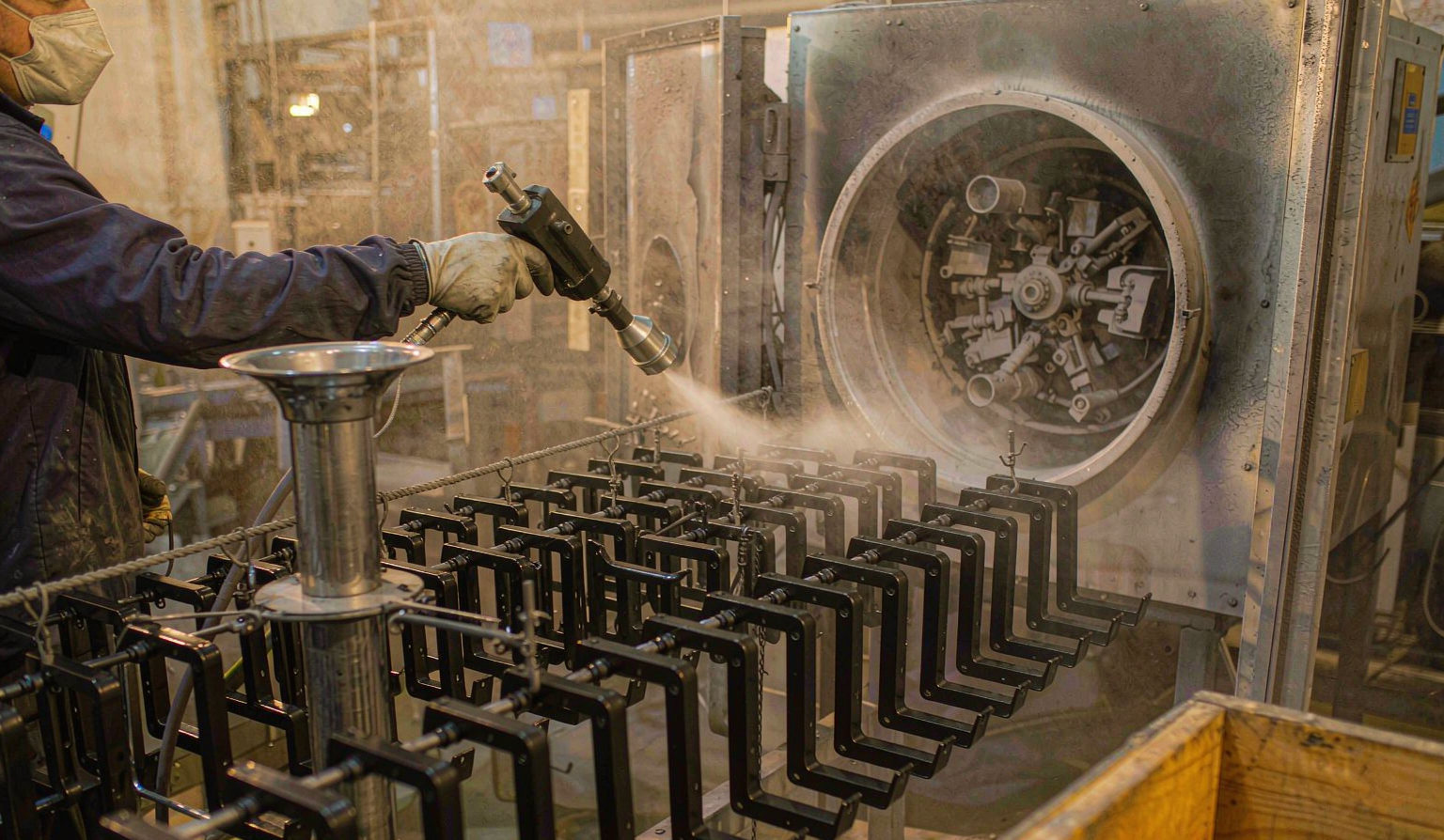
Electroplated zinc 5-12 µm 24-96 h to white rust Matte silver; the cheapest option, on our standard peg hooks Dry, ambient aisles Polished chrome over nickel 0.1-0.3 µm 48-120 h Mirror finish; shows fingerprints, cleans easily Ambient retail where appearance sells Powder coating 60-120 µm 300-1000 h Any RAL colour; chip-resistant, thicker film covers weld marks Chilled, damp and high-touch zones Electrophoretic (e-coat) 15-25 µm 200-500 h Even film, including inside bends and weld joints Complex shapes with hidden surfaces RFQ Checklist: What to Send Before You Get a Quote
What We Learned From Retail Chain Hook Projects
Display Hook Selection: FAQ
What wire diameter do I need for a 1 kg product on a 100 mm hook?
Can display hooks be customised in length and finish?
Do display hooks damage pegboard or slatwall panels?
How long does sampling and production take?
Get the Right Hook on the First Order