ESL Rails and Holders: Matching 40/60 mm Systems to Existing Shelving
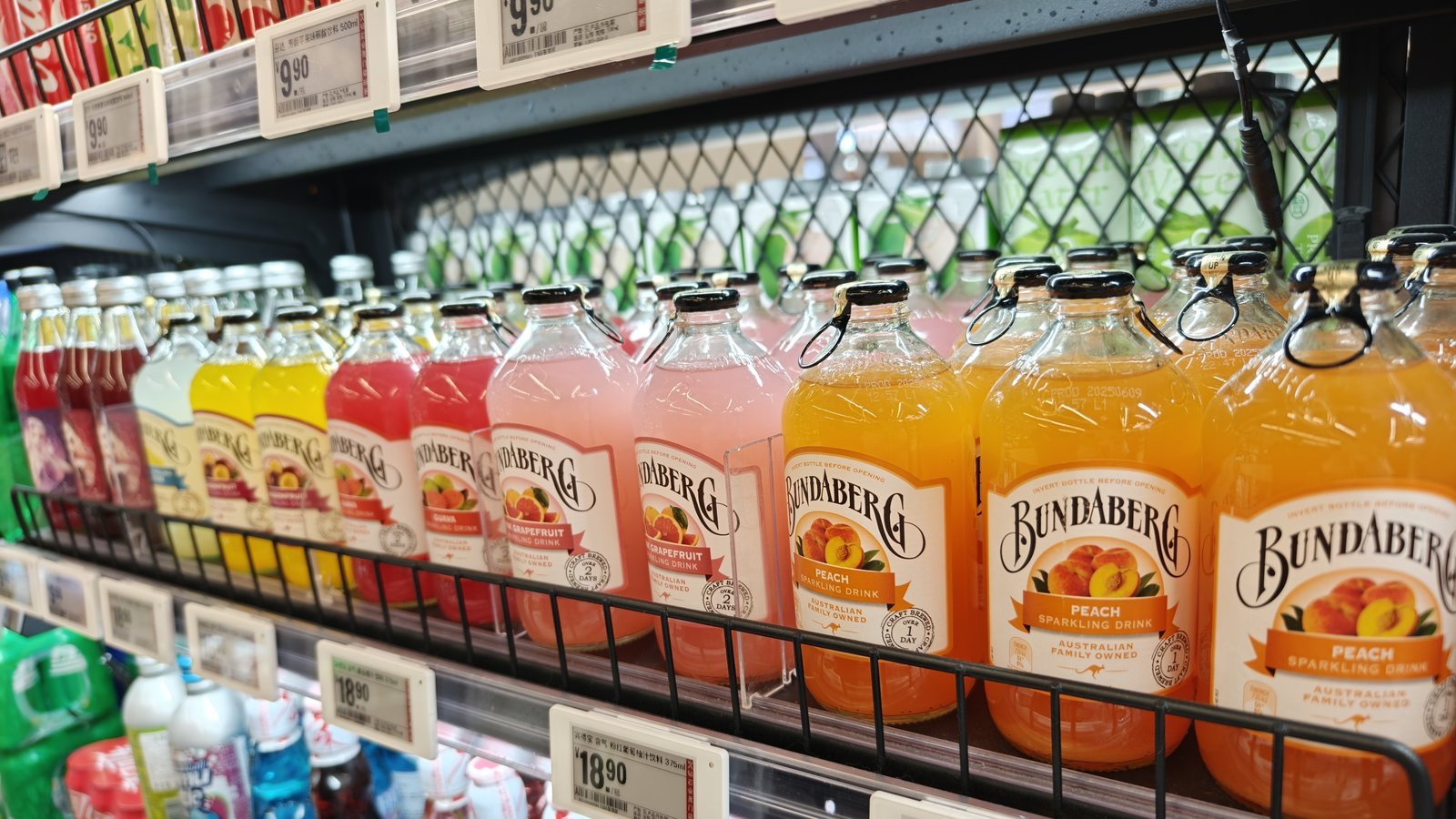
Most ESL rollouts hit the same bottleneck, and it is rarely the software. The tags arrive and the shelf edge will not take them: a 40 mm data strip is too shallow for a 66 mm label, the front lip is 22 mm so a clip-on rail has nothing to bite, and in the freezer case condensation runs down the molding until the adhesive lets go within a week.
None of that is solved by the label vendor. It is decided by the accessory layer at the shelf edge — rail, holder, bracket, end cap. This guide sets out how that layer is specified in practice, drawing on the retrofit work we have quoted and supplied since 2011.
Quick Answer
An ESL retrofit is decided by three measurements, not by brand: the label height, the rail cavity height, and the depth of the shelf front lip. Measure all three before ordering. A label taller than the cavity will not sit flush, and a front lip under about 30 mm usually rules out clip-on mounting, so a bracket is needed instead.
How This Guide Was Compiled
Three inputs sit behind the guidance below, and none of them is a laboratory test report.
- Quoting files. Dimension sheets and site photographs sent by retail chains when they ask us to quote a retrofit — the shelf types, tag models and front lip depths we are actually asked to fit.
- Returns and complaints. What our QC team sees when rails and holders come back: where the profile cracks, where adhesive lifts, which end cap goes missing first.
- Cold-room projects. The material grades we specify for chilled and frozen cases, and what stores report after two or three winters.
Where a range appears in this article, it is the range we see across those projects, not a data sheet figure. Where we do not have a number, we say so instead of estimating one.
What the Accessory Layer Actually Includes
The tag is the part you see. Four parts hold it in place, and each one has a different failure mode.
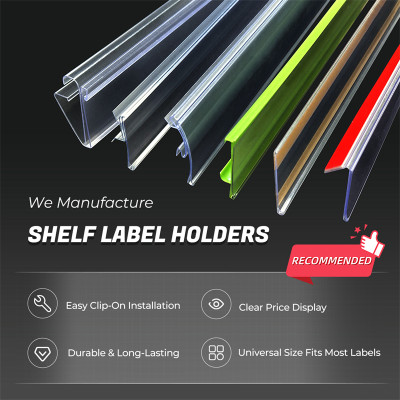
- Rail (data strip). The extruded profile fixed to the shelf edge, supplied as an ESL shelf strip. It sets the maximum label height the shelf can accept and the angle at which the label is read from the aisle.
- Holder or bracket. The interface used when a rail cannot be clipped on directly: deep front lips, wire shelves, wooden shelves with a rounded edge, or glass. This is the ESL holder and bracket layer in our own range.
- End cap. Closes the rail so labels do not slide sideways when a bay is hit by a cart. It is a small part that generates a disproportionate share of complaints when it is missing.
- Adapter or shim. Takes up the gap where the existing strip is wider or deeper than the new profile, so the old strip does not have to be removed.
VIGO DISPLAY manufactures this accessory layer only — rails, holders, brackets and end caps — and does not sell tags or gateways. That is deliberate: the advice below is about fit, not about one vendor’s software.
Three Measurements That Decide Whether It Fits
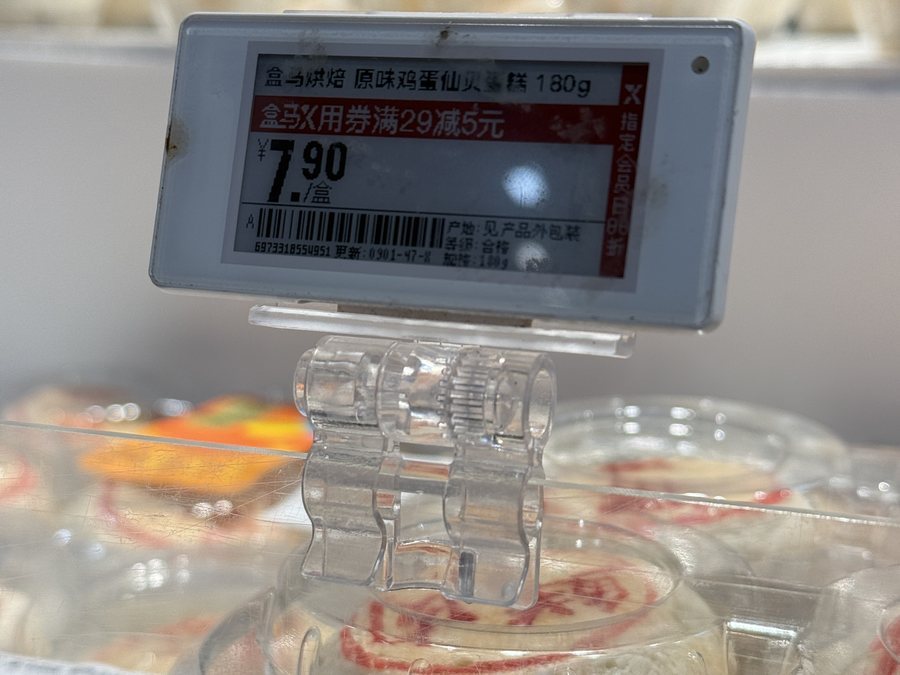
Almost every fit problem traces back to a measurement that was never taken, or was taken in the wrong place. These four values cover most retrofit accessories we quote.
| Measurement | Where to take it | Typical range | What goes wrong |
|---|---|---|---|
| Label height | Outer edge of the tag, not the visible screen | 45–90 mm | Tag sits proud, blocks the product above, or will not clip in |
| Rail cavity height | Inner opening of the existing strip, at three points along the bay | 30–60 mm | Paper labels fit, the ESL does not |
| Front lip depth | Shelf surface to front edge, measured square | 20–60 mm | Clip-on rail tips forward under load |
| Bay length | Shelf edge between two brackets | 900–1,200 mm | Rail sags or bows between supports |
Label height should be measured with a caliper, not a ruler: the tolerance is the difference between a rail that clips and one that does not. The other three can be read from a photograph, as long as a steel ruler is held against the profile in the same frame. Take one photo per shelf type, not per store.
Rail Types and Where Each One Belongs
There is no universal mounting method. The right choice depends on the shelf edge you already have, the case temperature, and how many bays an installer can realistically finish in a shift.
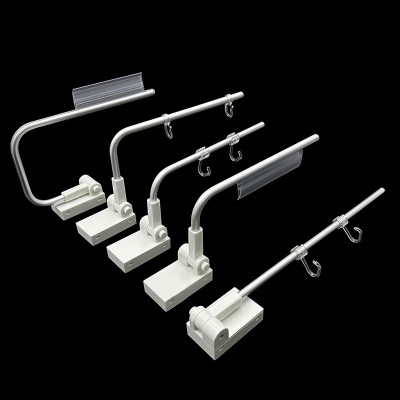
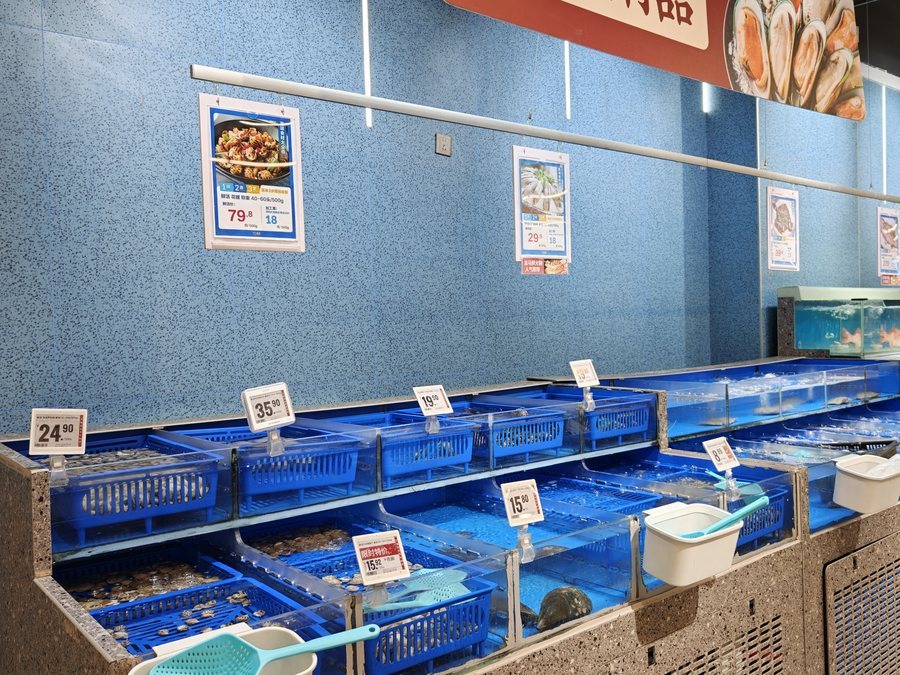
Not every edge can take a rail. Live seafood counters, deli cases and bakery bins often have a deep or uneven front, where a standing holder like the one shown is the only mounting that survives a daily wash-down.
| Type | How it mounts | Best for | Fails when |
|---|---|---|---|
| Clip-on | Snaps over the existing strip or front lip | Standard 40/60 mm supermarket strip; mixed paper and ESL on one bay | Lip under about 30 mm, or an edge that is bent or chipped |
| Adhesive | Peel-and-stick backing | Glass, smooth metal, wooden shelf fronts, one-off fixtures | Condensation in cold rooms; surfaces below about 10 °C at installation |
| Screw-mounted | Self-tapping screws into the shelf edge | Heavy labels, high-traffic aisles, 60 mm profiles | Thin or hollow shelf edges; slows installation per bay considerably |
| Magnetic | Magnetic strip on steel shelving | Steel shelves, temporary and pop-up displays | Aluminum or plastic shelves, where there is nothing to hold |
Clip-on is the default for a reason: it leaves the existing strip in place, so a store can keep paper labels on slow-moving SKUs while the electronic ones go on the fast movers. Adhesive is faster to install and worse to live with — repositioning a rail means replacing it.
Where the shelving is steel, a magnetic holder sidesteps both problems: it lifts off for cleaning and slides to a new position without tools. Steel gondola runs are the usual case, and a clear magnetic ESL holder is what we quote for them.
40 mm vs 60 mm: What Actually Changes
These two heights cover most supermarket shelving, and the difference is not cosmetic. It changes what you can put on the edge, and what the customer reads from the aisle.
| Dimension | 40 mm profile | 60 mm profile |
|---|---|---|
| Label size it accepts | Single-line price tags, smaller digit formats | Taller labels, two-line price and unit price |
| Promo card space | Almost none; needs a separate clip | Room for a promo strip above the label |
| Sightline from the aisle | Readable at close range, weaker from 2 m | Readable at cart distance |
| Retrofit impact | Usually fits existing strip without changing the shelf | Often needs a deeper front edge or a bracket |
A 60 mm rail on a shelf that was designed for 40 mm sits lower than the shelf surface line, which can foul drawers below or reduce the usable shelf depth. If the planogram is already approved, confirm the profile before the molding is ordered. Where the tag has to be angled up toward the aisle rather than mounted flat, an adjustable clip changes the reading angle without changing the profile.
Cold Rooms and Freezer Cases
Cold cases fail differently from ambient aisles. The part rarely breaks; the mounting does.
- Condensation defeats adhesive. Water runs down the molding and lifts the backing within days. If adhesive is the only option, specify a low-temperature grade rated for the case temperature and install when the case is dry, not during a restock.
- Acrylic turns brittle near 0 °C. Impact from a cart or a stock crate cracks it at the mounting points. PETG or PP holds up better in frozen applications.
- Paper inserts wrinkle. Any label card behind a clear front will wrinkle at high humidity, which is one more reason the electronic label earns its place in these aisles first.
- Leave a drainage gap. A rail fixed tight to the bottom of the front lip traps water. A 1–2 mm gap and a coated screw make the difference between a two-year part and a ten-year part.
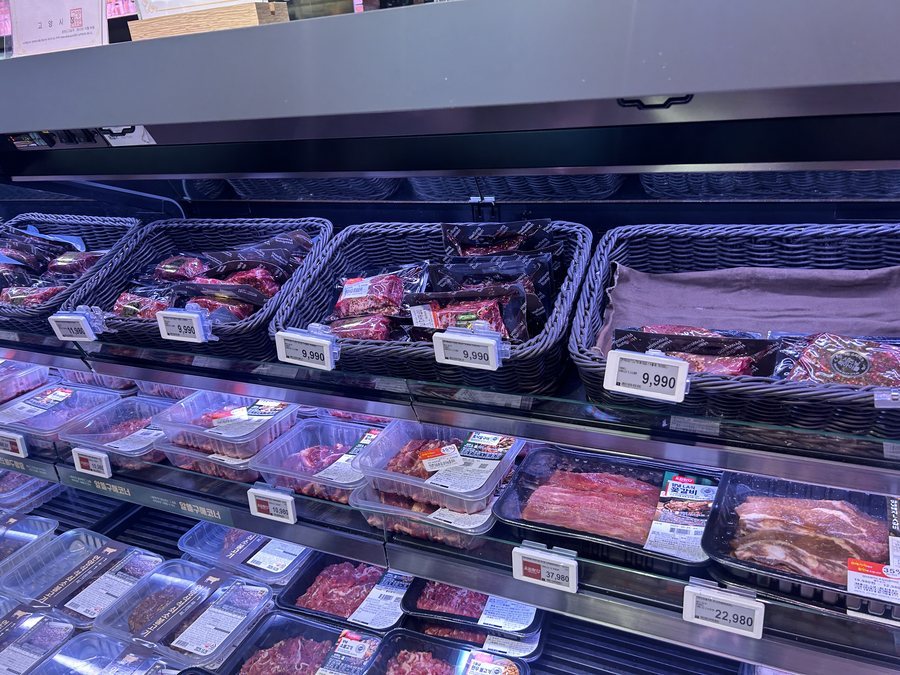
For cold rooms we quote PETG or PP on request rather than acrylic, including the clear shelf bracket shown on the meat case above. The grade is confirmed on the drawing before production starts, not assumed from the product name.
Running ESL and Paper Labels on the Same Bay
Very few chains convert 100% of a store in one budget cycle. The realistic pattern is electronic labels on high-change SKUs and paper everywhere else, on the same shelf, for two or three years.
- Clip the rail over the existing strip rather than replacing it, so the paper label position stays available.
- Keep the paper label at the same height on converted and unconverted bays. If staff have to remember two positions, they will get both wrong.
- Mark it on the planogram. One column for edge type per bay saves an argument every time a merchandiser resets the aisle.
- Order end caps with the first batch. Partially converted aisles are where labels migrate sideways most, because the run is no longer continuous.
Wire shelving is the exception to rail thinking: there is no front lip to clip onto, so the tag hangs from the wire. A wire-hook swivel mount takes the holder and can be turned to face either aisle.

Retrofitting Without Replacing the Shelving
The shelving is the expensive part and it is rarely the problem. What makes retrofits go wrong is discovering a shelf type in store 60 that nobody surveyed.
- Survey by shelf type, not by store. A 200-store chain usually has four to six shelf types. Two hundred photos of the same profile is wasted effort.
- Measure the extremes. Photograph the deepest front lip, the shallowest strip and the oldest shelving. If the accessory fits those three, it fits the middle.
- Sample one aisle. Samples take about 7 days. Test with the actual tags, not with a paper mock-up at the same size.
- Pilot three stores covering the extremes: a cold room, a tall gondola, and the oldest fixtures in the chain.
- Roll out by store-labeled carton. Production runs about 25 days after sample approval. Cartons labeled by store and aisle cut installation time more than any tool does.
Budget the second survey, not the second sample. A failed pilot almost always means a shelf type was missed, and re-surveying costs less than re-molding.
Five-Year Wear: PVC vs PET vs Aluminum
Rails are cleaned with the same chemicals as the shelf, which is what usually ends their life, not the label load.
| Material | Clarity over time | At low temperature | Relative cost | Where it belongs |
|---|---|---|---|---|
| PVC | Yellows under UV and cleaning agents | Stays flexible | Lowest | Ambient aisles, short-life promotions, dry goods |
| PET / PETG | Holds clarity; resists crazing | Better impact resistance than acrylic | Mid | Cold rooms, dairy and frozen, high-visibility edges |
| Aluminum | No change, but dents | Unaffected | Highest | Heavy labels, 60 mm profiles, long-life fixtures |
If a store uses aggressive degreasers on the shelf edge, PVC will haze within two years. Ask what the cleaning protocol is before choosing the material; it matters more than the wall thickness.
What to Send for an Accurate Quote
Most quotes come back wrong because the first message contained a photo of a shelf and nothing else. Five items are enough to quote without a second round of questions.
- A photo of the shelf edge with a steel ruler held against the profile in the same frame.
- The label model and its outer height and width in millimeters.
- Bays per store and the number of stores in the first phase.
- The mounting you prefer, or the constraint that rules one out (a deep lip, a glass shelf, a freezer case).
- The date the first store has to be finished.
Minimum order is 100 pcs per size, and samples are ready in about 7 days. Nothing in the accessory layer needs new tooling unless the profile itself has to change.
What This Guide Does Not Cover
- Tags, gateways and CMS. We do not make or support them, so we do not advise on firmware versions, battery management or price automation software.
- Brand compatibility lists. Any such list goes stale with the next tag generation. We confirm fit from three measurements instead, and put the reasoning in writing.
- Prices. Profile, material and volume set the price. The checklist in the quoting section is what we need to give you a figure.
For a decision on any of those, ask the company that supplies your tags — and ask for the measurement behind their answer.
FAQ
Will your rails fit my ESL brand?
We do not claim blanket compatibility with any brand, and a supplier who does should be asked for the measurement behind it. Fit is determined by the label's outer height, the rail cavity and the front lip. Send those three and we can confirm the profile without naming a brand.
Can I keep my existing paper labels?
Yes, and in most rollouts you should. A clip-on rail sits over the existing strip, so converted and unconverted bays keep the same edge geometry. This is the cheapest way to phase a conversion by SKU.
Do the holders work in freezers?
With the right material and mounting, yes: PETG or PP rather than acrylic, a low-temperature adhesive or a mechanical fastening, a drainage gap at the bottom of the rail, and coated screws.
How many rails do I need per store?
One continuous rail per shelf edge, plus about 5% spare for damaged edges and later resets. Count bays, not meters; a bay length is easier for store staff to verify.
What is the minimum order?
100 pcs per size. Samples are ready in about 7 days, and production runs about 25 days after sample approval.
Will removing a rail damage the shelf?
Clip-on rails leave the strip intact. Adhesive rails take the paint or powder coat with them when removed, which is the practical reason to prefer mechanical fastening on fixtures you intend to keep for a decade.
Summary: Three Things to Get Right
- Measure three dimensions before ordering. Label height with a caliper; cavity and front lip from a scaled photograph.
- Survey by shelf type, not by store. Four to six profiles cover most chains; the risk is the one nobody photographed.
- Match the mounting to the case temperature. Clip-on everywhere hot or dry, mechanical or low-temperature adhesive in cold rooms.
The figures in this article are ranges we see on live projects, not a specification. If a dimension in your store does not match, trust your tape measure over this page — and tell us what you found, so the next revision reflects it.
About the author
Jerry Sheng — Founder, VIGO DISPLAY (Hangzhou Jepar Display Products Co., Ltd.). Jerry started the company in 2011 in a 30 m² workshop, on the belief that display fixtures should not be bought on price alone. The factory now covers 6,000 m² and ships more than 50,000 pcs a month to retail chains in over 120 countries, including RT-Mart, Metro and B&Q. He still reviews every major project drawing himself.
Related reading: Shelf label holders explained: profile, label height, adhesive and the four ways they fail. The parts described above are listed under ESL shelf strips for rails and data strips, and ESL accessories for holders, brackets and wire mounts.