Shelf Label Holders Explained: Profile, Label Height, Adhesive and the 4 Ways They Fail
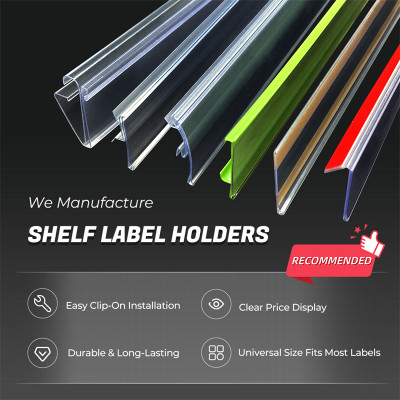
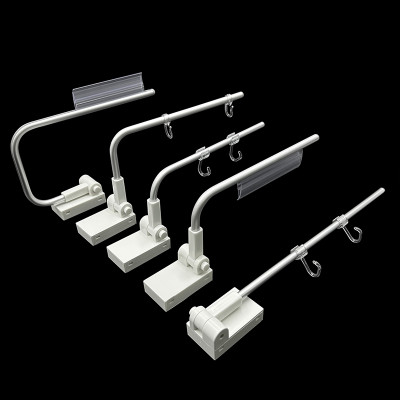
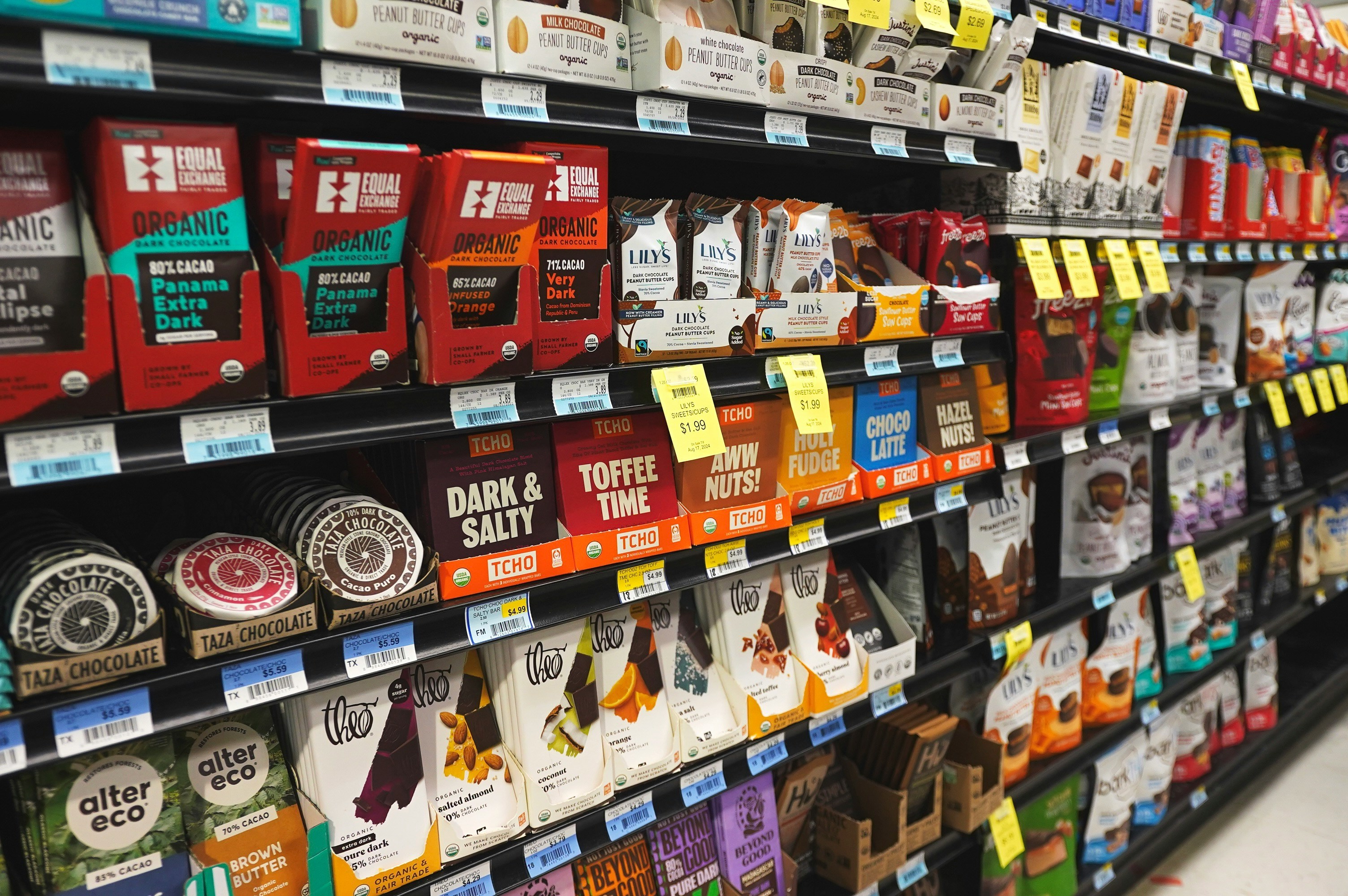
A shelf label holder is the cheapest line in a store fit-out and the one that gets re-ordered most often. It is a strip of extruded PVC with a channel, a paper card that slides into that channel, and a way of holding on to the shelf edge. Three parts, four numbers - and almost every complaint about price strips comes from a mismatch in one of them. This article stays with that one product: what the profile is, which label heights exist, how a strip attaches to a shelf, what the material does over years rather than weeks, and how to trial a single bay before committing to a chain-wide order. Every number in it comes from our own product data or our published FAQ pages, and the source is named at each point. Start with the two measurements a supplier can never guess: the thickness of your shelf front edge where the strip will sit, and the height of card your pricing team actually prints. A shelf label holder is not a single item but a system of four parts that have to agree with one another. When stores report that price strips look untidy, the cause is almost always one part that was ordered without reference to the other three. Cross section of a shelf label holder on a shelf lip: the profile clips over the front edge, the card sits inside the channel, and the whole assembly stays under 2 mm thick. A profile under 2 mm thick that sits in the shelf-edge slot stays outside the product zone. It does not take up facing space and does not change the load the shelf carries - our published answer on this states exactly that, and adds that the same design fits over 95 % of standard supermarket shelves. In returned-sample reports and store complaints, four failure modes cover almost everything we see. None of them is a manufacturing defect in the usual sense. Each one is a specification that stayed open at quotation. The four failure modes side by side. Only the fourth is a material question - the first three are settled by measurement and by surface preparation, which is why a heavier strip does not remove them. Four symptoms, four root causes. Three of the four are geometry or surface problems - which is why ordering a heavier strip at a higher price does not remove any of them. Read the table in the opposite direction and it becomes a checklist: the fourth column is what you write into the enquiry. A supplier who receives those four lines can quote a strip that will still be flat in year three. Label height is the height of the paper card the strip accepts, and it is the specification that decides how much information a bay can carry. Our shelf label holders are produced in the standard heights below, and anything outside the list is made to order. The standard label heights in our shelf label holder range, with the job each one is normally asked to do. Choosing the strip to fit the card you already print removes reprinting cost from a roll-out. The same shelf edge with three card heights. The strip is not what changes - it is how much the customer can read standing at arm's length. A shelf's steel thickness is quoted bare. What the profile actually grips is steel plus paint or powder coat, and that extra fraction of a millimetre decides whether an edge-slot profile closes properly on your fixture. There are two ways a shelf label holder stays on a shelf. Which one you can use is decided by the fixture in front of you, not by preference. Three adhesive outcomes on an identical shelf edge: full-length contact, ends-only pressure, and a surface that was never cleaned. Only the first one keeps the strip flat through a year of price changes. Three actions decide whether an adhesive strip is still flat next year: remove dust, remove oil film, and press the full length rather than the ends. A strip pressed only at its ends lets the middle lift, and the middle is exactly where the card starts to curl. Nearly every shelf label holder on the market is extruded PVC, and that is not only about cost. PVC takes a clear extrusion, holds a precise channel, stays flexible enough to clip over an edge, and accepts colour and printing on its face. A qualitative comparison of the three materials used for shelf-edge labelling. Relative cost rises down the list, but clarity retention and design flexibility do not rise with it, so the environment should decide the choice. Compliance is a separate question from performance. Our display plastics are supplied against EU REACH and RoHS requirements, and the PET and PP parts in the range belong to recyclable material streams. Test reports can be requested together with the quotation. All three materials look the same in your hand on the day the sample arrives. Yellowing resistance and low-temperature toughness cannot be judged by eye, which is why the useful question is not which material, but which grade - and against which test. No, provided the profile is fitted the way it was designed to be fitted. A shelf label holder under 2 mm thick sits in the shelf-edge slot, outside the product zone, so it takes no facing space and adds no load to the shelf. Our published answer on this also states that the design fits over 95 % of standard supermarket shelves. The clearest test of all of this is a fresh-food shelf labelling project for the Yonghui supermarket chain, where the strips run through chilled displays and have to stay legible and flat in a wet, cold environment. A specification for a shelf label holder fits in six lines. Send those six lines and most of the risk is gone before anyone quotes a price. Then trial one bay. Fit the sample on the worst shelf in the store - the coldest, the sunniest, the one your team re-prices most often - and leave it there for two weeks. A strip that survives that bay will survive the rest of the store. Send the six lines above. We reply with the profiles that fit your shelf edge, a sample plan for the trial bay, and a specification sheet your buyer can forward internally. Minimum order 100 pcs per model, samples ready in 7 days and mass production 25 days after sample approval. Quote within 24 hours. Yes. Only the paper card is replaced; the profile stays on the shelf. That is the main reason a strip is the lowest-cost way to re-price a bay, and the reason the profile quality matters more than the card. Measure the front edge at the point where the profile will grip, then compare that figure with the profile's slot opening. If the edge is a lip or a wire rather than a slot, choose an adhesive-backed version instead. Yes, and most chains do. Choose the label height that matches the card you already print; if your template falls outside our standard heights, the profile can be produced to that height. Yes. Clear is standard, and colours including black-plus-clear, white-plus-clear and green-plus-clear are produced to order, with length cut to your bay. 100 pcs per model, with samples ready in 7 days and mass production 25 days after sample approval. Sea freight runs 20-40 days, air freight 5-10 days and express 3-7 days. Send the six specifications above. We reply with the profile that fits your shelf edge, a sample for one trial bay, and a specification sheet your buyer can forward internally. Minimum order 100 pcs per model. Quote within 24 hours.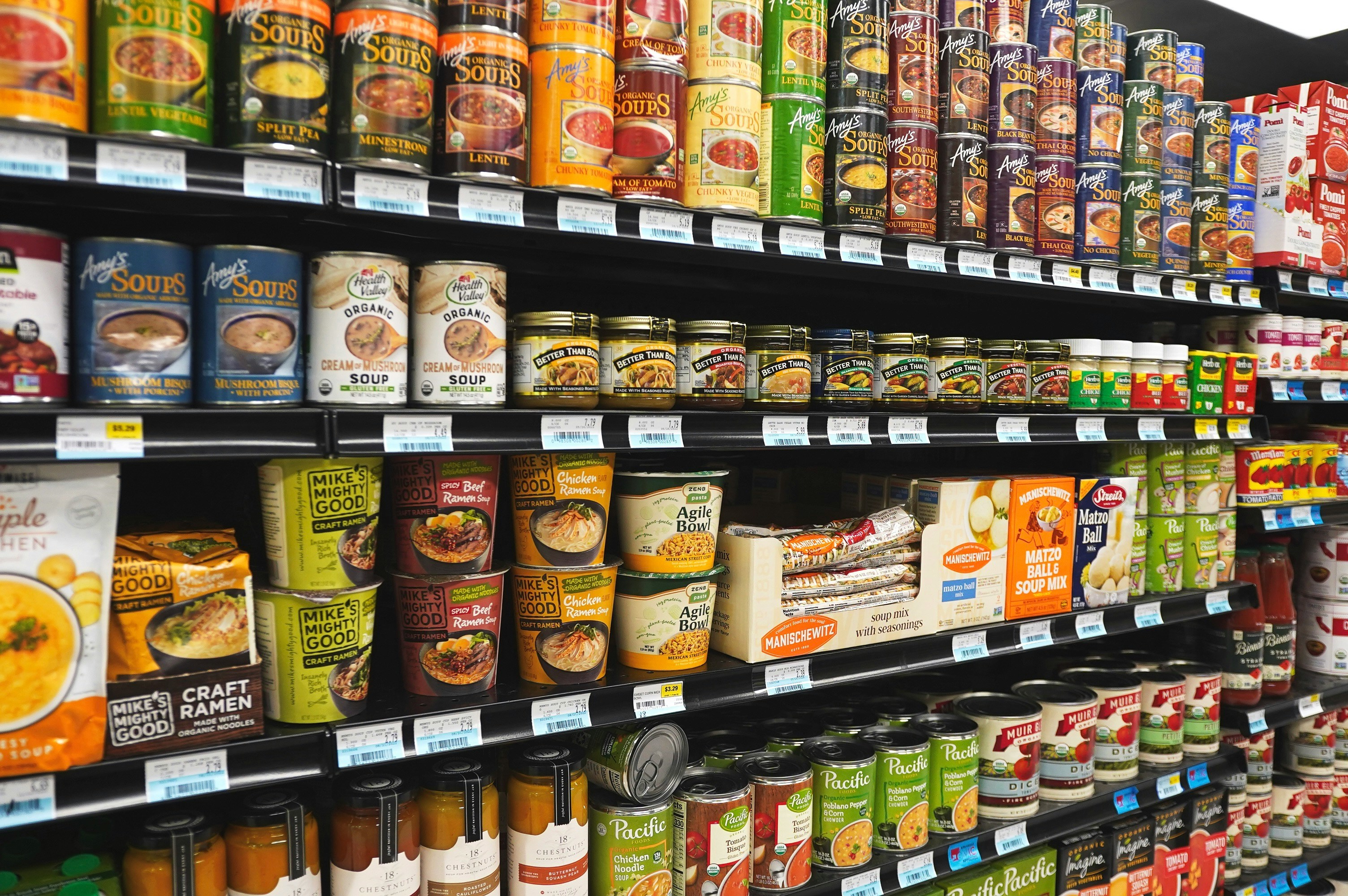
What a Shelf Label Holder Actually Is
The 4 Ways a Shelf Label Holder Fails
What you see in store
What is really wrong
What to settle before ordering
Cards sitting crooked or hanging out of the channel Card height below the channel height, or a slot wider than the card stock Card height and channel width, checked against the card your team prints Strip lifting at both ends Dust, oil film or a cold surface at the moment of application Mounting method, with surface preparation written into the installation step A clear strip turning yellow or hazy Plasticiser migration and UV exposure in the compound Material grade, and whether the bay faces direct daylight Cracks at the fixing points in a cold aisle PVC losing flexibility at low temperature A material choice for chilled and frozen zones, not the standard grade Label Height: The Number Buyers Forget to Specify
Label height
What normally goes on the card
Where it is the right choice
20 / 23 mm Unit price and product name only Dense aisles where every millimetre of sight line counts 26 / 27 / 28 / 30 mm Price, unit price and a short promotional word Standard grocery and convenience shelves 35 / 39 / 40 mm Price, unit price, barcode and country of origin The most common supermarket specification 45 / 50 / 52 mm Full legal label, sometimes with a second barcode Fresh food counters and pharmacy shelves 60 / 70 / 75 / 76 mm Shelf talker or category header above the price Promotional bays and end caps 110 mm A full shelf card with product information Feature displays and seasonal areas Customized Whatever your existing label template already prints Chain roll-outs with a fixed label template Edge Slot or Adhesive: Matching the Mounting Face
Material: Why PVC Is the Default, and When It Is Not Enough
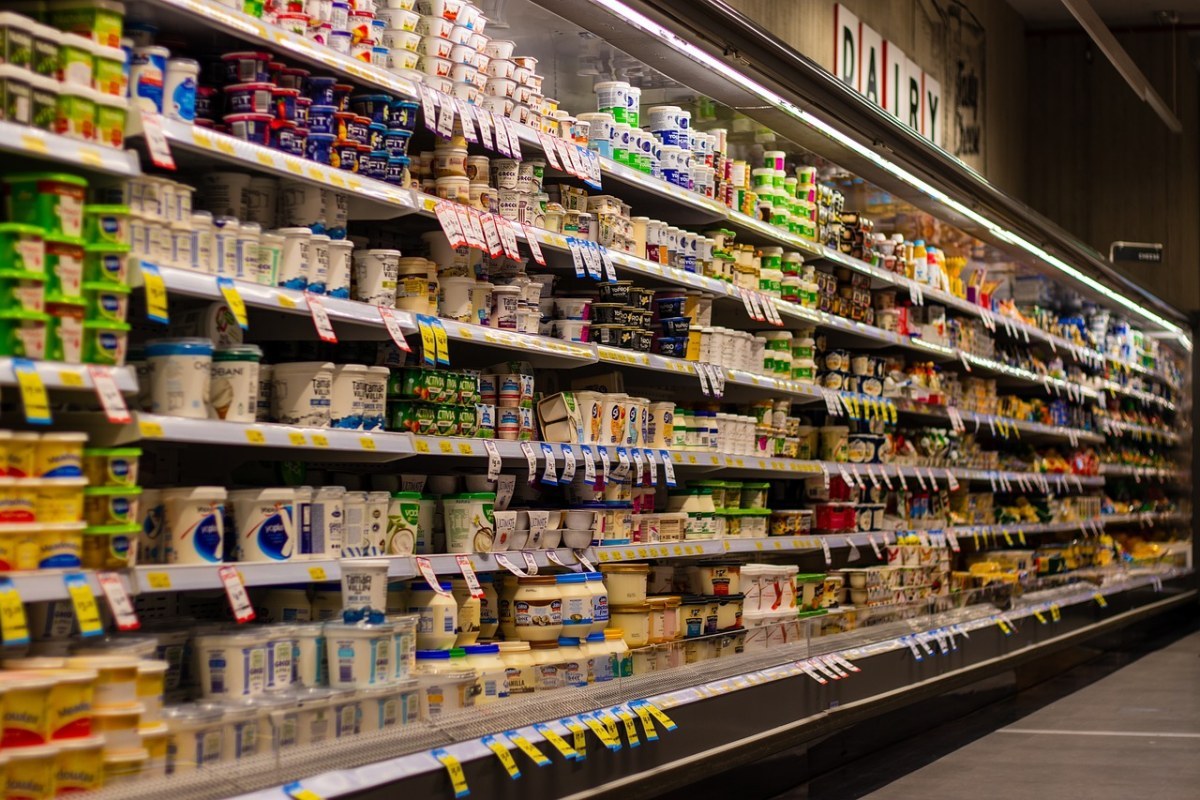
Material
What it is good at
Where it gives up
Best fit
PVC Clear, flexible, and available in the widest range of profiles and label heights Loses clarity over time and stiffens in cold zones Standard grocery, convenience and pharmacy shelves PET Better clarity retention and higher stiffness than PVC Less forgiving where the profile has to flex over an edge Bays facing daylight, and clean, dry environments PC High impact strength and good behaviour at low temperature Highest material cost of the three Chilled and frozen aisles, and high-traffic front-of-store bays Does a Shelf Label Holder Affect Load Bearing or Facing Count?
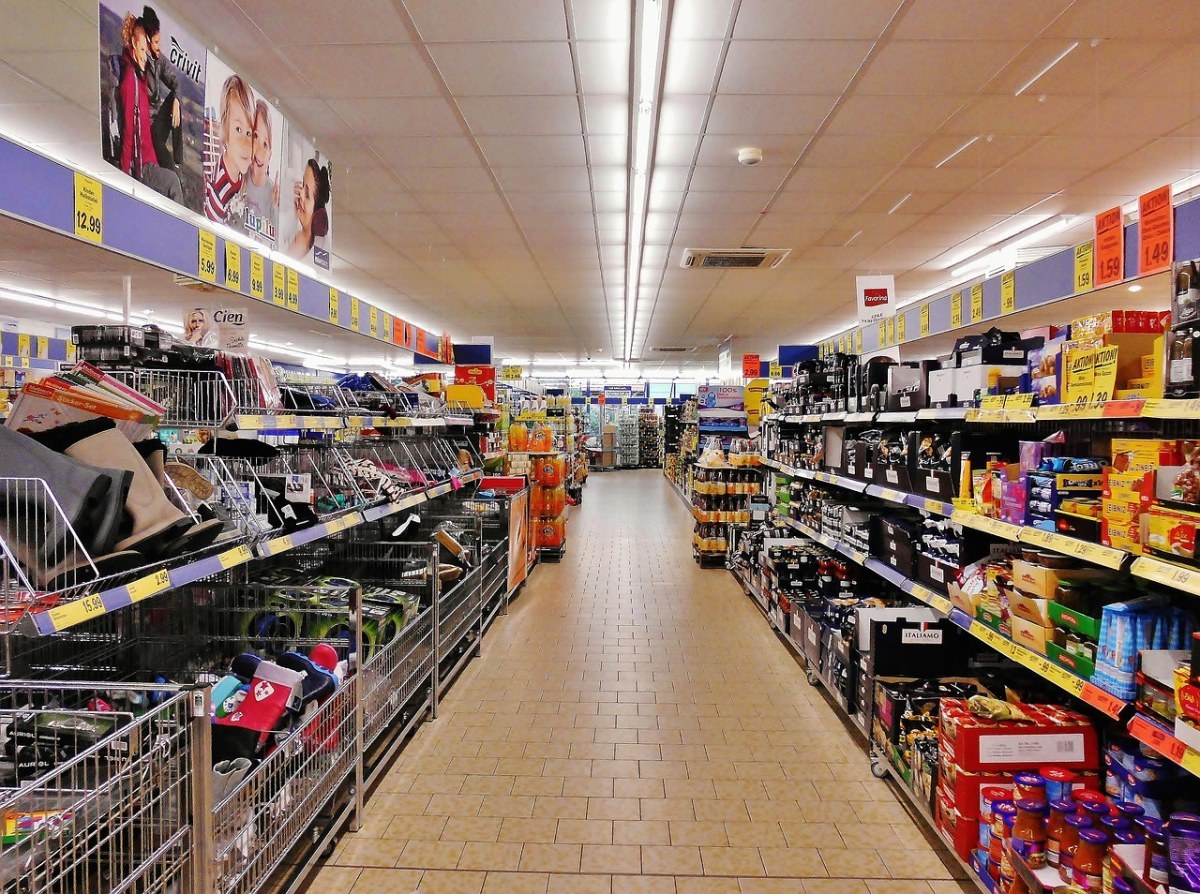
How to Specify It, and Trial One Bay First
Get a Shelf Label Holder Sample and a Quotation
Frequently Asked Questions
Can the same strip be reused when prices change?
Will it fit my existing shelf edge?
Can we print our own price cards?
Do you supply custom colours and lengths?
What are the minimum order and lead times?
Specify Your Shelf Label Holder in Six Lines