Data-Driven Design: New Mainstream in Retail Displays
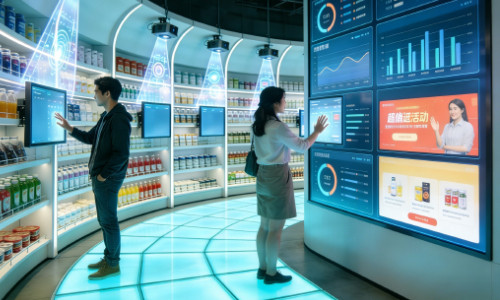
Recently, the global retail industry has set off an upsurge of data-driven design. Artificial intelligence and big data technologies are deeply penetrating the field of display props, bringing a new path of precise operation for retailers. This trend has become a key grasp to improve the operational efficiency of physical stores and attracted widespread attention in the industry.
According to industry observations, global retailers are accelerating the integration of artificial intelligence algorithms and big data analysis tools into the design and application of display props. By collecting and analyzing core information such as real-time store passenger flow data, consumer dwell time, and hot spot distribution in display areas, retailers can accurately optimize the placement position of display props, the way of information transmission, and even refine to the display angle of products. This data-supported design strategy has completely changed the traditional display mode that relied on empirical judgment in the past, realizing the transformation from "relying on feeling" to "relying on data".
Relevant industry data shows that after adopting data-driven design strategies, the average conversion rate of retail stores can be increased by 37%, and the cart addition rate can also achieve a growth of 28%. Taking the fast-moving consumer goods (FMCG) retail scenario as an example, by analyzing shelf heat map data, retailers can accurately adjust the height of promotional display props to match the visual focus of target consumer groups, thereby improving product attention and trial purchase intention. This refined display optimization method is especially suitable for categories that require high-frequency promotions such as snacks, beverages, and beauty products, helping brands seize advantages in terminal competition.
Industry insiders pointed out that the popularization of data-driven design not only improves the practical value of display props, but also promotes the digital transformation process of the retail industry. With the continuous maturity of technology, display props will further link deeply with real-time data systems in the future, realizing dynamic adjustment and intelligent optimization, which will bring more precise shopping guidance for consumers and provide stronger support for retailers to reduce costs and increase efficiency.
Source: China Daily, "Secret of Store Page Operation: 700% Growth in Traffic and 50% Growth in Conversion Rate"