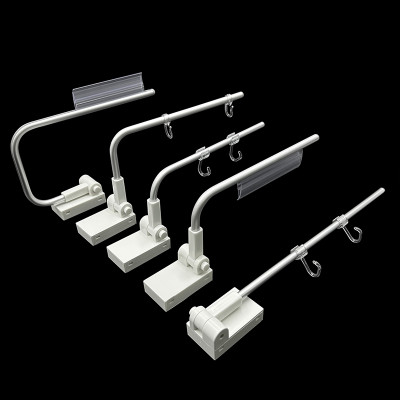
Shelf Pusher Systems: The Ultimate Guide for Retailers in 2026
In today's competitive retail landscape, shelf presentation directly impacts sales performance. Research from the Center for Advanced Retail & Technology reveals that products hidden at the back of shelves can cost retailers up to 15% in lost revenue — not from inventory shortages, but from simple visibility problems. A shelf pusher system addresses this challenge head-on, automatically keeping products front-faced and accessible at all times.
At VIGO DISPLAY, we have spent years engineering shelf management solutions that combine durability, flexibility, and measurable ROI. This guide draws on our manufacturing expertise and real-world implementation data to give you a complete understanding of shelf pusher systems in 2026 — from how they work to how they pay for themselves.
What Is a Shelf Pusher System?
A shelf pusher system is a mechanical merchandising solution that automatically advances products to the front edge of a retail shelf as items are removed by shoppers. The system operates on a simple spring-loaded principle: a coiled spring housed within a track applies constant forward pressure, pushing the remaining products toward the shelf edge every time a customer picks one up.
Each shelf pusher unit consists of four key components working together:
-
Pusher Track (Base)
The foundation rail that mounts onto the shelf surface, guiding products in a straight line from back to front. Tracks typically feature breakaway segments for adjustable depth — simply snap off the unused portion to match your shelf depth precisely. -
Spring Mechanism
The core driving force behind every pusher. Variable force springs (rated from 2N to 15N) ensure the correct tension for different product weights. Lighter products like cosmetics use low-tension springs, while heavy beverage bottles require stronger springs for smooth movement. -
Pusher Paddle (Plate)
The vertical plate making direct contact with products. It slides along the track as items are removed, maintaining consistent contact with the last item in the row. High-quality paddles are injection-molded from durable ABS or PET plastic for long service life. -
Shelf Divider
Vertical panels that create individual product lanes, keeping different SKUs separated and preventing items from shifting sideways. Adjustable dividers allow retailers to quickly modify lane widths when product assortments change.
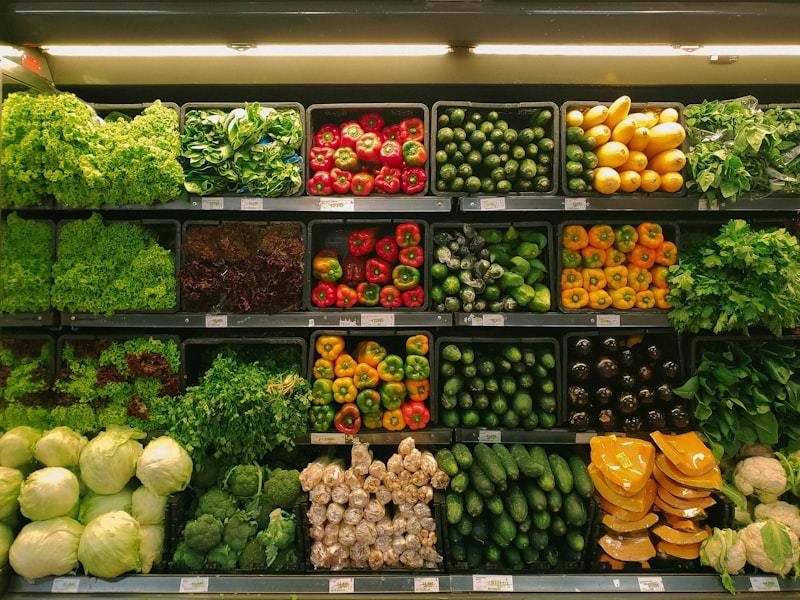
A well-organized supermarket shelf demonstrates the visual impact of consistent product facing — exactly what shelf pushers deliver automatically.
How Shelf Pusher Systems Drive Measurable Sales Growth
The business case for shelf pushers is supported by concrete data, not just theory. Multiple independent studies have documented significant performance improvements across various retail categories.
CART study comparing stores with and without pusher systems showed a 17.6% year-over-year sales lift in the frozen pizza category alone.
Retailers report cutting shelf-facing labor by 30-50% after installation, freeing staff for higher-value tasks like customer service.
The retail industry loses billions annually to perceived stockouts — products present in backroom but invisible to shoppers.
Properly implemented pusher systems consistently deliver 18-22% sales increases across various retail categories.
Core Benefits That Deliver Real ROI
Beyond the headline sales numbers, shelf pushers create value across multiple operational dimensions. At VIGO DISPLAY, we help our clients measure ROI across all four of these areas.
1. Consistent Product Visibility and Impulse Sales
Products that sit at the front of a shelf enjoy significantly higher purchase rates than those pushed to the back. This is not merely about tidiness — it is about the psychology of consumer behavior. When every item is front-faced and easy to grab, shoppers spend less time searching and more time buying. Impulse purchases increase because products are always within immediate reach and sight.
2. Dramatic Labor Cost Reduction
Manual shelf facing is one of retail's most repetitive and time-consuming daily tasks. In a typical supermarket, staff may spend 2-4 hours per day per aisle on straightening and front-facing products. A well-designed shelf pusher system from VIGO DISPLAY maintains front-of-shelf positioning automatically — 24 hours a day, 365 days a year. For a store with 10 full-time employees each spending one hour daily on manual facing, this translates to 1,500-2,500 hours of labor recaptured annually.
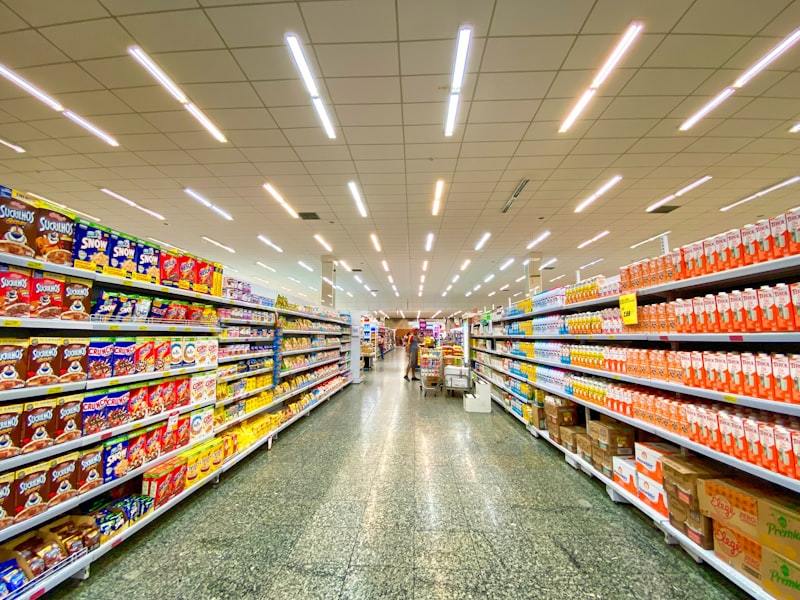
With shelf pushers handling automatic front-facing, staff can redirect their time from repetitive shelf straightening to customer service and inventory management.
3. Reduced Product Damage and Shrinkage
When products are clearly separated by dividers and consistently positioned, the risk of damage from falling, crushing, or mishandling drops significantly. Organized shelves also support proper FIFO (First In, First Out) inventory rotation, reducing expiry-related waste — a critical concern in food, beverage, and pharmaceutical retailing.
4. Enhanced Brand Image and Customer Experience
Customers form impressions of a store within seconds of entering. Well-organized shelves signal professionalism, quality, and attention to detail. Conversely, disorderly shelves create doubt about product freshness and store management. Shelf pushers help every retailer — from independent pharmacies to national supermarket chains — present a consistently premium shopping environment.
Industry Applications: Where Shelf Pushers Deliver the Greatest Impact
Different retail environments have different shelf management challenges. Here is how shelf pushers perform across major retail sectors.
| Retail Sector | Key Challenge | Recommended Configuration | Typical ROI Period |
|---|---|---|---|
| Supermarkets & Grocery | High SKU count, constant customer traffic, fast-moving goods | Medium-force spring pushers with adjustable dividers for mixed categories; gravity rollers for heavy beverages | 6-9 months |
| Pharmacies & Drugstores | Small, similar-sized packages; strict planogram compliance needed | Light-to-medium force pushers with clear front stoppers; narrow dividers for precise SKU separation | 4-7 months |
| Convenience Stores | Limited shelf space, high turnover, narrow aisles | Compact-width pusher trays; beverage glide systems for cooler doors; cigarette pusher trays for tobacco displays | 5-8 months |
| Cosmetics & Beauty | Premium brand presentation, small fragile items, frequent assortment changes | Light-tension transparent pushers; slow-down dampers for fragile packaging; custom color options for brand alignment | 3-6 months |
| Electronics & Accessories | Varied product sizes, high theft risk, peg-hook displays | Medium-to-heavy force pushers; anti-theft pusher variants; pegboard-compatible mounting systems | 8-12 months |
Data sourced from VIGO DISPLAY client implementations across global retail markets, 2024-2026.
Spring-Loaded vs. Gravity Feed: Choosing the Right Mechanism
Not all shelf management systems work the same way. The two dominant technologies — spring-loaded pushers and gravity feed shelves — each excel in different scenarios.
Spring-Loaded Pusher System
- Uses spring tension to push products forward
- Works on flat, standard retail shelves
- Compatible with a wide range of product shapes and sizes
- Excellent for cosmetics, snacks, OTC medicines, boxed goods
- Adjustable track width for flexible merchandising
- Ideal for maximizing SKU density
Gravity Feed Shelf System
- Products slide forward naturally on inclined roller tracks
- Requires angled shelves or cooler tilt frames
- Best for uniform, heavier products
- Excellent for beverage coolers, dairy, canned goods
- Fewer moving parts, lower maintenance
- Perfect for cold chain and high-turnover environments
Many retailers achieve the best results by combining both systems — spring pushers for center-store packaged goods and gravity rollers for refrigerated beverages and heavy items. VIGO DISPLAY offers both technologies with full customization options.
How to Choose the Right Shelf Pusher System
Selecting the optimal shelf pusher configuration requires evaluating four critical factors. Our team at VIGO DISPLAY guides every client through this assessment as part of our complimentary consultation process.
Step 1: Assess Your Product Portfolio
Start by cataloging the products you plan to display. Measure package width, height, depth, and weight. Heavier items (over 500g) typically need 10N-15N spring tension. Lightweight items like lip balms or candy bars need 2N-4N. Products with fragile packaging may benefit from slow-down damper mechanisms that prevent abrupt forward movement.
Step 2: Measure Your Shelf Infrastructure
Document your existing shelf dimensions — depth, width, material type, and front-edge profile. Metal gondola shelves, wooden shelves, and refrigerated shelves each require different mounting approaches. VIGO DISPLAY pusher systems are engineered for universal compatibility with standard retail shelving, but precise measurements ensure a perfect fit.
Step 3: Consider Your Operational Workflow
How does your team currently handle restocking? From-the-front loading suits spring pushers well, while back-loading may favor gravity rollers. Think about seasonal planogram changes — adjustable-width pushers reduce the cost and time of reconfiguration compared to fixed-width alternatives.
Step 4: Calculate Your Expected ROI
Use our ROI framework: multiply your current daily staff hours spent on manual facing by your hourly labor cost, then factor in projected sales uplift (typically 10-20% for affected SKUs). Most VIGO DISPLAY clients achieve full payback within 4-12 months, depending on store size and category mix.
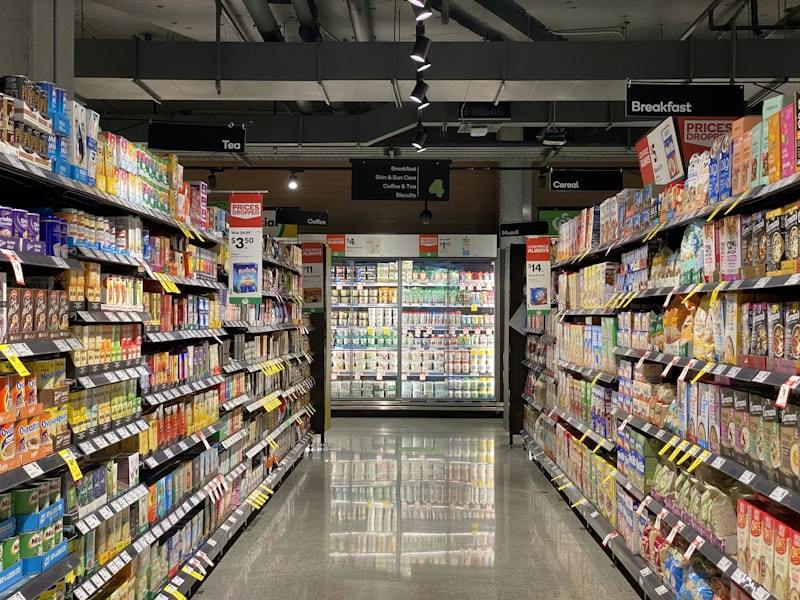
Modern retail environments demand consistent shelf presentation — an automated pusher system ensures your displays always look their best.
Installation and Maintenance Best Practices
A quality shelf pusher system should be straightforward to install and maintain. Here is what to expect with a VIGO DISPLAY implementation.
Clean the shelf surface thoroughly. For adhesive-mount front rails, ensure the surface is dry and free of residue. Measure and mark rail positions before installation.
Attach the front mounting rail along the shelf edge using the provided adhesive backing or mechanical clips. Install the rear rail at the back of the shelf for systems that require dual-rail support.
Clip each pusher assembly onto the front rail. Adjust track width by sliding dividers to match your product dimensions. Snap off excess track length at the pre-scored breakaway points to match shelf depth.
Load products into each lane, ensuring the pusher paddle contacts the last item. Remove the front item to verify smooth forward movement. Adjust spring tension if products move too quickly or too slowly.
Clean pusher tracks quarterly with a dry cloth to prevent dust buildup. Inspect spring tension annually — VIGO DISPLAY springs are rated for 3+ years of continuous use. Replace any damaged dividers or paddles as needed from our modular component inventory.
Materials and Durability: What to Look For
The longevity of your shelf pusher investment depends heavily on material quality. Here is how the three most common plastics compare.
| Material | Strength | Clarity | Best Application | Cold Chain Compatible |
|---|---|---|---|---|
| ABS (Acrylonitrile Butadiene Styrene) | Very high | Opaque | Heavy products, high-traffic areas, general retail | |
| PET (Polyethylene Terephthalate) | High | Clear | Coolers, cosmetics, premium displays requiring visibility | |
| PVC (Polyvinyl Chloride) | Moderate | Slight tint | Lightweight products, low-traffic zones, budget applications | Limited |
At VIGO DISPLAY, we primarily use injection-molded ABS and PET for our core product lines, with Japan-grade steel springs rated for 3+ years of consistent performance. All materials meet ROHS and CE standards, with food-grade options available for fresh food and refrigerated display applications.
2026 Shelf Management Trends: Automation Meets Intelligence
The shelf management landscape is evolving rapidly. Here are the key trends shaping the industry in 2026 and beyond.

The integration of automated shelving with smart retail technologies represents the next frontier in store operations.
ESL Integration
Electronic Shelf Labels are being integrated directly into pusher track systems, enabling dynamic pricing updates and real-time inventory tracking without manual label changes.
AI-Powered Shelf Audits
Computer vision systems now scan shelf facings and detect planogram deviations automatically. Consistent front-facing from pushers dramatically improves AI audit accuracy.
Sustainable Materials
European retailers increasingly require recyclable or bio-based plastics. VIGO DISPLAY is developing next-generation pushers using post-consumer recycled PET and mono-material designs for easier end-of-life recycling.
Mobile-First Store Operations
Staff now use mobile devices to scan shelf conditions and receive real-time restocking alerts. Pusher systems with integrated sensors are beginning to automate this entirely.
Frequently Asked Questions
How long do shelf pusher springs last?
VIGO DISPLAY shelf pusher springs are manufactured from Japan-grade steel and rated for a minimum of 3 years of continuous use in standard retail environments. In high-turnover applications, we recommend annual spring tension checks as part of routine maintenance.
Can shelf pushers be used in refrigerated displays?
Yes. Our PET and ABS material options are cold-chain rated and perform reliably in temperatures as low as -2C. For freezer applications (below -18C), we recommend gravity roller alternatives, as extreme cold can affect spring performance over extended periods.
What is the minimum order quantity for custom pushers?
VIGO DISPLAY accommodates both small and large orders. Our standard product lines have a minimum order quantity of 50 units. For fully custom OEM designs, MOQs start at 1,000 units, with prototyping available within 3-5 working days.
Can I customize the color of my shelf pushers?
Absolutely. We offer Pantone color matching for all pusher components — tracks, paddles, and dividers. Brand-color customization is available for orders of 500 units or more and is included in our OEM service package.
How do I calculate how many pushers I need?
Measure your total shelf width in inches or centimeters, divide by the average product width plus divider gap, and multiply by the number of shelves. Our sales engineering team provides complimentary planogram-based quantity calculations as part of every quotation — just send us your shelf dimensions and product specifications.
Why Choose VIGO DISPLAY for Your Shelf Pusher Needs
With over 15 years of manufacturing experience, VIGO DISPLAY has established itself as a trusted partner for retailers and distributors worldwide. Our shelf pusher systems are designed and produced in our own ISO 9001-certified facility, with in-house mold making, plastic injection, spring manufacturing, and assembly lines — giving us complete control over quality, cost, and lead time.
We serve clients across more than 30 countries, from national supermarket chains to independent pharmacies. Every project begins with a complimentary design consultation. Our engineers review your shelf specs, product portfolio, and operational goals, then deliver a tailored proposal — including 3D renderings, quantity calculations, and a detailed ROI projection — typically within 48 hours.
Ready to transform your shelf presentation and drive measurable sales growth? Explore our shelf pusher catalog or contact our team for a free consultation and custom quote. Let VIGO DISPLAY help you put every product front and center — automatically, 24/7.