Price Clips vs. Data Strips vs. Acrylic Holders: Which One Actually Stops Tags Falling Off?
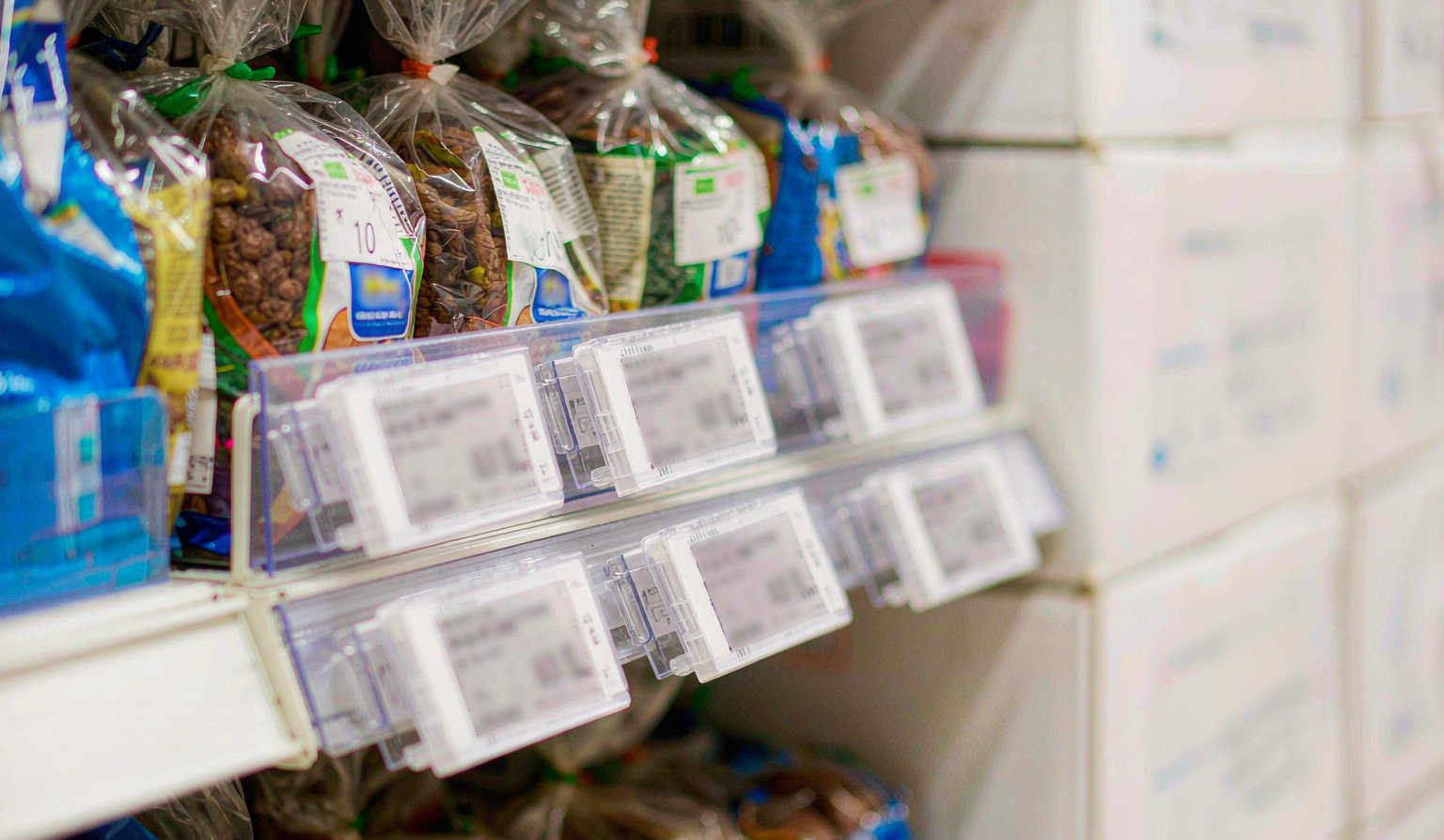
When a store reports that price tags keep falling off, the first question we ask is not which holder is cheapest. It is where, on that shelf, the tag is actually leaving. In the complaints we work through, the same three situations keep coming up: a tag that slides out of an adhesive pocket in a chilled cabinet, a clip that held fine for months and then started letting go, and a tag that simply gets brushed off by hands during picking and restocking.
Those three situations do not have the same answer, and that is the whole problem with the question 'which holder is best'. A price clip, a data strip and an acrylic holder are not three grades of the same product. They are three different ways of holding a tag onto a shelf, and each one fails in its own way.
This guide compares them on the criteria that actually decide the purchase: how the tag is held, how fast it is to change, what shelf edge thickness it suits, how it behaves in cold and damp conditions, whether it takes up selling space, and what it does to repeat orders. Everything quoted here comes from our own product data and published test and case pages, with the source named at each point.
Where Price Tags Actually Fall Off
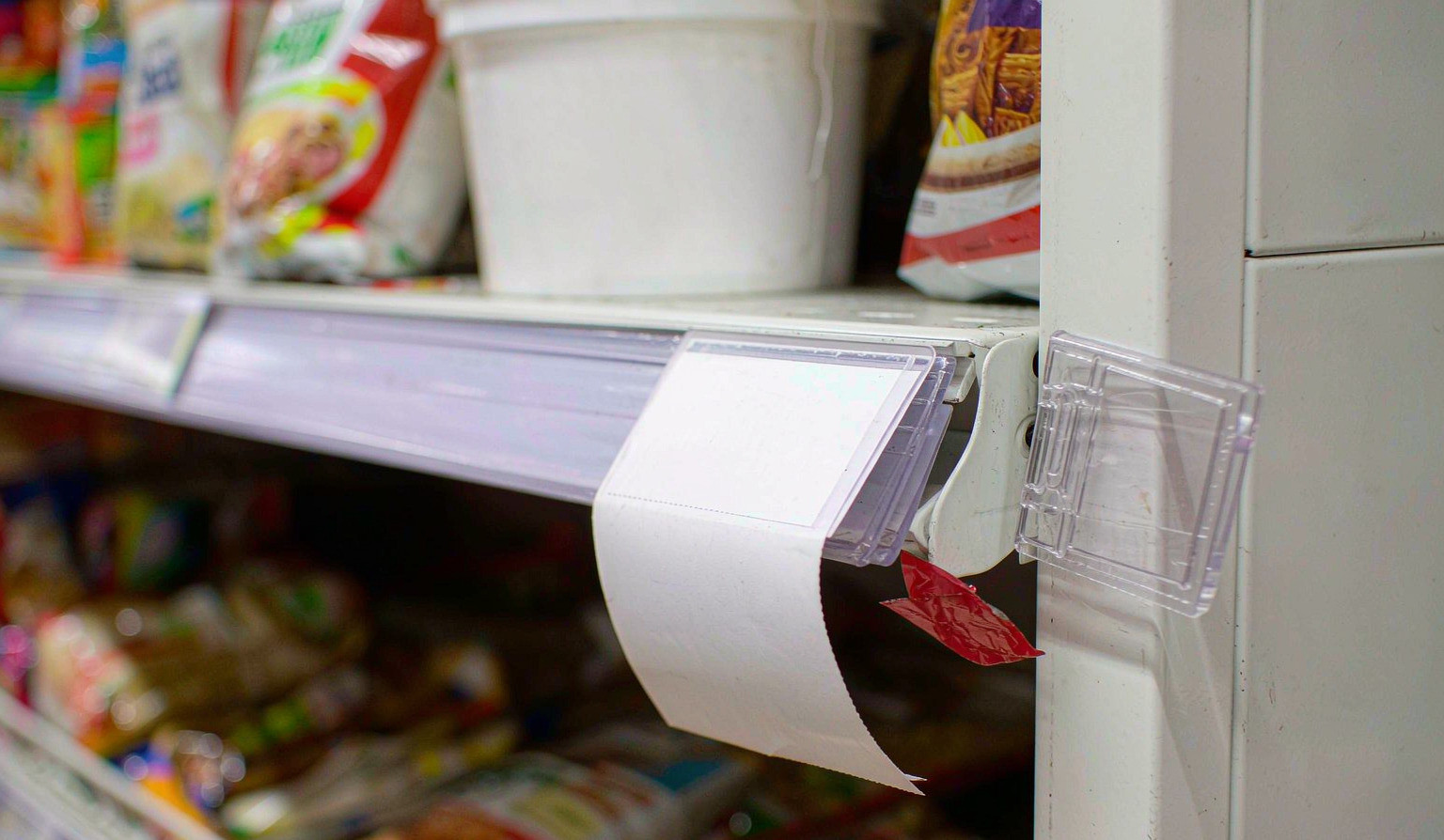
Sorting complaints by symptom is faster than sorting them by product. The three symptoms below come from store walk-throughs and from the questions buyers send us before ordering; each one points at a different fix.
- The tag slides out but the holder is still on the shelf. This is an adhesive failure. Self-adhesive pockets and strips rely on the bond between the tape and the shelf surface, and that bond weakens on cold metal, on damp surfaces and where cleaning agents are wiped along the shelf edge. It shows up first in chilled cabinets and in wet-format fresh areas, not in the middle of a dry grocery aisle.
- The holder is still gripping, but the tag is loose inside it. This is grip fatigue. Every time staff open and close a clip, or slide a card in and out of a channel, the material takes a small amount of set. Cheap PVC and PP clips lose their spring first; the teeth that made the grip positive get rounded off. It shows up as tags that stay in place until a delivery day, then fall in a group.
- The tag is on the floor near a bay that is picked constantly. This is mechanical knock-off, and it is the most common one in practice. Shoppers pulling the front item, staff restocking at speed, trolley corners and even price guns all pass within a few millimetres of the tag. A tag that protrudes into the picking path will be knocked; a tag that sits flush or behind a lip will not.
Only the middle failure mode is really about the strength of the holder. This is why 'buy the stronger clip' often fails - it only addresses one of the three.
If you want a longer version of this diagnosis with the operational and cost consequences spelled out, our earlier guide on stopping price tags from falling off in small stores walks through the shelf-edge decisions in more detail; this article takes the three methods apart and sizes them.
Match the failure mode to the product
Clips, data strips and acrylic holders sit in three separate catalogues so you can compare families rather than single parts. Start from the symptom you recognise, then check the sizing table below.
Price Tag ClipsShelf Labels & Data StripsThree Fixing Methods, Side by Side
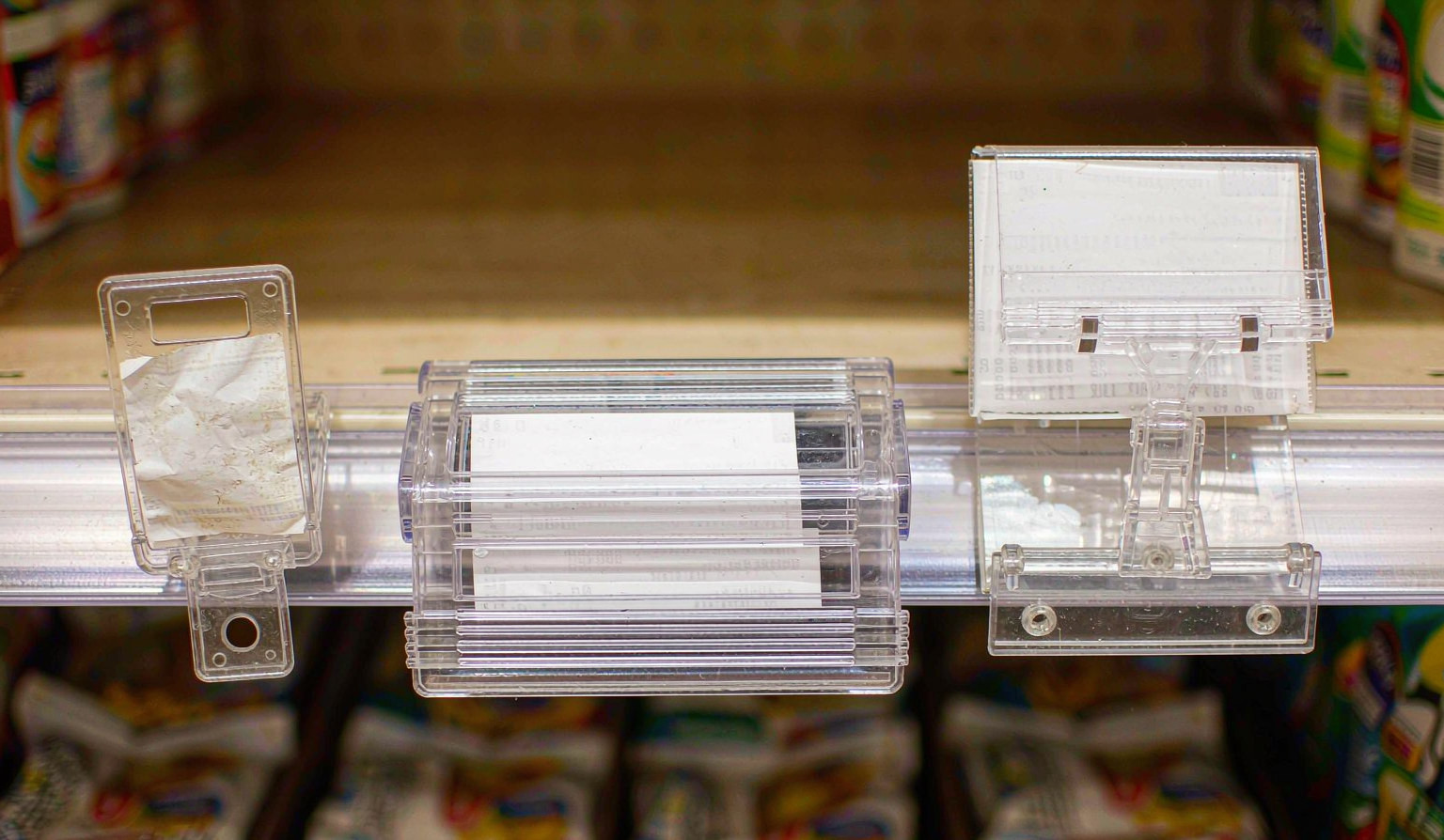
Once you know the failure mode, the comparison becomes straightforward. The table below uses the criteria we see in real specification sheets: how the holder attaches, how the tag is secured, how long a price change takes, what edge thickness it suits, whether it can be reused, how it handles a chilled or damp zone, and whether it consumes selling space.
| Criterion | Price clip | Data strip | Acrylic holder |
|---|---|---|---|
| How it attaches | Clips onto the board edge; some versions are self-adhesive or magnetic | Snaps over the shelf edge and runs continuously along it | Stands on the shelf top, or sits on a counter surface |
| How the tag is held | Spring or serrated teeth grip the card | Card slides into a closed channel | Card sits behind a rigid front lip |
| Price change speed | Fast - open, swap, close; good for frequent promo changes | Very fast in bulk - cards can be pre-printed and slid in bay by bay | Moderate; the front lip is wiped clean but access is tighter |
| Edge thickness fit | Must match the board thickness closely | Tolerant - channel profile covers a range of edge shapes | Not edge-dependent; depends on available shelf-top depth |
| Reusable | Yes, until the spring or teeth relax | Yes, the strip itself is permanent; only cards are replaced | Yes, provided the front lip is not scratched; acrylic itself does not wear |
| Chilled and damp zones | Serrated clip plus a strong spring is the version built for this; clamping force is quoted at 2 N or above | Sealed channel protects the card from moisture and cleaning sprays | Moisture-proof acrylic with an anti-fog surface is available for this environment |
| Selling space | None - it hangs off the shelf edge | None - profile thickness is 2 mm or less | Uses shelf-top depth in front of the product |
Clamping force and profile thickness figures are our published product and FAQ values; edge-thickness tolerance is the practical range we recommend rather than a tested limit.
Read the table by column, not by row. If your price tags change weekly, the strip's bulk-change speed outweighs everything else. If your store runs magnetic or perforated fixtures and you want the tag to move with the product, the clip wins. If the tag has to face the customer at a reading angle on a counter or a promotional table, no edge-mounted product will do the job and the acrylic holder is the only sensible option.
All three on one shelf edge. The orange dots are the load path - friction at two points, a continuous channel, or a rigid lip standing in the way.
The one combination that works in most stores
In practice, stores with long straight shelving rarely choose one method for the whole store. The layout that survives contact with operations is a continuous data strip along permanent everyday-pricing positions, magnetic or clip-on holders where the merchandise or the fixture changes, and acrylic holders only on counters, end-caps and promotional tables where the tag has to be read head-on.
Matching Holder Size to Shelf Edge Thickness
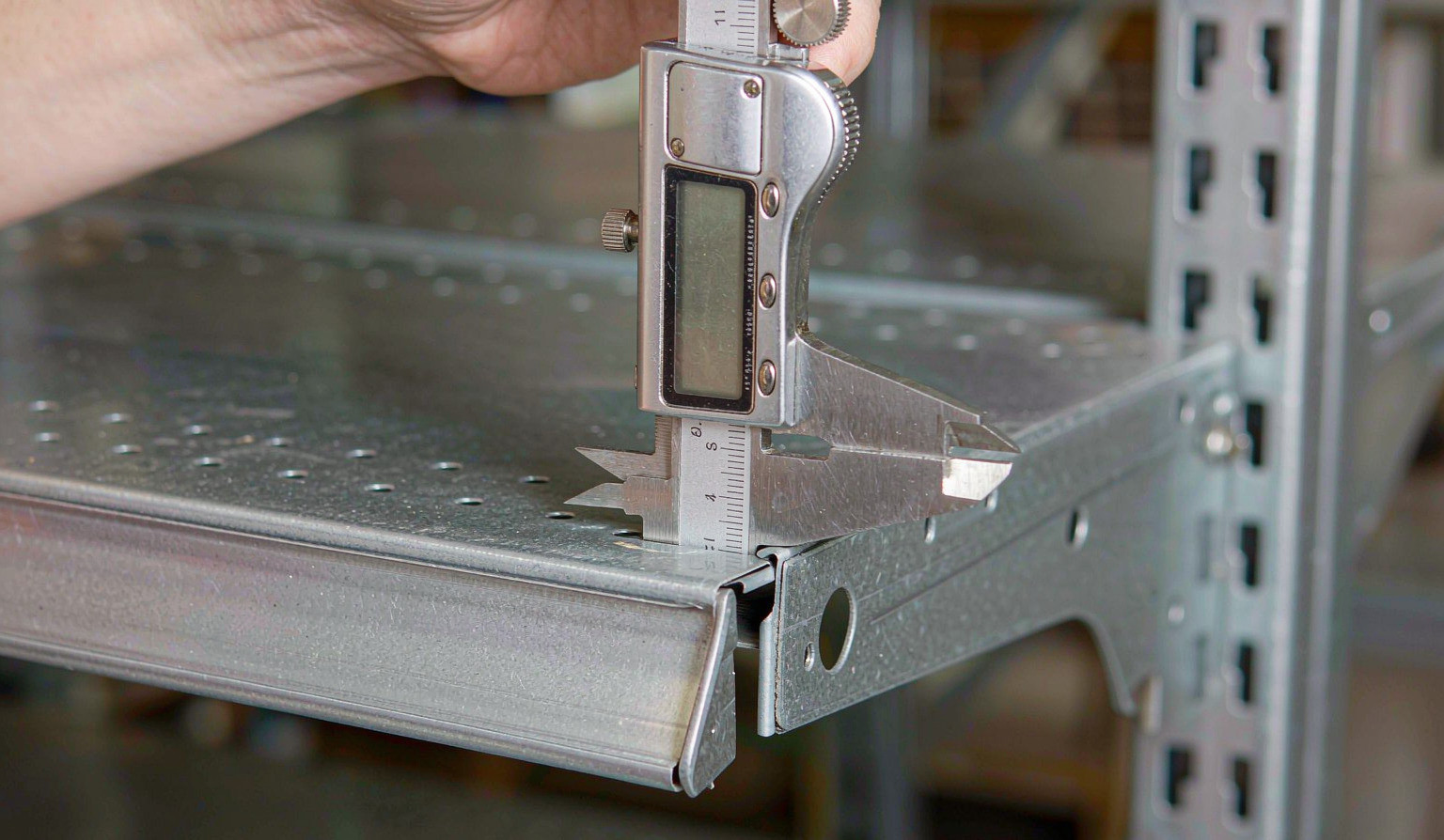
This is the step that decides whether the holder stays put, and it is the step most orders skip. Shelf edge thickness varies by fixture age, by manufacturer and by whether the edge has been painted or powder coated. A holder that is specified to the catalogue number rather than to the measured edge will either rattle or fight its way on.
| Measured edge thickness | What works | Watch for |
|---|---|---|
| 0.8 - 1.2 mm (thin sheet-metal lips) | Self-adhesive label holder, or a data strip profile with a wide internal channel | Self-adhesive bond is temperature-sensitive; a metal edge below about 5 °C needs an acrylic-based adhesive |
| 1.2 - 2.0 mm (the most common gondola lip) | Clip-on holders and standard data strips both fit comfortably; choose by how often prices change | Two different profiles from the same supplier may not share the same jaw opening - confirm the number |
| 2.0 - 3.0 mm (thicker or double-skinned edges) | Clip-on holders specified for this range, or over-edge strips | Standard 1.2-2.0 mm jaws will need forcing, which lifts the strip off the shelf face at one end |
| 3.0 mm and above, or a shaped/rolled edge | Magnetic holders on ferrous fixtures, or shelf-top acrylic holders | A rolled edge has no flat contact face at all - clips and strips have nothing to grip |
Thickness bands are the practical ranges we quote in enquiries. The mechanism to check is always the same: does the jaw fully close, or does it need forcing?
Too loose and the holder tilts forward under load; too tight and fitting it damages the shelf coating before it ever holds a tag.
Our shelf-edge data strips use an ultra-thin lightweight profile, 2 mm or less, fixed to the laminate edge through the card channel. The published figure is that this fits over 95% of standard supermarket shelves, and it is the reason a strip does not read as a bulky addition to the fixture.
How to measure in 30 seconds per shelf type
Take a vernier caliper or a cheap feeler gauge and measure at three points along the front edge of one shelf, then repeat on the oldest and newest fixture in the store. Do not measure a shelf in the middle of the bay only - front edges take the wear. Note the number in millimetres, and note whether the edge is flat or rolled, because a rolled edge rules out every edge-mounted holder regardless of thickness.
Material: PVC vs. PET vs. PC
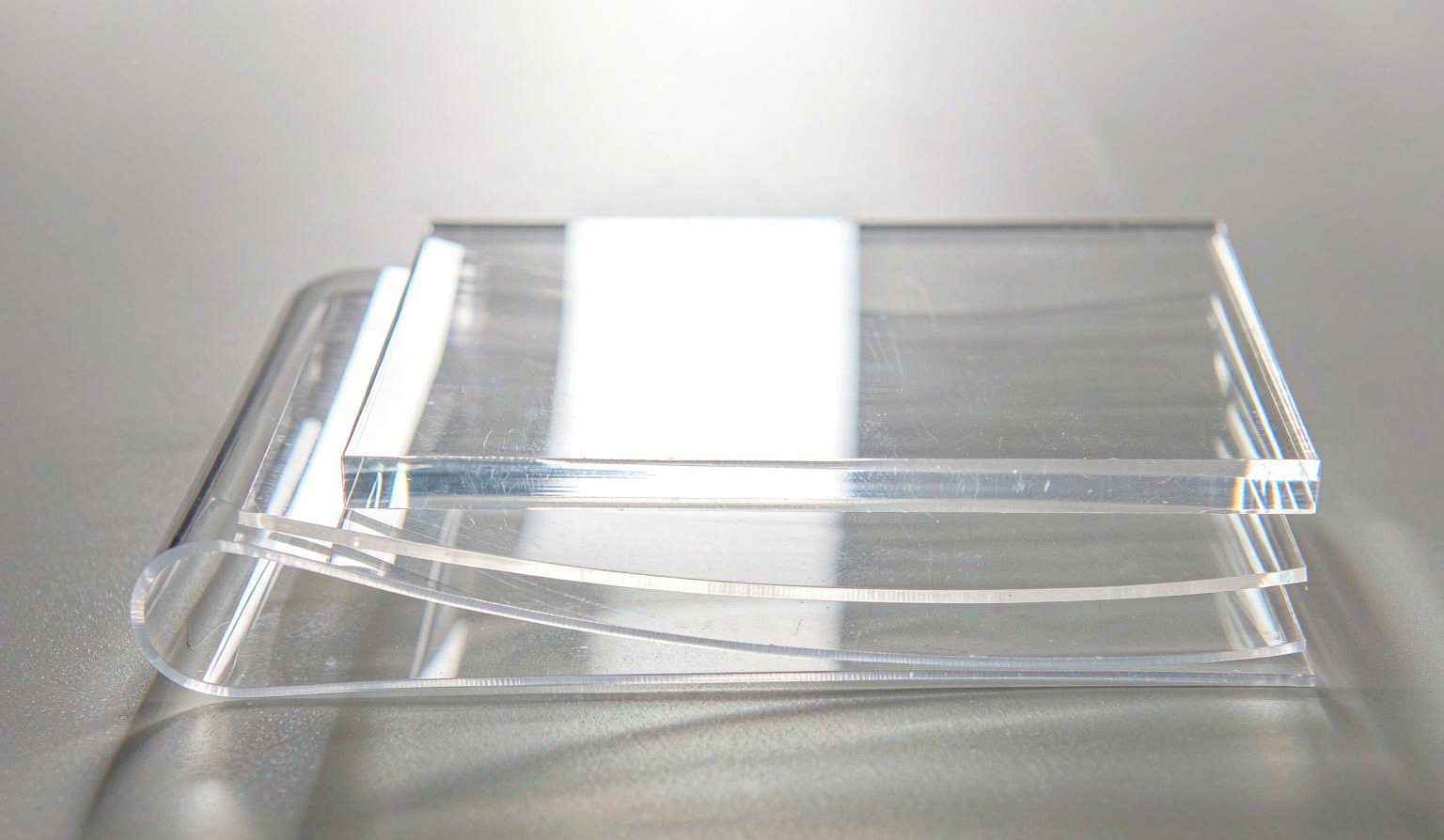
Material choice is usually the last decision on the enquiry form and the first one to cause a complaint two years later. The three families below cover almost every shelf labelling product on the market, including our own range.
| PVC | PET | PC / Acrylic | |
|---|---|---|---|
| Clarity | Good; clarity can drop slightly over time | Very good and stable | Best clarity; acrylic is the clearest of the three |
| Yellowing | Weakest of the three under UV and heat; visible in direct sun or under strong display lighting | Good; PET is the usual upgrade when clarity has to hold | Good; acrylic keeps clarity far longer than PVC |
| Low-temperature toughness | Becomes brittle below roughly 5 °C - a common failure cause in chilled cabinets | Better than PVC at low temperature | The best low-temperature toughness of the three |
| Impact resistance | Moderate; cracks at impact points | Good | Highest; PC is the material for high-contact bays |
| Relative cost | Lowest | Middle | Highest |
| Where it makes sense | Dry, ambient, cost-sensitive aisles | Damp areas and where clarity matters; commonly used for waterproof pockets | Chilled zones, high-touch bays and front-of-store counters |
Comparisons are for the material families as commonly used in shelf labelling; exact performance depends on the grade, the wall thickness and the UV package. Cost order is relative, not a quotation.
The honest limitation to plan around is PVC in the cold. It is the cheapest of the three and it is perfectly adequate for a dry ambient aisle, but below roughly 5 °C it loses toughness, and a flexible clip that has gone brittle will crack at exactly the point where it holds the tag. If your chilled cabinet is where tags are disappearing, material is a more likely cause than the clip design.
For damp and hygiene-sensitive environments, moisture-proof acrylic with an anti-fog surface is the material we specify; the published figure is that it passes a 72-hour high-temperature and high-humidity test without deformation, and the anti-fog treatment keeps the print readable where sprays are used. On compliance, our display materials are stated to comply with EU REACH and RoHS, and recyclable plastics including PET and PP are used across the range, with certification reports available on request.
Two cases worth saying out loud. Standard PVC holders are not the right specification for a deep-freeze or a below-zero chilled cabinet; use acrylic or PC there. And no edge-mounted clip or strip is suitable for a rolled or shaped shelf edge, because there is no flat contact face for it to grip - a shelf-top acrylic holder or a magnetic holder is the correct answer on those fixtures.
Does a Clip or Strip Affect Shelf Load Bearing?
This is one of the most common questions we get from chain buyers, and the short answer is no - not when the holder is specified correctly. A shelf-edge data strip is a thin lightweight profile fixed to the edge of the laminate, and it does not occupy the product placement area or change how the load sits on the shelf.
The published specification we work to is a profile of 2 mm or less, mounted on the laminate edge through the card channel, which is why the answer to 'will it affect placement' is also no. Our own FAQ page on this exact question states that the design fits over 95% of standard supermarket shelves without affecting load bearing or placement.
There are three situations where the load question does need a second look, and none of them are caused by the price holder itself:
- When you add gravity feed, spring pushers or roller tracks to the same shelf. These systems pull the whole product load forward and change the load path on the shelf and its brackets, which is a separate calculation from the label holder.
- When the holder is used to carry something heavier than a price card - a hanging promotional sign, for example. Then the weight is the sign, not the holder, and the sign should be hung from a dedicated fitting rather than from a label channel.
- When the shelf edge itself is already damaged, bowed or missing its support bracket. A flat strip applied to a bent edge will simply follow the bend, and the tag will look crooked for reasons that have nothing to do with the holder.
The practical rule: a label holder is a display accessory, not a structural component. Keep it thin, keep it on the edge, and it stays out of the load path. If any of the first two situations above applies to your bay, review the shelf capacity at the same time as the labelling, and put one clean line in the specification that says which of the two the load figure refers to.
Run a 2-Week Trial Before Bulk
No comparison table survives contact with a specific store, which is why we recommend spending two weeks on one or two bays before committing a chain order. The trial is cheap, it produces evidence your operations team can argue with, and it separates a fixing-method problem from a quantity problem.
- Pick two bays with the two hardest conditions in the store: one chilled or damp zone, and one high-frequency promotional or impulse aisle. Do not trial in a quiet aisle, because a quiet aisle will pass any holder.
- Measure the shelf edge thickness on both bays before ordering, in millimetres, and record whether the edge is flat or rolled.
- Fit the holder and, in parallel, keep the existing method on one bay as a control. Comparing old against new in the same store is what makes the result credible internally.
- Record once a day for 14 days using the five columns below. Daily beats weekly, because a weekly check cannot tell you whether a tag survived a delivery day.
- Score at day 14 against a pass rule agreed before the trial started - not after you have seen the numbers.
The record sheet only needs five columns. The cause column is the one that turns a trial into a specification decision.
From pilot to rollout: what actually changes
The pattern we see across chain projects is consistent. Pilot bays almost always pass, and the specification still changes before rollout - usually in two places. The first is size: one edge thickness quoted for the whole chain turns out to be three thicknesses in practice, because fixture generations differ by store age. The second is the mix: the store that trialled a strip in a grocery aisle discovers it wants clips in the promotional zone, where signage changes weekly.
Our published case page for Yonghui Supermarket describes the same structure at chain scale: self-adhesive data strips and clip-on price tag holders deployed across ambient, chilled and frozen sections, with a card-insert mechanism so staff can update prices for hundreds of SKUs, and waterproof wear-resistant materials chosen for refrigerated humidity. The same page reports the operational results Yonghui measured after the pilot stores - faster price updates and fewer pricing errors - and the programme was then extended to more stores. You can read the full project in our case library.
Minimum order quantity is 100 pcs per model, samples are ready in 7 days, and mass production takes 25 days after sample approval. Those three figures are the same for catalogue items and for customised profiles with logo printing or structural changes; only the tooling cost is quoted separately.
Test it in one bay before you commit a chain order
Send us the measured edge thickness, the shelf type, the environment and how often prices change. We will come back with the two or three profiles that fit, a sample plan for a two-week trial, and the spec sheet you can forward to your buyer.
Request a Sample & QuoteSee Chain ProjectsFAQ
Can price tag holders be customised in size, colour and material?
Yes. Catalogue label heights run from 26 mm to 110 mm and custom heights are made to order; colours include clear, black, white, green and custom Pantone matching, and materials cover PVC, PP, PS, PC, metal and acrylic. Print on the holder itself - category names, store branding, a colour band - is also available on the printed profiles.
Will clear holders turn yellow, or cloud over time?
PVC is the material most likely to yellow in direct sun or under strong display lighting, which is why it is normally specified for ambient aisles rather than sun-facing windows. PET and acrylic hold clarity much longer. If a holder sits in daylight, specify PET or acrylic and state the exposure in the enquiry so the grade can be matched to it.
What is the minimum order quantity?
It is 100 pcs per model, and samples are ready in 7 days. The same 100 pcs figure applies to customised versions with logo printing or structural changes - only new tooling is quoted separately as a one-off cost.
How long does production take, and can it ship by air?
Samples take 7 days, and mass production takes 25 days after sample approval. Sea freight takes 20-40 days, air freight around 5-10 days and express 3-7 days, so a two-week store trial can be supplied by air while the bulk order travels by sea.
Which Holder Fits Your Shelf Edge?
Send the measured edge thickness, the shelf type, the environment and how often prices change. We reply with the profiles that fit, a two-week trial sample plan, and a spec sheet you can forward to your buyer. Free quote within 24 hours.
Browse Price Tag ClipsRequest a Quote