POP Display Materials Compared: Metal vs Acrylic vs Plastic vs Wood | VIGO DISPLAY
Material Selection Guide
POP Display Materials Compared: Metal vs Acrylic vs Plastic vs Wood
Metal carries the load, acrylic sells the product, plastic wins on volume cost, and wood sells freshness. Material sets a display's load rating, service life, perceived value and freight weight — which is why it should be settled before the artwork is approved, not after.
This guide compares the four core materials on durability, unit cost, weight, tooling, lead time and recyclability, then covers corrugated and hybrid builds, food-contact requirements, and how the cost curve shifts with order volume.
The Short Answer
Match the material to what the fixture must survive first, and to how the product should feel second. Those two answers eliminate most of the options immediately.
Metal — load and lifespan
High-traffic, heavy-load, multi-year or outdoor fixtures. Highest rigidity of the four; heaviest freight per unit.
Acrylic — visibility and perception
Cosmetics, eyewear, jewellery, electronics accessories. Best clarity available; scratches and crazes more easily than glass.
Plastic — volume economics
Standardised components and modular systems at high repeat volume. Cheapest per unit once tooling is amortised; weakest premium signal.
Wood — warmth and provenance
Produce, bakery and specialty grocery. Strongest natural positioning; needs sealing, drainage and a hygiene plan.
Metal Displays: Load Rating and Multi-Year Service
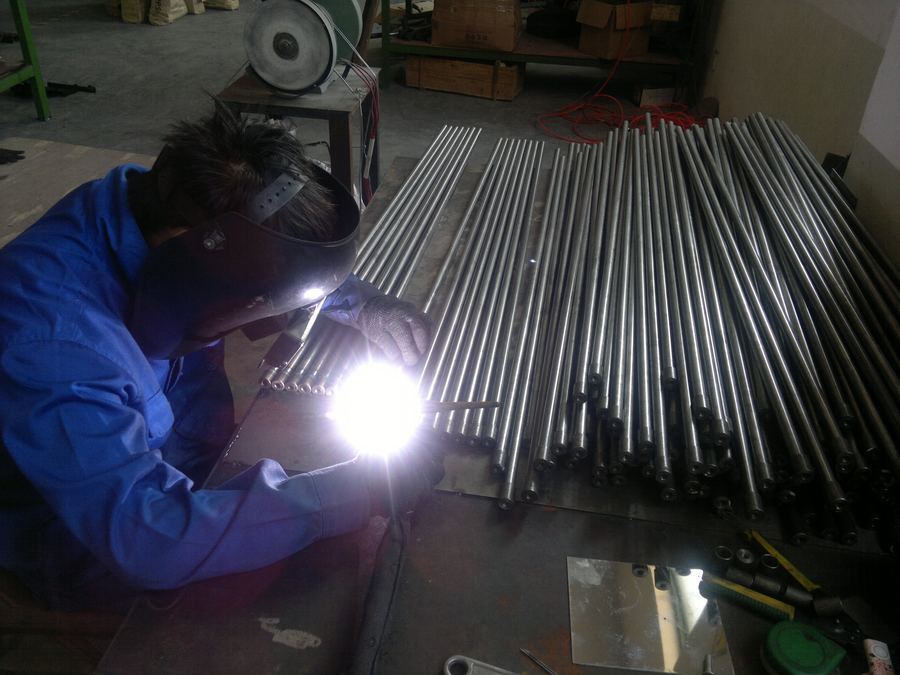
Specify metal when a fixture must hold heavy product, keep its geometry for years and survive continuous handling. Steel tube and sheet move through cutting, welding, grinding and surface preparation before coating — typically 60 to 100 microns of powder over a prepared substrate.
- Best fit: floor stands, gondola end caps, beverage and heavy-goods racks, outdoor and forecourt units.
- Load and life: the highest structural rigidity of the four, and the only one built for multi-year permanent service.
- Finishes: powder coating in matched brand colours, zinc plating, chrome or brushed metal, wood-grain transfer.
- Watch out: heaviest option, so the highest freight per unit; coating damage at contact points is where field corrosion usually starts.
Acrylic Displays: Clarity and Premium Perception
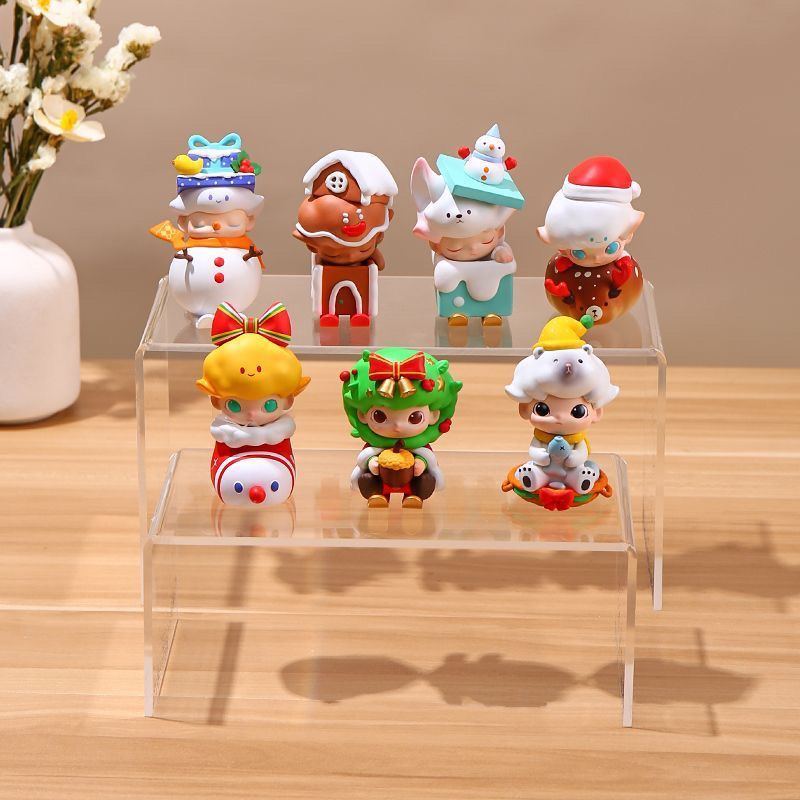
Acrylic (PMMA) transmits around 92% of visible light, so products read as premium even under ordinary store lighting, at roughly half the weight of glass for the same thickness. It cuts, bends, polishes and solvent-bonds into shapes metal and wood cannot reproduce economically.
- Best fit: countertop tiers for cosmetics, eyewear, jewellery and confectionery, where the product must be seen from several angles.
- Processing: laser cutting for complex profiles, flame or diamond polishing for glass-like edges, heat bending for curves and tiers.
- Watch out: scratches more readily than glass or metal, and can craze or crack under sharp impact; low-grade sheet yellows under UV.
- Design note: acrylic is a presentation material, not a structural one — put the load into metal or wood and use acrylic where it is seen.
Plastic Displays: Molding Economics at Volume
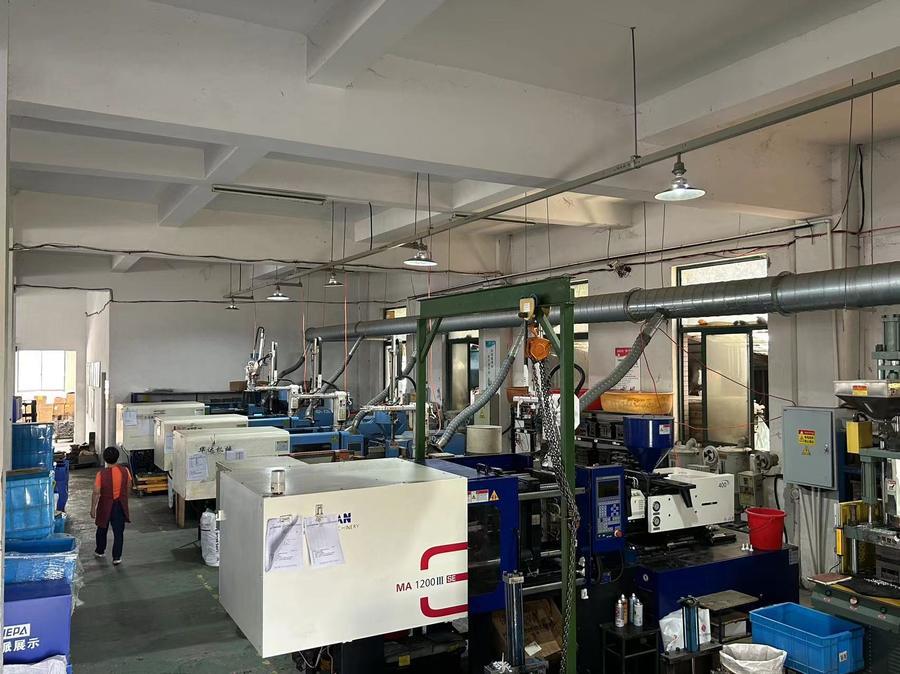
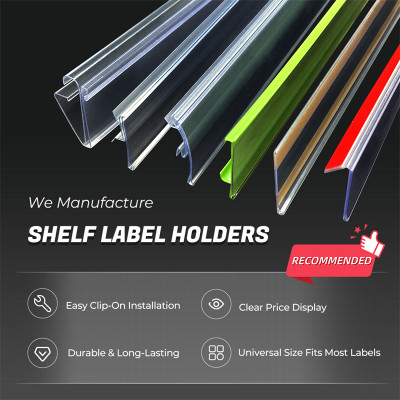
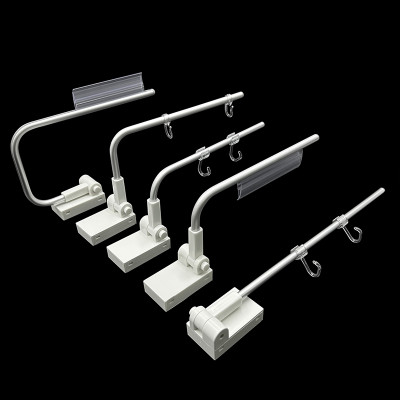
Injection molding concentrates cost in the tool, so the per-piece price falls sharply as volume rises. That is why plastic owns high-volume standardised components — tag holders, dividers, pushers, rails and modular counter units. The trade-off is upfront commitment: tooling is paid before the first saleable unit exists.
- Common resins: PP and PET for clarity and food-contact grades, ABS for impact resistance, PS and PVC for rigid signage profiles.
- Processes: injection molding, extrusion and thermoforming, each with a different tooling threshold.
- Best fit: programs with a stable design and a predictable repeat volume — not short promotions or designs still in flux.
- Watch out: weakest premium signal of the four and limited structural strength for large floor-standing units; allow four to eight weeks of tooling lead time.
Wood Displays: Warmth and Fresh-Category Fit
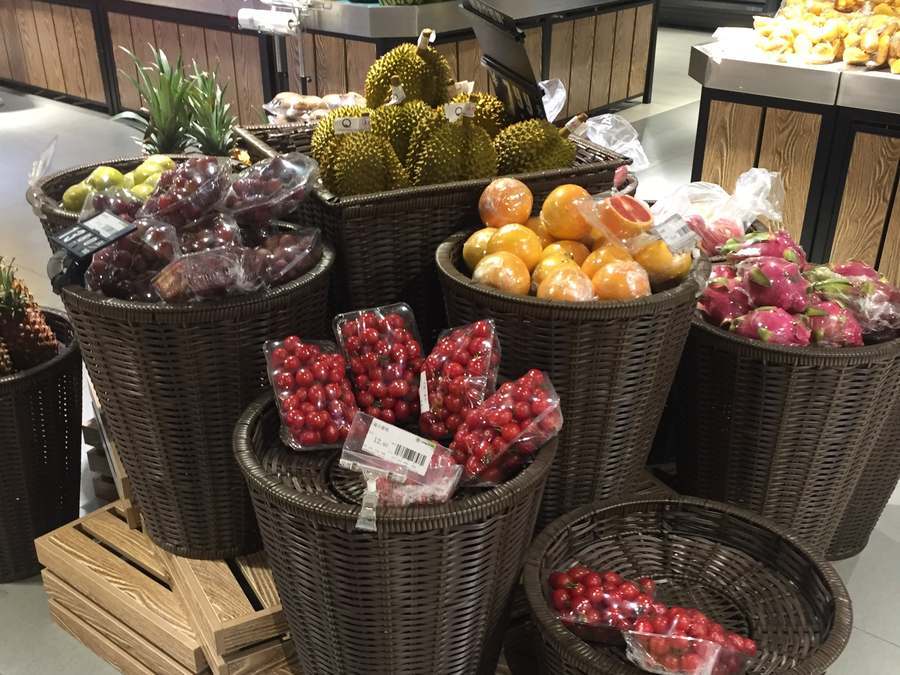
Wood communicates warmth and provenance. In produce, bakery and specialty grocery, timber platforms and wicker baskets lift perceived quality more effectively than powder-coated steel or clear acrylic, and they align the fixture with the natural positioning the category already sells.
- Forms: solid timber and laminated board for platforms, plywood and veneered MDF for large panels, wicker and rattan for containers.
- Best fit: fresh produce, bakery, farm shops and boutique grocery, where the fixture is part of the product story.
- Watch out: untreated timber moves with humidity, so chilled and damp areas need sealing, drainage and raised footing.
- Hygiene: where standards are strict, use wood for the structure and a food-grade plastic or washable liner for the surface that touches food.
Head-to-Head Comparison
One table, six criteria. This is the version most teams take into a specification meeting.
| Material | Durability / service life | Relative unit cost | Weight | Tooling needed | Recyclability | Best-fit use |
|---|---|---|---|---|---|---|
| Metal | Very high — multi-year permanent fixtures | Medium | High | Low to medium | High — mature scrap steel recovery | Floor stands, heavy loads, outdoor |
| Acrylic | Medium to high — impact and scratch sensitive | High | Low to medium | Low | Medium — specialist stream only | Premium countertop, cosmetics, eyewear |
| Plastic | Medium to high — good for standardised parts | Low at volume, high at low volume | Low | High — mould required | Low to medium — resin-specific | High-volume components, modular systems |
| Wood | Medium — moisture and handling sensitive | Medium | Medium to high | Low | High — renewable and biodegradable | Produce, bakery, boutique grocery |
| Corrugated | Low — one promotion or season | Very low | Very low | Very low — print and die-cut | High — widely collected | Short promotional campaigns |
Lead times assume an approved design: sampling takes 7 to 10 days and production around 25 days, while corrugated runs in weeks rather than months. Cost columns are relative and directional, not quotations.
Hybrid builds are the usual answer
Most real specifications combine materials — a steel frame with acrylic tiers, a weighted metal base with PET sign sleeves, or a timber platform on metal brackets. Hybrid construction lets you pay for strength only where strength is needed, which flattens unit cost and freight at the same time.
- One tolerance chain instead of three suppliers' tolerances.
- One sampling round instead of sequential hand-offs.
- One colour and finish reference across every material.
Which material fits which retail environment
| Retail scenario | Recommended combination | Reason |
|---|---|---|
| Supermarket and convenience | Metal frame with plastic components | High traffic, heavy loads, frequent cleaning, tight aisle space |
| Fresh produce and bakery | Wood or wicker with food-grade plastic liners | Reinforces freshness positioning; liners handle hygiene and drainage |
| Cosmetics, eyewear, jewellery | Acrylic on a metal or wood base | Unobstructed product view and premium perception at close range |
| Outdoor and forecourt | Powder-coated metal, minimal plastic | UV, moisture and temperature cycling; acrylic and wood degrade |
| Seasonal promotion | Corrugated with an optional metal base | Fast, cheap and fully printable; the base adds stability where needed |
Cost, Food Contact and Recyclability
Three questions finish the specification: what volume you can genuinely commit to, whether the display touches food, and how it will be disposed of at end of life.
Cost moves with volume more than with material
| Order volume | Metal | Acrylic | Plastic | Wood |
|---|---|---|---|---|
| Small batch, from 100 pcs | Lowest of the four | High | Highest — tooling spread over few units | Low to medium |
| Mid volume, around 1,000 pcs | Medium | High | Falling sharply | Medium |
| High volume, 10,000 pcs and above | Medium | Medium | Lowest | Medium |
Directional comparison within the same volume band. Size, structure, finish and packaging all move the number, so exact pricing needs drawings and a confirmed volume.
Food contact and end-of-life routes
If the display touches food
- Any surface that may contact unpackaged food needs an approved material with documented migration testing.
- Food-grade PP, PET or acrylic for the contact surface; sealed wood or coated metal for the structure.
- EU: framework Regulation (EC) No 1935/2004, and Regulation (EU) No 10/2011 for plastics.
- US: FDA 21 CFR Part 177 for polymers. German LFGB testing is widely referenced by European retailers.
- Approval is food-type specific — a resin cleared for dry bakery goods is not automatically cleared for high-fat or acidic products.
At end of life
- Metal: established scrap recovery; a long service life also spreads embodied carbon over years.
- Corrugated: widely collected and the strongest recycled-content story, but the shortest service life.
- Wood: reuse, downcycle or compost if untreated — coatings and adhesives can block composting.
- Plastic: recovery depends on local resin-specific collection; design for disassembly helps.
- Acrylic: specialist collection only — the least universally recyclable option here.
Where the footprint is actually won
Flat-pack design, fewer parts and lighter structural frames cut freight volume and packaging weight. In most programs that saves more carbon than swapping one recyclable resin for another, because it reduces how much material moves at all.
Five Questions That Decide It
Answer these in order. Each one removes options rather than adding them.
-
01
What must it carry, and for how long?
Heavy loads over several years point to metal. Light loads for one promotion point to corrugated or plastic.
-
02
What should the shopper feel?
Premium clarity favours acrylic, natural warmth favours wood, and functional value with shelf efficiency favours plastic.
-
03
Will it touch food?
If yes, the contact surface must be approved and documented, whatever the structure is made from.
-
04
What volume can you commit to?
Tooling only pays back above a predictable repeat volume. Below that, choose processes without hard tooling.
-
05
Where will it stand?
Chilled, damp or outdoor locations rule out untreated wood and most acrylic; powder-coated metal holds up.
Frequently Asked Questions
Which POP display material is the most durable?
Metal. A powder-coated steel fixture is the only one of the four built for multi-year permanent service under heavy product loads in high-traffic stores.
Is acrylic stronger than plastic?
Acrylic is stiffer and far clearer, but also more brittle. Plastics such as PP or ABS absorb impact better and flex instead of cracking, which is why structural components are usually plastic or metal rather than acrylic.
What is the cheapest POP display material?
For a single promotion, corrugated cardboard. For a repeat program at high volume, injection-molded plastic becomes the cheapest per unit once tooling is amortised.
Can the four materials be combined in one display?
Yes, and they usually are. Metal frames with acrylic shelves, timber platforms on metal brackets and plastic modules on metal rails are all standard hybrid configurations.
What is the minimum order quantity for a custom display?
Small-batch custom production starts from 100 pieces, which lets a program be validated in-market before committing to high-volume tooling.
Bottom Line
Decide what the fixture must survive first, then how it should feel, then what you can commit to in volume. In most programs the answer is a hybrid: metal where strength is needed, and a lighter, more expressive material where the shopper is looking.
- Metal — load, rigidity, multi-year service, outdoor use.
- Acrylic — clarity, premium perception, close-range product viewing.
- Plastic — volume economics, standardised components, light freight.
- Wood — warmth, natural positioning, fresh and specialty retail.
- Corrugated — speed and cost for short, single-season campaigns.
How this guide was written
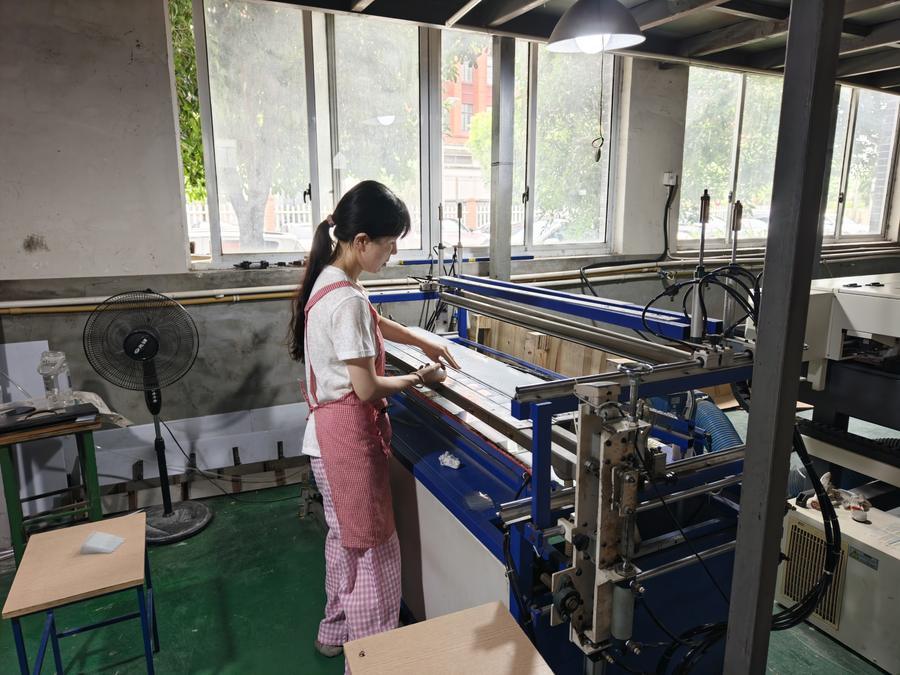
Every recommendation here comes from live production rather than desk research. We have manufactured metal, acrylic, plastic and wood fixtures since 2011 in the same 6,000 m² plant, so the notes on tooling, tolerances, freight and failure modes reflect orders we run ourselves — the production photographs above were taken on our own line. We hold CE and ISO 9001 certification and are REACH compliant. The standard lead times quoted here (sampling 7 to 10 days, production around 25 days) are the figures our project team plans against.
Cost figures are directional comparisons within the same order volume, not quotations. Where market rules govern the choice — food contact in particular — we cite the primary regulation rather than a summary of it.
Primary references
- Regulation (EC) No 1935/2004 — EU framework regulation on food-contact materials.
- Regulation (EU) No 10/2011 — plastic food-contact materials and migration testing.
- 21 CFR Part 177 — US FDA indirect food additives covering polymers.
- ISO 9001:2015 — the quality management standard our production is certified to.