OEM vs ODM vs Private Label: Which Display Manufacturing Model Fits Your Brand? | VIGO DISPLAY
OEM vs ODM vs Private Label: Which Display Manufacturing Model Fits Your Brand?
OEM, ODM and private label are not three price tiers of the same product. They are three different contracts about who brings the design, who pays for the tooling, and who owns what when the project ends. Choosing the wrong one rarely shows up as a higher invoice. It shows up as a missed launch date, a mold you paid for and cannot reuse, or a product your competitor can buy from the same factory next month.
Where the Decision Is Actually Made
Most buyers start asking this question after the first quotation arrives. By then the answer has already been decided — not by negotiation, but by the material you sent with your inquiry.
A display factory responds to the engineering input it receives. Send a dimensioned drawing with material callouts, and you get a quotation for OEM manufacturing: your design, our process. Send a reference photo with "something like this, but in our colours", and you get ODM: our existing design, adapted. Send nothing but a brand name and a channel, and you get private label: our finished product, your label.
The three models differ in a fourth, quieter dimension: who carries the risk when something is wrong. In OEM, a dimensional error that exists in your file is yours to absorb. In ODM, a fit problem in our design is ours. In private label, we are shipping a product we already build, so the technical risk is the lowest of the three — and so is your ability to differentiate.
This is why we ask for drawings before we quote numbers, not after.
One-sentence test. If the product cannot exist without a file only you own, you need OEM. If it could exist without your brand on it, you are choosing between ODM and private label — and the real question becomes how much exclusivity you are willing to pay for.
The Three Models on One Screen
Before the detail, the structural difference. Four things move between the three models: the design, the tooling, the brand, and the exclusivity.
You own the design
- Design: yours, supplied as files
- Tooling: usually yours, or amortised into your unit price
- Brand: yours
- Exclusivity: inherent — nobody else can order your file
- Typical buyer: retailer with an in-house design team, or a brand with an existing product it wants localised
You adapt a proven design
- Design: ours, selected from our catalogue or samples
- Tooling: already exists — you normally pay nothing for it
- Brand: yours, applied at the finishing stage
- Exclusivity: negotiable — ask for it in writing
- Typical buyer: brand entering a category for the first time, or a buyer testing a new market
You own the shelf, not the product
- Design: ours, unchanged
- Tooling: ours
- Brand: yours on the packaging and label
- Exclusivity: lowest — the same product may already exist under other labels
- Typical buyer: distributor or online seller who needs speed and volume, not uniqueness
A single project can move between models. It is common to start with private label to test demand, then fund an ODM adaptation, then commission a full OEM design once the volume justifies tooling.
OEM: You Own the Design, We Own the Process
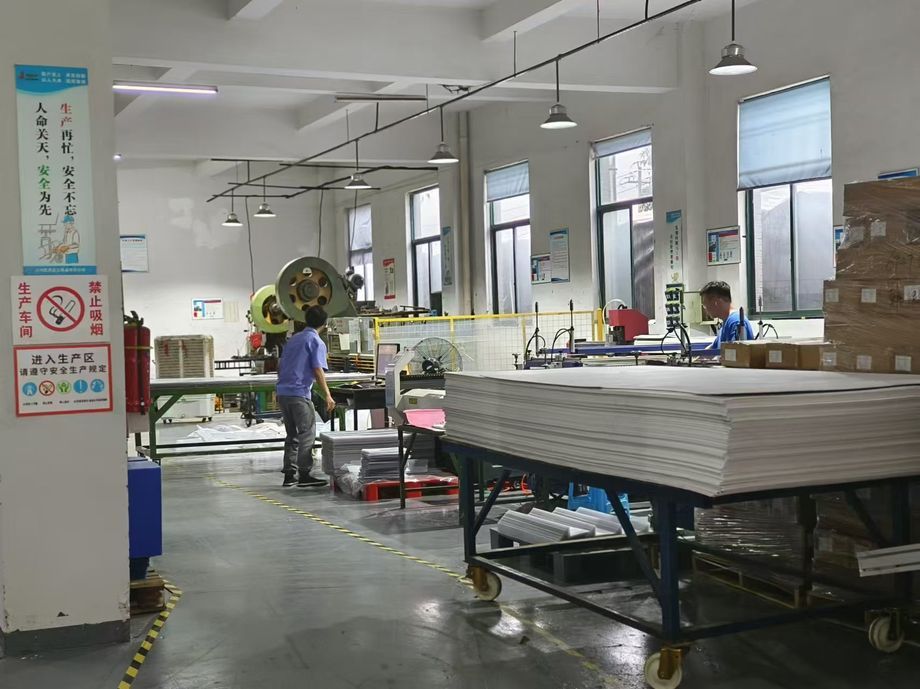
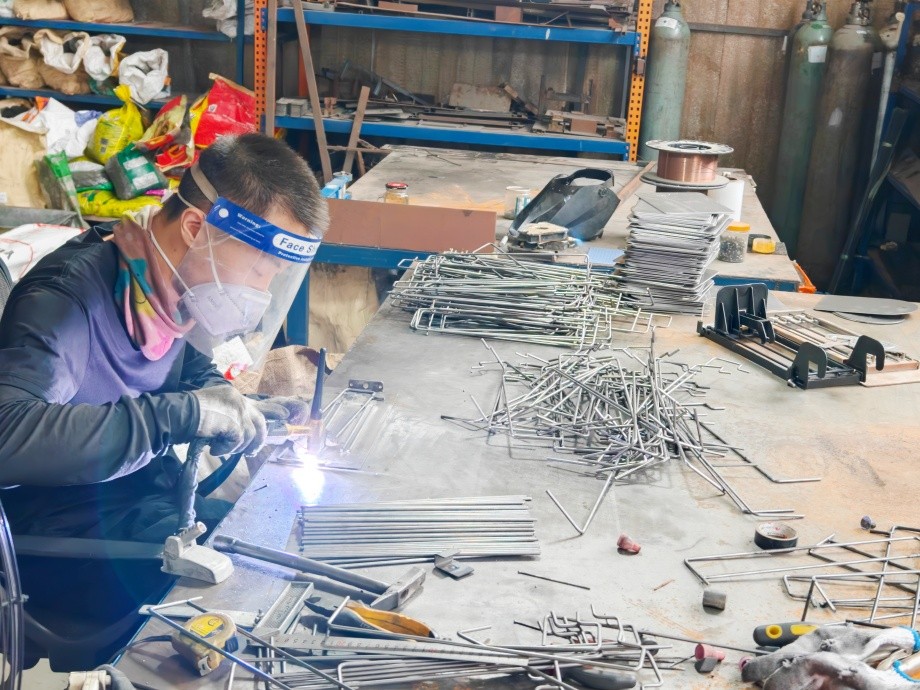
In OEM, the factory is a manufacturing service. The design intent arrives as files and leaves as finished displays. Your control is the highest of the three models, and so is your workload before production starts.
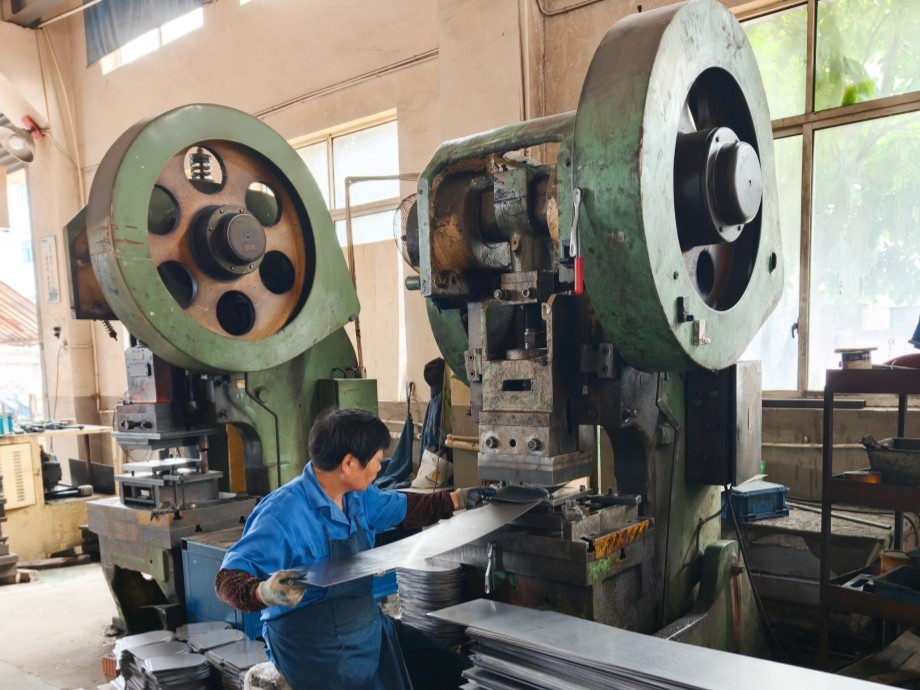
What actually happens to your file: our engineering team breaks the assembly into a process route — flat cutting, forming, joining, surface finishing, sub-assembly, final assembly, packing — and then checks each step against the drawing tolerances. Where a tolerance is tighter than the process can hold, or a bend radius is too small for the material thickness you specified, you get a DFM note before production, not a rejected batch after it.
The most expensive OEM projects we see are not the complex ones. They are the simple ones where a rendered image was treated as a production drawing. A render shows a shape; a drawing shows a shape plus the six dimensions that let a press operator repeat it. Without those six numbers, the first article has to be reverse-engineered by eye, and every revision restarts the schedule.
Practical rule: a render plus a reference part tells us you need ODM support. A render alone is not yet an OEM instruction.
Three input states, three very different projects
The phrase "we have the design" covers three situations with completely different schedules. Naming which one you are in is the single fastest way to make an OEM quotation accurate.
| Your input | What we must add | Typical effect on schedule |
|---|---|---|
| Complete engineering pack Assembly drawing, part drawings, tolerances, materials, finish | Process route, DFM notes, quotation | Quotation within about 5 working days |
| Partial pack Main dimensions plus a render, some parts unspecified | Missing part drawings, joint details, tolerance assignment | Adds a drawing round before quotation; each round costs days, not hours |
| Concept only Sketch, inspiration photo, or a competitor product | Full engineering — this is an ODM engagement with an OEM target | Realistically a development project, not a quotation |
What OEM asks of you
- Files with dimensions, not images. PDF with scale, DWG or STEP are all workable; a screenshot is not.
- Material and finish decisions, or explicit permission for us to propose them.
- One named decision-maker. OEM projects stall in committees; a single approver sign-off is what keeps a schedule honest.
- Tolerance priorities. Tell us which three dimensions matter for assembly; do not tolerance everything equally.
- A realistic first order quantity. Tooling and set-up are amortised across the run, not the sample.
ODM: Start From a Proven Design
In ODM, the design already exists and already sells. You are buying a proven structure plus a defined set of adaptations applied to it. The engineering risk drops sharply; so does the development time.
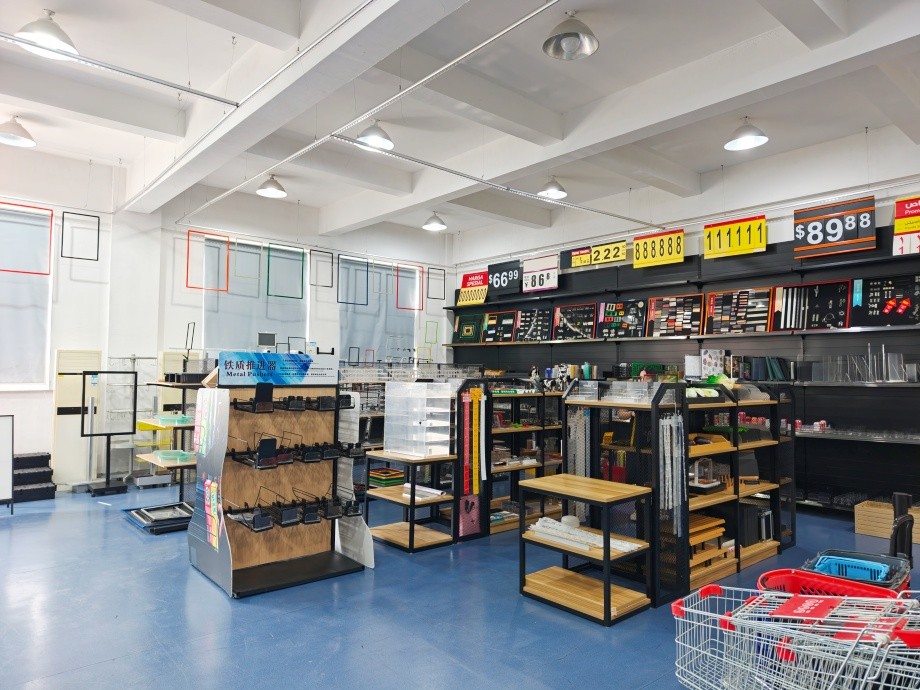
An ODM project begins with selection, not creation. You choose a structure from our catalogue or from units already on the market, and we then apply adaptations: colour, finish, logo application, graphic panel size, hook or shelf configuration, and packaging. Each of those sits inside a range the existing tooling can already produce.
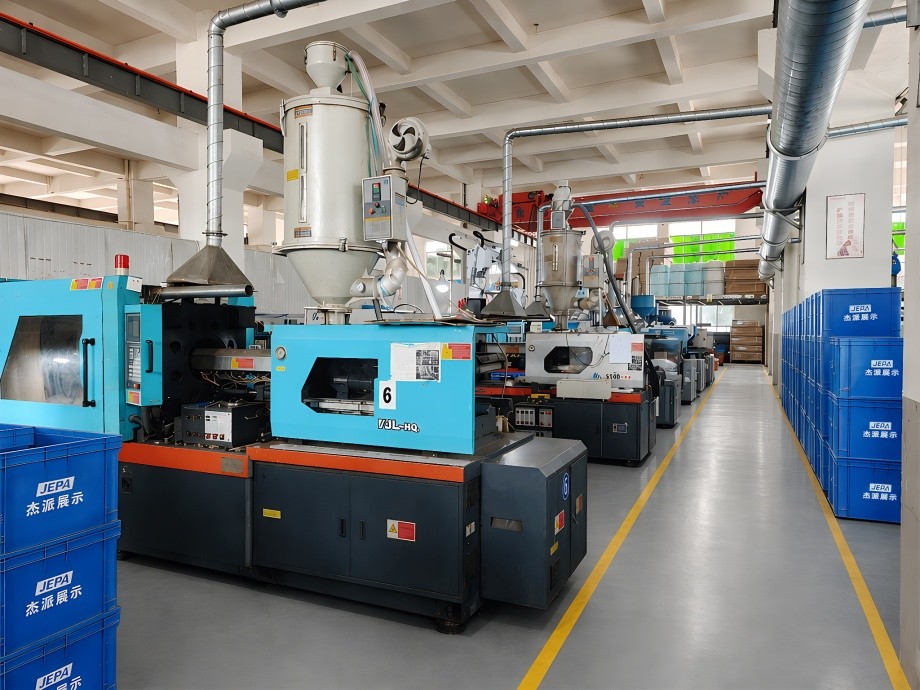
The commercial logic is that hard tooling is the slow and expensive part of a display project. When it already exists and is already paid for, the project skips the longest stretch of the schedule. That is why an ODM adaptation typically samples far faster than a new OEM build — you are waiting for a finish change, not for a mold.
Ask which adaptations are free, which add cost, and which break the tooling. The third category is the one that turns an ODM quote into an OEM project.
Adaptations that do not require a new mould
- Colour and finish — powder coat colour, plating, brushed or gloss surface.
- Branding — logo application, screen printing, laser marking, engraved plates.
- Graphic panels — printed card, foam board or acrylic signage sized to the existing frame.
- Hook and shelf arrangement — added, removed or repositioned within the existing pitch.
- Packaging — retail box, printed carton, insert layout, language variants.
- Label and documentation — barcode, SKU labelling, instruction sheets, certification text.
- Sub-assembly changes — swapping a purchased component such as a caster, bracket or LED module.
Adaptations that do require it
- Changing the footprint or overall height of a moulded part.
- Adding a structural load point the mould was never designed to carry.
- Changing wall thickness, or moving to a different polymer with different shrink behaviour.
- Reducing a flat-pack unit below its engineered fold dimensions.
| You want to change | Model it stays | New tooling needed | Why the line moves |
|---|---|---|---|
| Colour, logo, packaging, graphics | ODM | No | Applied after forming; tooling is untouched |
| Hook count or shelf pitch | ODM | No, if inside existing pitch | Positions already exist in the tool |
| Frame size or height | ODM to OEM | Usually yes | Forming and cutting dimensions change |
| New structural load case | OEM | Often yes | Requires re-checking joints and sections, not just cosmetics |
| Different material family | OEM | Yes | Process route, tooling and finish all change together |
Private Label: Your Brand on a Proven Product
Private label is the fastest and lowest-risk route to a sellable display, because almost nothing is being developed. The product exists, the tooling exists, and the commercial decision is about packaging and volume rather than engineering.
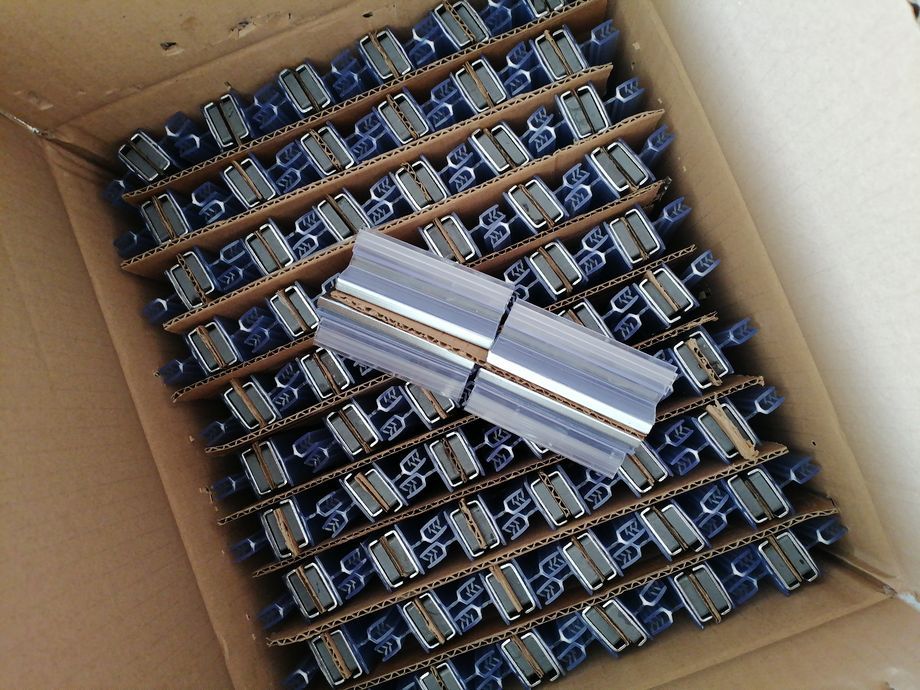
In a private label engagement, the value you add is commercial, not technical. You own the shelf presence, the price position and the customer relationship. The factory owns everything that makes the object work.
This is a genuine advantage when speed matters more than uniqueness — entering a new market, testing a channel, or filling a promotional programme with a fixed launch date. It becomes a liability the moment your differentiation depends on the product itself, because the same unit is available to any other buyer with a purchase order.
Where private label brands genuinely differentiate is in the five places a customer actually touches:
- The carton — structural quality, print quality, and how the unit survives transit.
- The label — compliance text, barcode, and language coverage for the destination market.
- The instruction card — assembly clarity measurably reduces returns and support contacts.
- The colour and finish — the cheapest visible difference available.
- The SKU architecture — how the range is organised for your channel, not the factory's catalogue.
The most common private label misunderstanding. Buyers often assume a private label order guarantees the product will not appear under another brand. It usually does not. If exclusivity matters to your business model, it has to be negotiated explicitly, in writing, with a defined territory and term — and it usually has a volume condition attached.
What private label can and cannot change
Changeable
- Packaging structure and print
- Label artwork, barcode, compliance text
- Unit colour and surface finish
- Accessories and purchased components
- Master carton configuration and pallet pattern
- Language variants of documentation
Not changeable
- Overall dimensions and proportions
- Load rating and structure
- Material family
- Assembly method
- Any element produced by hard tooling
OEM vs ODM vs Private Label: The Full Comparison
Fifteen dimensions that decide the commercial outcome of a display project. Read down the columns, not across the rows — each model is internally consistent, and mixing expectations across them is what creates disputes.
| Dimension | OEM | ODM | Private Label |
|---|---|---|---|
| Who owns the design | You | Us, adapted for you | Us, unchanged |
| Who owns the tooling | Depends on the agreement — confirm in writing | Us | Us |
| Upfront cost | Highest: drawing work, tooling, sampling | Low: adaptation and sample only | Lowest: packaging artwork |
| Unit cost | Structure-driven; benefits most from volume | Mid-range, tooling already amortised | Lowest at equal volume |
| MOQ driver | Tooling set-up and material run length | Existing batch sizes | Packaging print run |
| Sample lead time | Longest — tooling must be made first | Short — a finish change, not a mold | Shortest — often a packed sample |
| Mass production lead time | Broadly similar across all three models once tooling exists | Same | Same |
| Exclusivity | Inherent | Negotiable | Weakest |
| Can your design reach a competitor | Only if you share the files | Yes, in its unadapted form | Yes, and in identical form |
| Ability to switch supplier later | High — the design travels with you | Low — the structure stays | Lowest — you own no assets |
| Brand control | Total | High on the surface | Packaging and label only |
| Technical risk | Shared: your dimensions, our process | Mostly ours | Ours |
| Best suited to | Established ranges, patented or distinctive structures | Category entry with a need to look different | Speed, promotions, channel tests |
| Main risk to you | Paying for tooling you never amortise | Discovering your adaptation is now standard | Zero product differentiation |
| How we typically run it | Drawing review, DFM notes, tooling, first article, production | Selection, adaptation spec, sample, approval, production | Catalogue selection, artwork, packed sample, production |
One row above deserves a second read: mass production lead time is broadly similar across all three models. Production speed is decided by the factory and the order book, not by the model. What the model changes is everything that happens before production starts.
What Each Model Actually Costs
We do not publish prices, because a display quotation depends on dimensions, material, finish, packaging and quantity — four of which do not exist until a drawing does. What can be explained honestly is the structure of the cost, and where the models diverge.
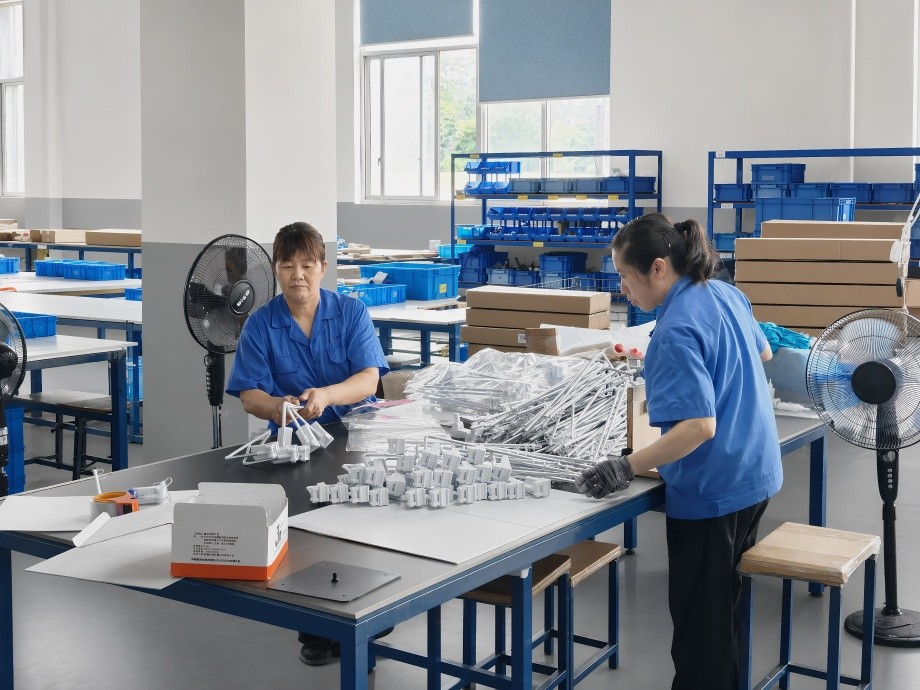
The one number that decides everything
One-off costs — drawing work, tooling, sampling, artwork — do not change with order quantity. Their effect on unit cost does. Take a hypothetical one-off cost equal to the unit price of 2,000 pieces:
| Order quantity | One-off cost spread across | Effect on unit cost |
|---|---|---|
| 500 pcs | 500 units | About +400% |
| 2,000 pcs | 2,000 units | About +100% |
| 10,000 pcs | 10,000 units | About +20% |
Illustrative arithmetic to show the mechanism, not a quotation. The shape of this curve is why OEM and ODM are volume businesses, and why private label is the only model that is economically rational at low volume.
Three costs buyers most often forget to budget
- Revision cycles. Every engineering change after tooling exists costs more than the same change before it. Reviewing a drawing properly is cheap; changing a mold is not.
- Documentation and compliance. Language variants, compliance marking for the destination market, and instruction artwork are real line items in private label work.
- Freight configuration. Flat-pack versus assembled changes container utilisation, and that can outweigh a unit-cost difference between two suppliers.
How to read any quotation. Ask the supplier to separate three things: one-off development and tooling, unit price at your stated quantity, and unit price at the next logical volume step. A supplier who cannot separate these three is quoting a number, not a project.
Where the Weeks Actually Go
The model you choose mainly changes the first three stages. Once tooling exists, all three models converge into the same production sequence.
- 01
Inquiry and drawing review. We confirm which model your input actually supports, and return clarifying questions before any quotation. OEM projects usually take longest here — this is where missing dimensions surface.
- 02
DFM feedback and quotation. Process route, material and finish assumptions, tooling requirement, and a priced structure broken into one-off and unit costs. About 5 working days from a complete pack.
- 03
Tooling and sample. For OEM, tooling is made and debugged first. For ODM, the existing tool is set up for your adaptation. For private label, the sample is a packed production unit with your artwork. This is the stage where OEM pays back the time it saved everywhere else.
- 04
Sample approval. We ask for written approval against the sample, not verbal. The approved sample becomes the reference for the whole order — the single most effective quality control instrument available to a buyer.
- 05
Mass production. Scheduled in production batches. Our standard window for a confirmed display order is around 25 days, subject to finish and quantity.
- 06
Inspection and shipment. Final inspection against the approved sample, packing to your carton specification, and documentation for the agreed Incoterm.
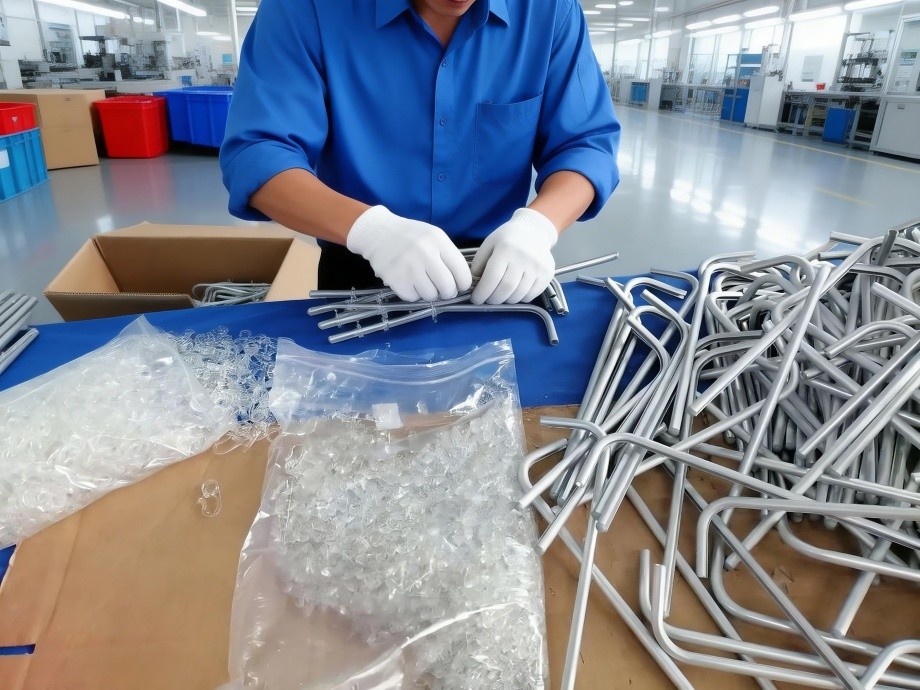
Who is waiting for whom
Delays in display projects are rarely manufacturing delays. They are approval delays. Across the projects we run, the pattern is consistent: the factory stage is predictable and the buyer-side stage is not.
- Waiting on artwork approval is the most common single cause of a slipped private label launch.
- Waiting on dimension clarification is the most common cause in OEM — and it repeats if the answer arrives incomplete.
- Waiting on sample sign-off affects all three models equally. A named approver with authority to say yes is worth more to a schedule than any production expedite.
Our practical recommendation: put your approval steps into your own launch calendar with dates attached, before you place the order.
Risk Map: What Can Go Wrong, by Model
Each model concentrates risk in a different place. Knowing which one you have accepted is more useful than assuming the factory has absorbed it.
OEM — tooling risk
You fund tooling against a forecast. If the volume does not arrive, the one-off cost never amortises and the unit economics never recover.
Mitigation: confirm tooling ownership and storage in writing, and consider a staged tooling investment tied to a second order.
ODM — dilution risk
Your adaptation sits on a shared structure. Unless exclusivity is agreed, the same base product remains available to other buyers.
Mitigation: negotiate exclusivity by territory and term, or move the differentiating element into something you own — a moulded component, a printed graphic system, a patented fitting.
Private label — commoditisation risk
Your product is commercially identical to competing labels. The only competition left is price, and price is the worst place to compete from.
Mitigation: compete on packaging, service level, assortment logic and delivery reliability rather than on the unit.
All three — specification risk
A sample approved verbally, or approved against a photo, is not a specification. Disputes at final inspection almost always trace back to an approval that was never written down.
Mitigation: approve a physical sample in writing, keep a signed copy, and reference it in the purchase order.
A Five-Question Decision Path
Answer these in order. The first "no" determines your model.
- 01
Can your product only exist from your own files? If yes, you need OEM. Nothing else will produce it. If no, continue.
- 02
Does it need to look different from what already sells in your market? If yes, you need an ODM adaptation — colour, finish, graphics and accessories can carry a surprising amount of differentiation. If no, continue.
- 03
Can you commit to the volume that justifies tooling? If no, stay at ODM or private label and revisit the OEM case when the forecast is proven. Tooling bought speculatively is the most expensive mistake in this category.
- 04
Do you need the product to be unavailable to competitors? If yes, get written exclusivity — territory, term and volume condition — or own the differentiating tooling yourself. Assuming exclusivity exists is the same as not having it.
- 05
Is your launch date fixed and close? If yes, choose the model with the shortest pre-production path — usually private label or an ODM adaptation — and save the OEM design for the second generation.
Frequently Asked Questions
What is the difference between OEM and ODM in display manufacturing?
In OEM, you supply the design and the factory manufactures to it. In ODM, the factory already owns the design and adapts it for you. The commercial difference is tooling: OEM projects usually create new tooling that you help fund, while ODM projects reuse tooling that already exists. That single difference explains most of the gap in lead time and upfront cost between the two.
Is private label the same as ODM?
No. Private label means a finished product, unchanged, carrying your brand — typically on the packaging and label. ODM means the product itself is adapted: colour, finish, graphics, accessories, sub-components. Private label is a branding agreement; ODM is a limited development agreement. If the object changes at all beyond its packaging, you have moved from private label into ODM.
Which model gives me the lowest unit price?
At the same volume, private label usually carries the lowest unit price, because no development or tooling cost is being recovered. But unit price is not total cost. Once freight, packaging, revision cycles and unsold inventory are included, a slightly higher unit price on an OEM or ODM product that actually sells can be the cheaper outcome. Compare landed cost per unit sold, not per unit shipped.
Can I move from private label to OEM later?
Yes, and it is a common and sensible progression: test demand with private label, then fund an ODM adaptation once you know which variant sells, then commission an OEM design with tooling once the volume is proven. The risk to avoid is ordering large private label volumes while assuming that popularity will automatically translate into a defensible product.
How long does an OEM display project take compared with ODM?
Once tooling exists and production is scheduled, all three models run at broadly similar speeds. The difference sits before that: an ODM adaptation can be sampled on existing tooling, while an OEM project must design, manufacture and debug tooling first, and every drawing revision restarts part of that work. From a complete engineering pack we typically return a quotation in about 5 working days; mass production for a confirmed order runs around 25 days.
Who owns the tooling in an OEM project?
It depends entirely on what is agreed, and it must be agreed in writing before the order. Common arrangements include factory-owned tooling amortised into unit price, buyer-funded tooling stored at the factory, and shared arrangements tied to volume commitments. If you fund tooling, confirm in writing who holds it, where it is stored, and what happens to it if you place no further orders.
What do I need to send for an OEM quotation?
Dimensioned drawings (PDF with scale, DWG or STEP), material and finish specifications, expected order quantity, target market and any compliance requirements, packaging expectations, and target launch date. If some of these are not decided, say so explicitly — an incomplete brief quoted as if complete produces a number nobody can build to.
Does a private label order give me exclusivity?
Not by default. A private label order is a purchase of an existing product with your branding applied; the same product generally remains available to other buyers. Exclusivity has to be negotiated explicitly, with a defined territory and term, and it usually carries a volume condition. If exclusivity is central to your business model, raise it before the quotation, not after the order.
Not Sure Which Model Your Project Needs?
Send us what you have — a full drawing pack, a partially dimensioned sketch, or just a reference photo and a target market. We will tell you which model your input actually supports, what is still missing, and what it would take to close the gap. There is no charge for that review, and if we think you are buying more development than you need, we will say so.
Related reading
- Our full display manufacturing capability and process stages
- Display materials compared: metal, acrylic, plastic and wood
- How to prepare a display drawing pack for quotation
- Tooling ownership and what to confirm before you pay
VIGO DISPLAY — manufacturing since 2011, 6,000 m² factory, minimum order 100 pieces, exporting to more than 120 markets.