How to Choose a Retail Display Manufacturer for Your Chain Store | VIGO DISPLAY
Your choice of display manufacturer directly affects store opening timelines, per-unit costs, and the consistency of your brand experience across locations. Get it wrong, and you face delayed rollouts, quality inconsistencies, and escalating procurement costs. Get it right, and you gain a supply chain partner that reduces your total cost of ownership by 25% or more. After 15 years supplying display fixtures to retail chains across 50+ countries, we have identified five dimensions that separate reliable manufacturing partners from costly mistakes. Here is what procurement teams need to verify before signing a supplier agreement. Many buyers do not realize they are working with an intermediary until problems arise. The difference between a factory-direct manufacturer and a trading company affects your pricing, quality control, and ability to customize products. Bottom line: For standard products in small volumes, a trading company with strong logistics can work. For custom displays, chain-wide rollouts, or ongoing engineering needs, go factory-direct. Many experienced chains use both: factory-direct for their core program, trading companies for one-off supplementary purchases. See VIGO DISPLAY's factory capabilities. A display fixture that rusts in six months or a gondola shelf that sags under load creates safety risks and forces premature replacement. Here is the QC verification framework we recommend to every procurement team: Require current ISO 9001. For Europe and North America, add BSCI or SEDEX social compliance. Check the certificate dates and confirm they cover the specific facility producing your order — not a different factory under the same corporate group. For metal fixtures: salt spray test (ASTM B117) — minimum 72 hours for indoor, 200+ hours for refrigerated. For powder coating: adhesion test and thickness specs. For acrylic/plastic: material composition and UV resistance data if near windows. Book SGS, Bureau Veritas, or TÜV Rheinland for pre-shipment inspection. Cost: $300-500 per day. This is the highest-ROI risk mitigation step in international procurement. If the manufacturer resists, walk away. Request manufacturer test certificates for shelf load ratings with documented safety factors. For freestanding displays, require tip-over resistance data. These documents protect your stores from liability. Custom displays — branded checkout counters, store-specific gondola configurations, unique POP units — require engineering depth. Evaluate a manufacturer's custom capability by examining their process: Submit CAD files, reference photos, or sketches. The engineering team evaluates structural feasibility, material selection, and production methods. They should propose cost-saving improvements without compromising function. Functional prototype delivered in 7-14 days. Test it in your store: verify dimensions, materials, finish, and assembly. Plan for 1-2 revision rounds. This is standard practice — not a red flag. After sample approval, tooling fabrication begins. Pre-production samples from production tooling confirm consistency. Timeline: 2-4 weeks depending on tooling complexity. Production with defined quality gates: incoming material check, in-process QC at critical stages, final inspection before packaging. Each checkpoint is documented and shareable. Custom packaging engineered to prevent transit damage — critical when heavy metal fixtures share containers with acrylic components. Full export documentation prepared for your customs broker. Ask for examples of previous OEM projects similar to yours. A manufacturer that shows you a comparable project — with photos, timelines, and references — reduces your project risk significantly. View VIGO DISPLAY OEM/ODM projects. Factory square footage means little. What matters: can the manufacturer handle your volume within your timeline, consistently? Catalog products: 20-35 days from order confirmation. Custom OEM: add 2-4 weeks for tooling and sampling. Confirm in writing whether the timeline includes weekends and holidays. Target 75-85%. Above 85% means no room for rush orders. Below 60% may signal underinvestment. Request data for your product category specifically, not factory-wide figures that mix unrelated lines. Ask for their average container utilization rate and damage rate. For chain rollouts, confirm split-container shipments to different ports or consolidated delivery to your DC. Every supply chain hits disruptions. A professional manufacturer has backup raw material suppliers, surge capacity via evening/weekend shifts, and relationships with alternative shipping lines. No contingency plan = risk you absorb. China supplies the majority of the world's retail display fixtures — and this is not primarily about labor costs. Three structural advantages drive the industry: Steel coils, acrylic sheets, injection-molded components, powder coating, and packaging — all sourced within a 50 km radius. This eliminates the long-distance logistics costs embedded in fragmented supply chains and cuts lead times by 30-50%. Sheet metal fabrication, welding, powder coating, acrylic thermoforming — these are skills that take years to master. Chinese manufacturing clusters have deep labor pools that produce consistent quality at high throughput, directly benefiting your delivery schedule. Manufacturers serving clients across dozens of countries accumulate design insights that improve every product. A shelf divider refined for Japanese convenience stores improves a European supermarket layout. That knowledge transfer benefits all clients, not just the originating market. In 2024, a regional supermarket chain came to us with a common problem: their European trading company supplier was delivering inconsistent quality. Per-unit costs had risen 18% over three years. Our engineering team audited their display specifications and found three immediate opportunities: 12-month results: Annual procurement cost down 30%. Quality consistency at 99.2% (defect rate). Store opening delays from fixture issues dropped from 4.3 days to 0.5 days. In-store assembly labor reduced by an estimated 18% through standardized components. Before signing, verify these 10 items. Each unchecked box represents a risk you carry: We welcome factory visits, virtual tours, and independent third-party audits. Request a sample kit, compare our OEM pricing, and receive a custom quote within 24 hours.What to Look for in a Retail Display Manufacturer
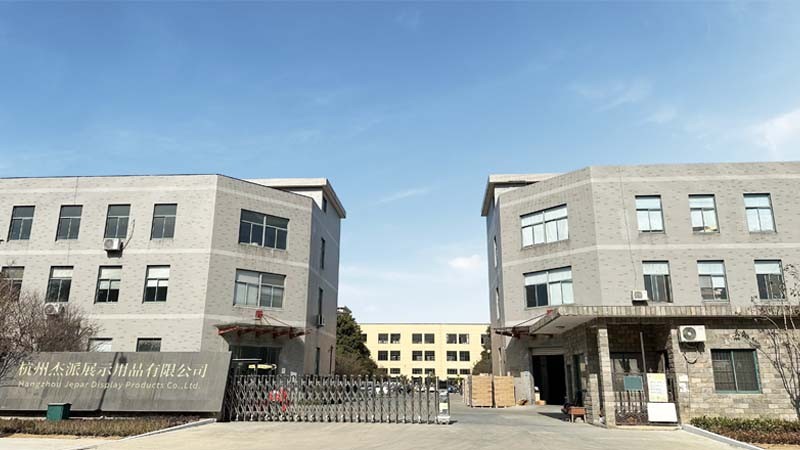
Factory Direct vs Trading Company
Factory Direct
Trading Company
Quality Verification: 4 Steps Before You Commit
Verify Certifications
Request Material Test Reports
Arrange Third-Party Inspection
Validate Load and Stability
OEM and ODM: From Drawing to Delivery
Design Review
Prototyping
Tooling and Pre-Production
Mass Production
Packaging and Shipping
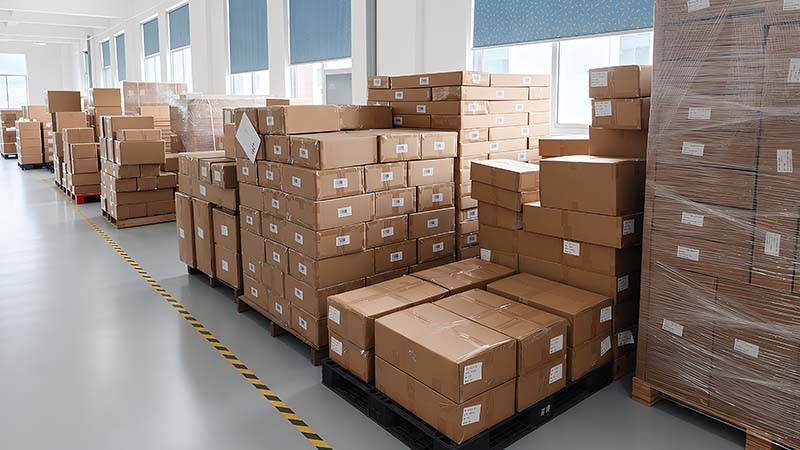
Capacity, Lead Times, and Logistics
Lead Times
Capacity Utilization
Container Optimization
Contingency Plan
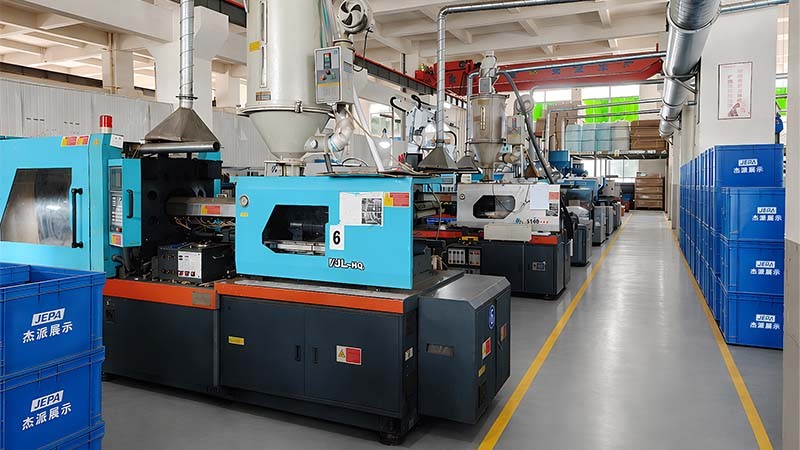
Why China Leads in Display Manufacturing
Supply Chain Density
Specialized Workforce Depth
Cross-Market Innovation
Case Study: 30% Cost Reduction for an 85-Store Chain
Supplier Verification Checklist
Evaluate VIGO DISPLAY as Your Manufacturing Partner