Checkout Display Solutions: Maximize Impulse Sales at the Point of Sale | VIGO DISPLAY
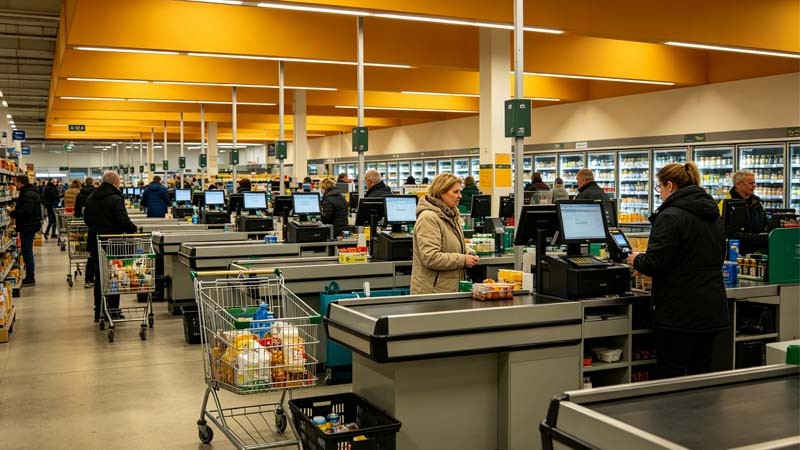
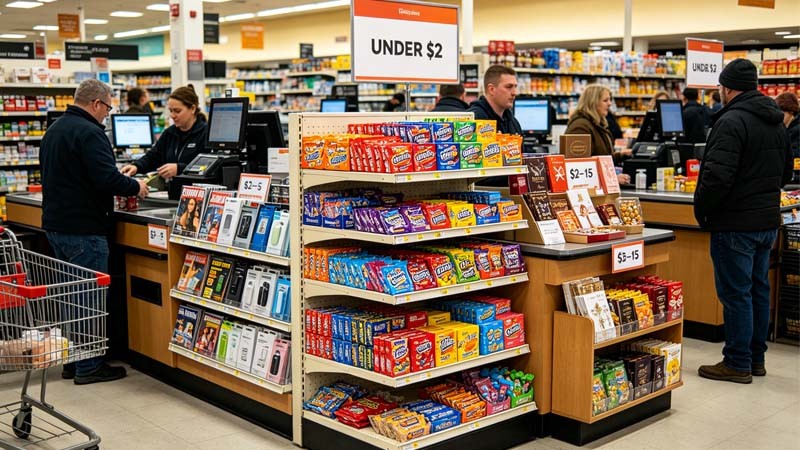
The checkout zone occupies roughly 5% of a typical supermarket's floor space — yet generates 15-25% of incremental impulse revenue. No other area converts square footage into sales at this rate. For a chain store processing 1,000+ transactions daily, checkout display optimization is not a cosmetic upgrade. It is a direct lever on profit per transaction. This guide covers the psychology behind checkout purchases, the essential fixture types every store needs, the key differences between checkout dividers and display stands, and a practical framework for designing an efficient checkout zone. Each recommendation is based on real-world deployments across supermarket, convenience, and specialty retail chains. Checkout impulse purchases are not random. They follow predictable behavioral patterns that effective display design exploits: After navigating 15-20 aisles and making dozens of product decisions, shoppers arrive at checkout with depleted cognitive resources. Small, low-risk items — gum, batteries, lip balm — require minimal mental effort. The brain defaults to "yes" when the decision is trivial and the item is visible. This is why 68% of checkout purchases are unplanned. The average shopper spends 2-4 minutes waiting in the checkout queue. During this idle window, products at arm's reach become the only available stimulation. Studies show that well-stocked checkout displays increase transaction value by 12-18% compared to empty or poorly maintained lanes, because shoppers browse and add items simply to pass the time. Products within 18 inches of the shopper's hands — on the countertop, at eye level on adjacent shelving, or on the checkout divider itself — are 3x more likely to be picked up than products 24+ inches away. This is the physical manifestation of impulse: reduce friction to zero, and conversion follows. Well-designed checkout fixtures position best-selling impulse items at exactly the right height and distance. Checkout display effectiveness is measurable. Chains that implement these practices consistently report 15-25% higher impulse sales per lane: Structure checkout products in three tiers: under $2 (gum, candy, single-serve snacks) at waist level for easy grab, $2-5 (magazines, phone chargers, travel-sized toiletries) at eye level on adjacent shelving, and $5-15 (premium snacks, gift cards, seasonal items) on dedicated countertop stands. This tiered approach prevents shoppers from ignoring the display as "just cheap stuff" while maximizing revenue from each tier. Rotate checkout display products every 4-6 weeks. Shoppers who visit the same store twice a week habituate to static displays within 3-4 visits. Seasonal rotations — summer beverages and sunscreen, back-to-school stationery, holiday gift items — maintain novelty and prevent the checkout zone from becoming invisible background noise. Shelf-communicating fixtures like sign stands and tabletop sign holders make rotation easy for store staff. The optimal checkout display has enough product variety to trigger "I might need that" thoughts without overwhelming the shopper. Research suggests 8-12 distinct SKUs per lane, organized by category with clear separation. Overcrowding above 15 SKUs reduces conversion because shoppers stop scanning. Use checkout dividers with built-in product display panels to add merchandising surface without cluttering the counter. An empty or half-empty checkout display signals neglect and reduces impulse purchases by up to 40%. Implement a mandatory restocking checkpoint at shift change and a mid-shift top-up during peak hours (11 AM-1 PM and 5 PM-7 PM). Fixtures designed for quick reload — such as gravity-feed anti-theft pull boxes and front-loading countertop stands — cut restocking time by 50%. A fully equipped checkout lane requires four categories of fixtures. Each serves a distinct function: Checkout dividers do more than separate customer orders. The best dividers incorporate advertising panels on the front face, product display pockets on the side, and brand messaging zones that generate incremental advertising revenue. For chain stores, custom-branded dividers with store loyalty program QR codes turn a functional item into a customer engagement tool. Choose dividers with rounded corners and smooth edges — sharp dividers damage products and frustrate cashiers. Countertop impulse fixtures hold 4-12 SKUs in a compact footprint. Acrylic and wire stands offer product visibility from all angles. Multi-tier rotating displays maximize SKU density without consuming counter space. For high-theft items like batteries and electronics, use lockable acrylic cases or anti-theft pull boxes that dispense one unit at a time while keeping inventory secure. Position these stands 12-18 inches from the payment terminal for maximum shopper interaction time. Sign stands and tabletop sign holders communicate promotions, loyalty program details, and payment options without cashier intervention. Clear acrylic sign holders present information at the precise moment shoppers are looking at the counter. Digital screen mounts are gaining adoption for dynamic content, but physical sign holders remain essential for static information like return policies, accepted payment methods, and store hours that must always be visible. Coin trays keep cash organized and speed up transactions. Stop locks prevent display hooks from being emptied in a single grab — a simple device that reduces theft of small items by 60-80%. These accessories seem minor, but in a chain with 100 lanes, a 5-second reduction in cash-handling time per transaction saves 14 labor hours per day. Procurement teams often conflate checkout dividers and checkout displays. They serve different purposes and require different specifications: Checkout zone design is constrained by store architecture, but four principles apply universally. Use them as an audit checklist for your current layout: For checkout lanes with 3+ shoppers queuing at peak times: place impulse displays along the queue rail where shoppers stand, not just at the counter. Wall-mounted shelving or freestanding floor displays along the queue path capture browsing during the full wait, not just the final 30 seconds at the register. For express lanes with short queues: concentrate displays on and immediately around the counter. Place high-volume impulse items within 24 inches of the cashier's seated position. Items the cashier can scan without standing or stretching reduce transaction time by 3-5 seconds per item. Reserve counter ends for larger items that shoppers self-serve. Position coin trays and payment terminals on the cashier's dominant-hand side for fastest processing. Maintain minimum 36-inch clearance between the checkout counter back edge and any rear wall or adjacent lane. This allows staff to restock without blocking the lane and provides wheelchair accessibility. For stores in ADA-compliant jurisdictions, verify that counter height and reach range meet local regulations — our checkout fixtures can be manufactured to specified dimensions for any market. For high-theft impulse categories: use lockable acrylic cases that allow product visibility but require cashier assistance to access. Stop locks on display hooks reduce grab-and-run theft of hanging items. Position these security fixtures so they are visible to deter theft but do not obstruct the shopper's view of available products. Visible security that does not slow down transactions is the goal. Here is what chain store operators should track to measure checkout display performance: Chains that track these five metrics and optimize against them report that checkout display improvements pay for themselves within 3-6 months through increased impulse revenue alone — before accounting for labor savings from faster restocking and reduced shrinkage. Checkout optimization is one of the fastest-ROI projects a retail chain can undertake. The fixtures are relatively low-cost, the installation is simple, and the revenue impact is immediate and measurable. VIGO DISPLAY supplies checkout dividers, countertop display stands, sign holders, anti-theft pull boxes, coin trays, and stop locks to retail chains in 50+ countries. All products are available with custom colors and logo printing. Bulk pricing applies to chain-wide deployments. Send us your lane dimensions and product categories. We will return a recommended fixture layout, product specifications, and bulk pricing within 24 hours.Why the Checkout Area Drives More Revenue Per Square Foot Than Any Other Zone
The Psychology Behind Checkout Displays
Decision Fatigue at Peak Vulnerability
Wait Time Conversion
Proximity and Graspability
Best Practices for Checkout Counter Displays
Product Tiers by Price Point
Seasonal Rotation Cycles
Visual Density Without Clutter
Restocking Discipline
Essential Checkout Fixtures: What Every Lane Needs
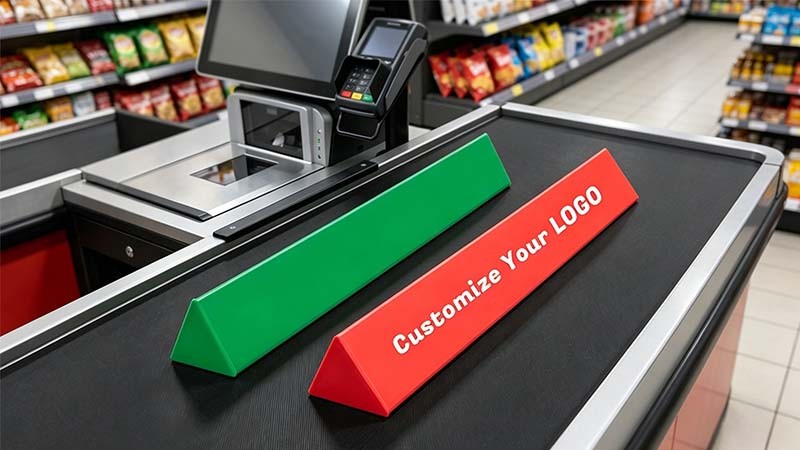
Checkout Dividers and Lane Separators
Countertop Display Stands
Point-of-Sale Signage
Cash Handling and Security Accessories
Checkout Dividers vs Checkout Displays: Know the Difference
Checkout Dividers
Checkout Displays
How to Design an Efficient Checkout Zone Layout
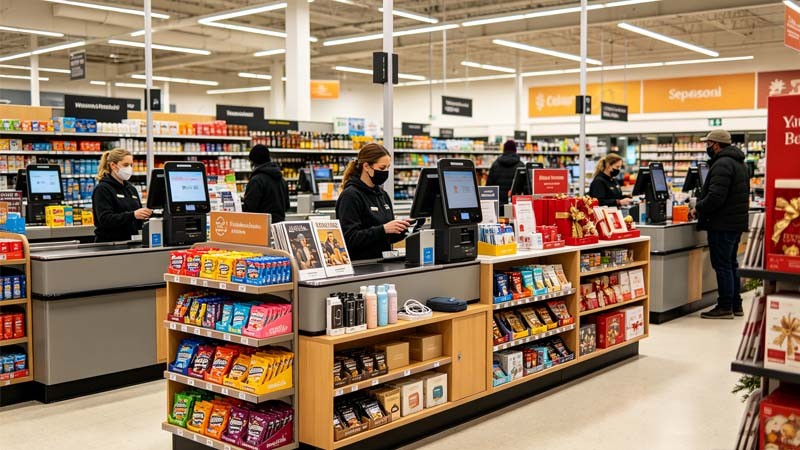
Queue Depth Dictates Display Strategy
Cashier Reach Zone Optimization
Aisle Width and Accessibility
Security Integration Without Customer Friction
Checkout Display ROI: The Numbers That Matter
Metric
Industry Baseline
Optimized Target
Measurement Method
Impulse revenue per transaction
$0.80-$1.20
$1.50-$2.50
POS data filtered by checkout-lane SKU category
Checkout SKU sell-through rate (weekly)
40-60%
70-85%
Inventory data: units sold / units stocked per lane
Average checkout display restock frequency
1x per day
2-3x per day (peak coverage)
Staff restocking log or inventory system timestamp
Checkout zone conversion rate
8-12% of transactions
18-25% of transactions
% of receipts that include at least 1 checkout SKU
Transaction time impact from checkout displays
+3-5 seconds
+0-2 seconds
Time-motion study comparing lanes with/without optimized displays
Upgrade Your Checkout Zone
Get a Custom Checkout Solution for Your Stores